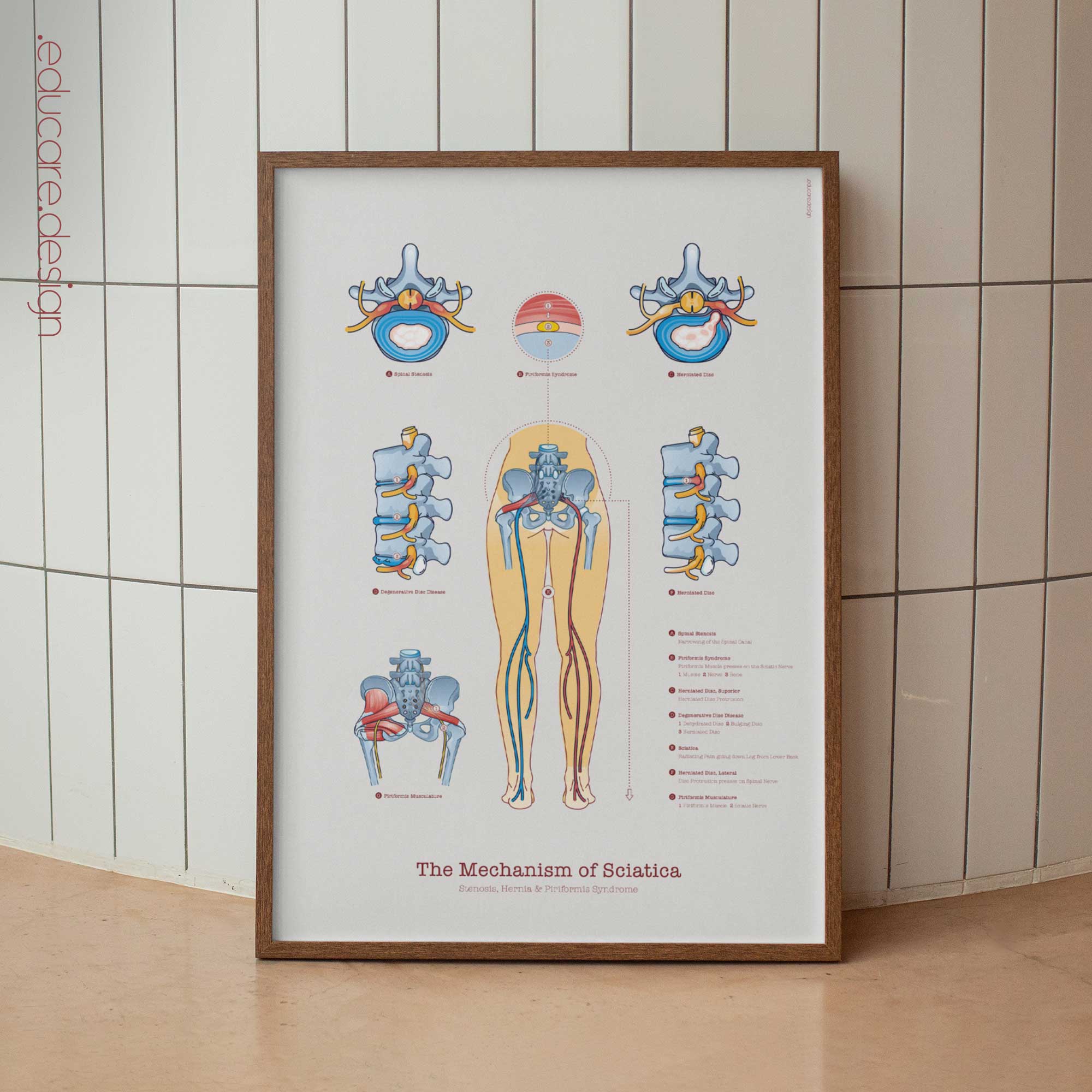
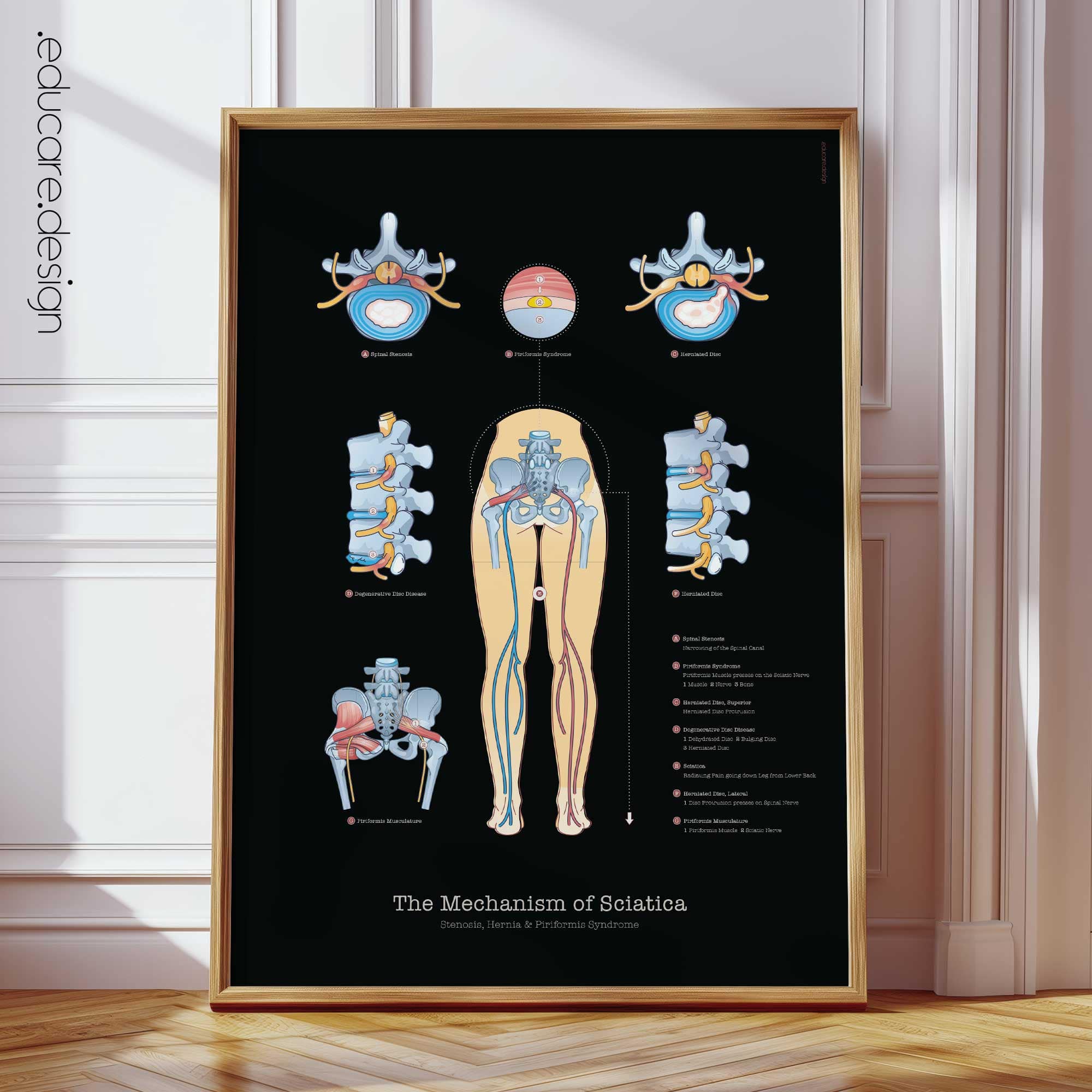
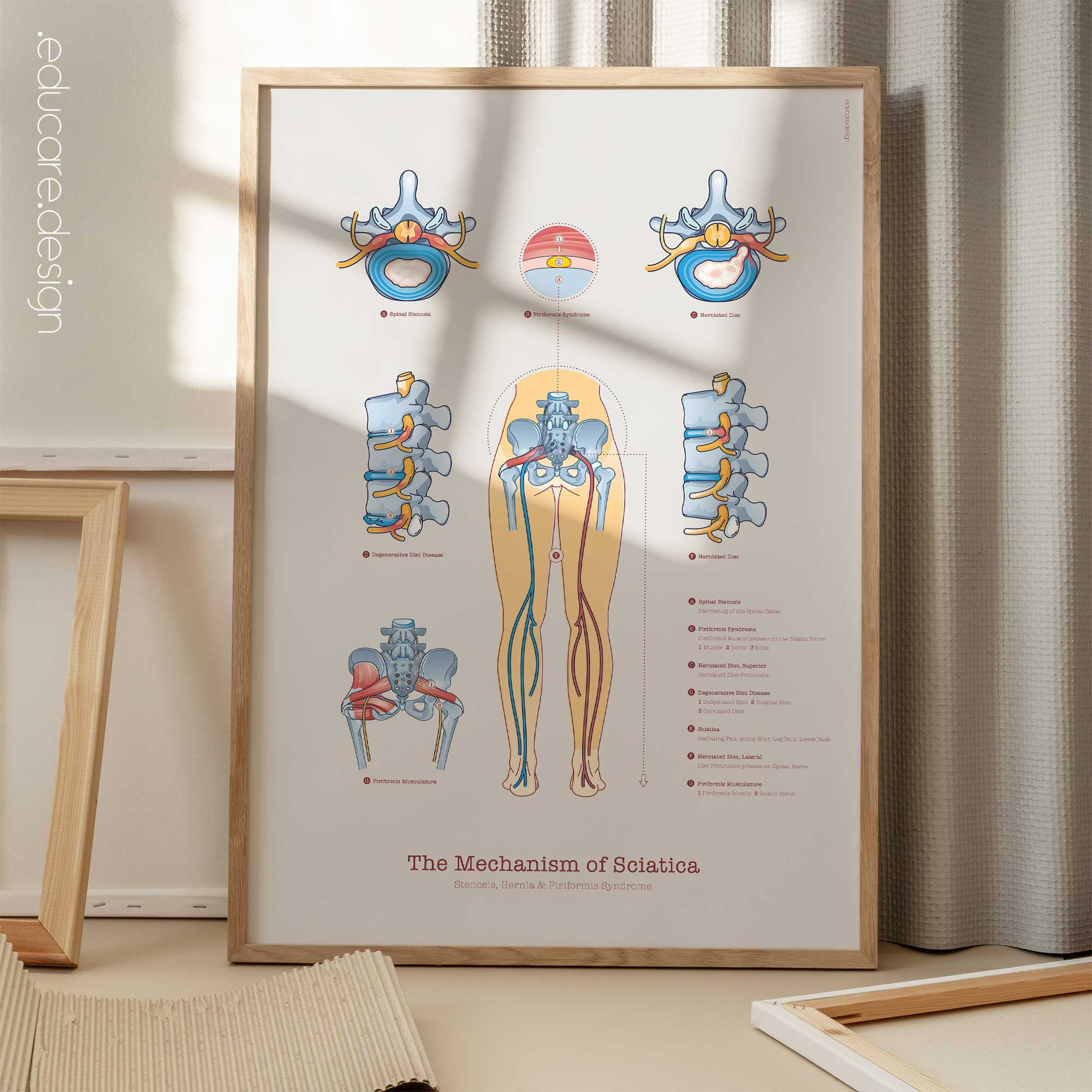
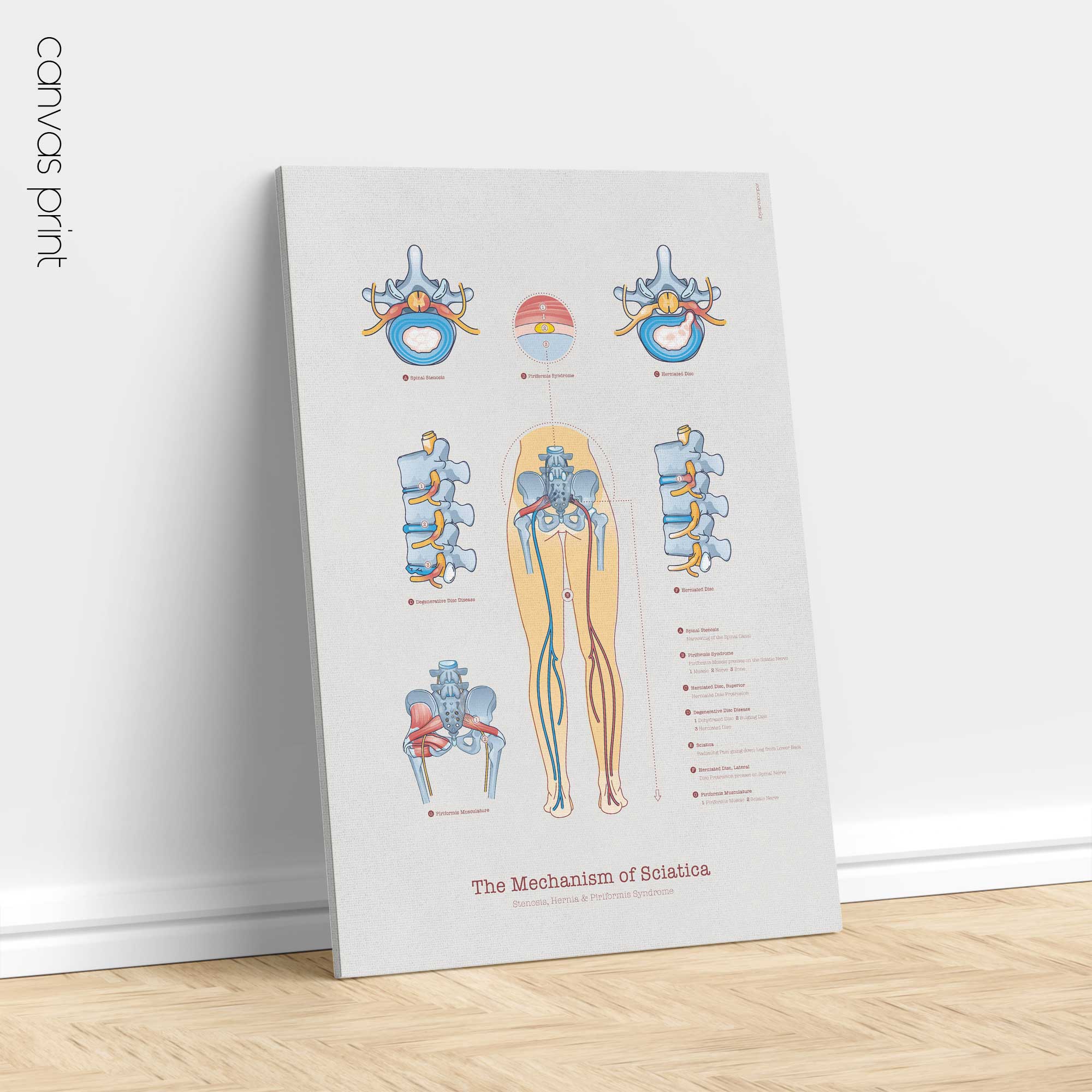
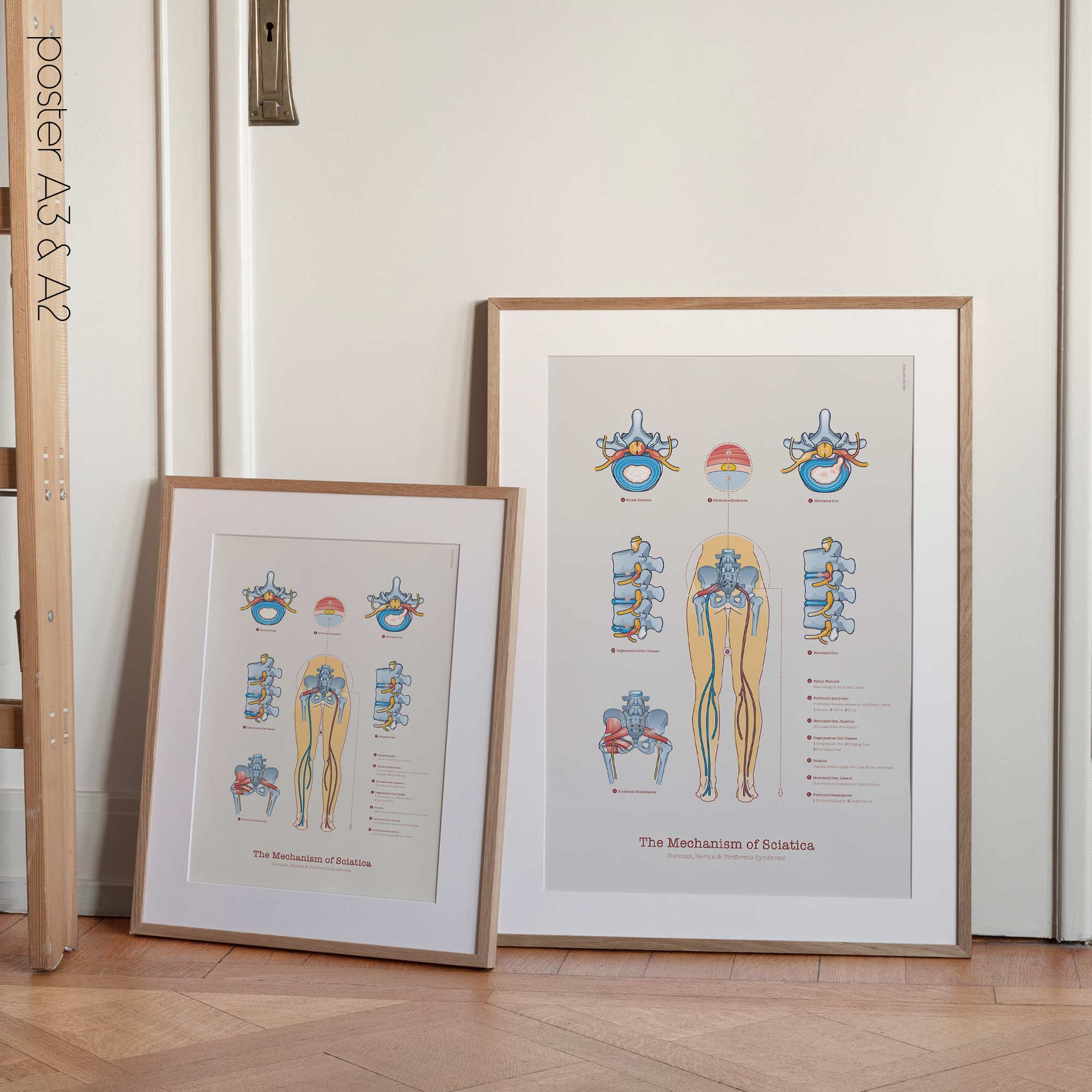
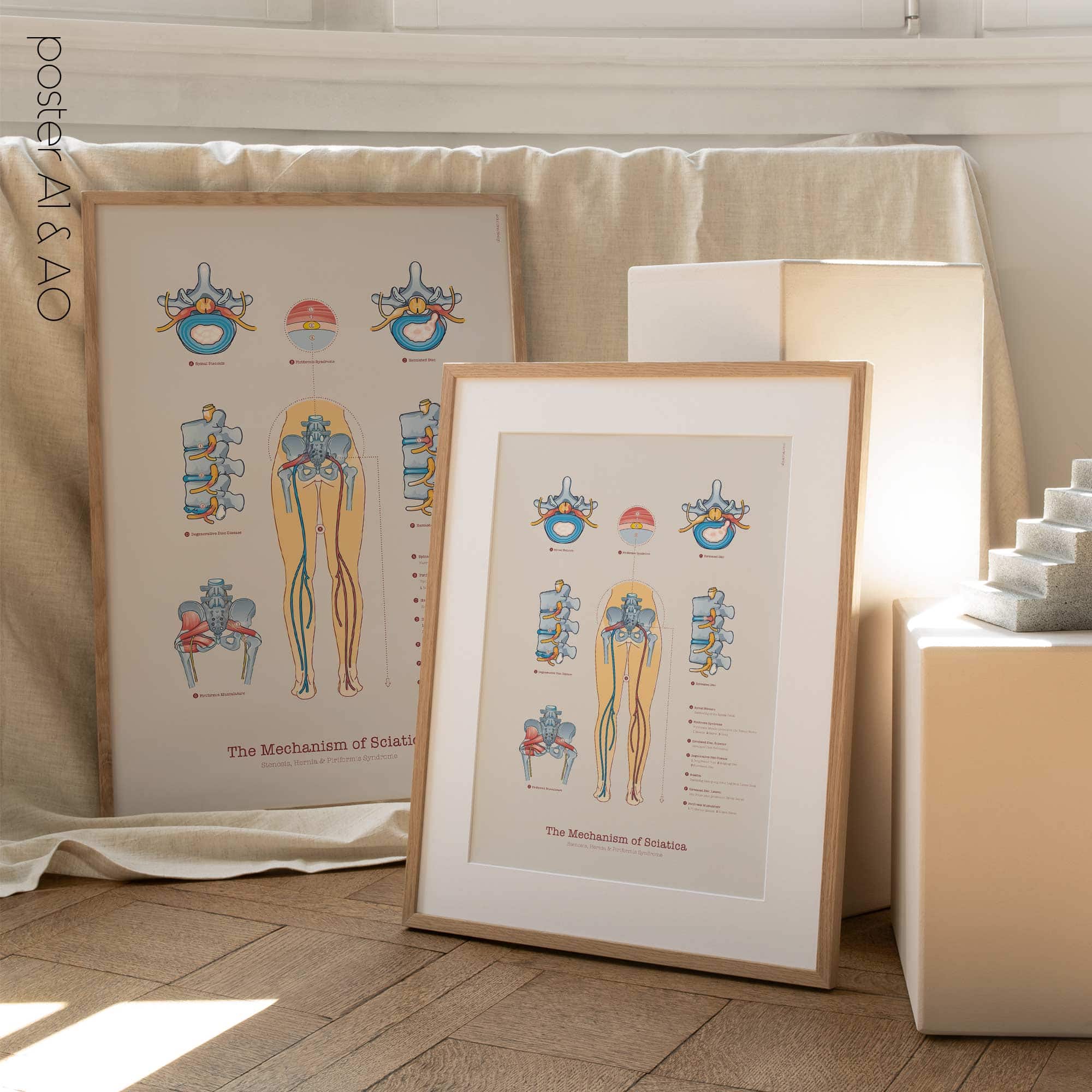
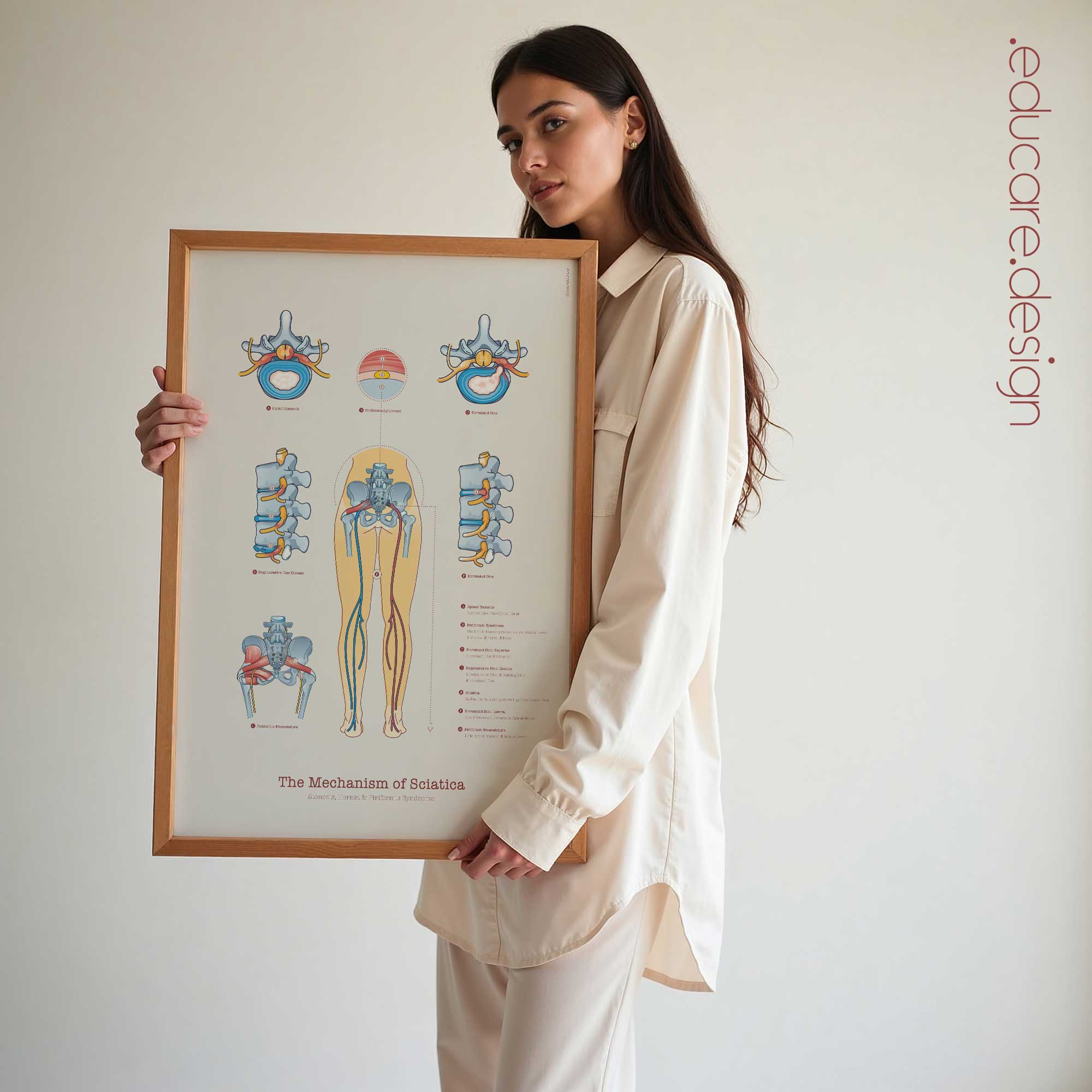
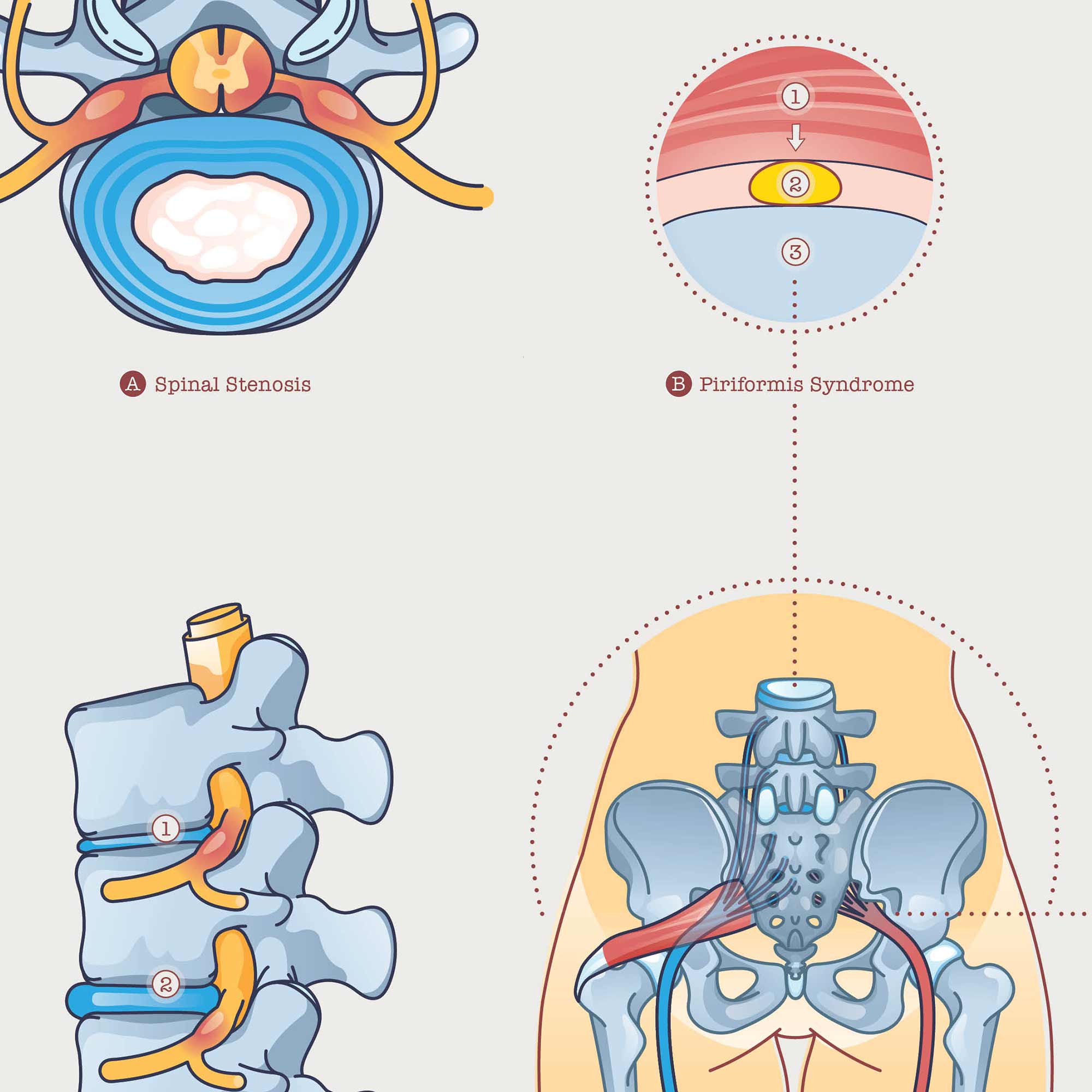
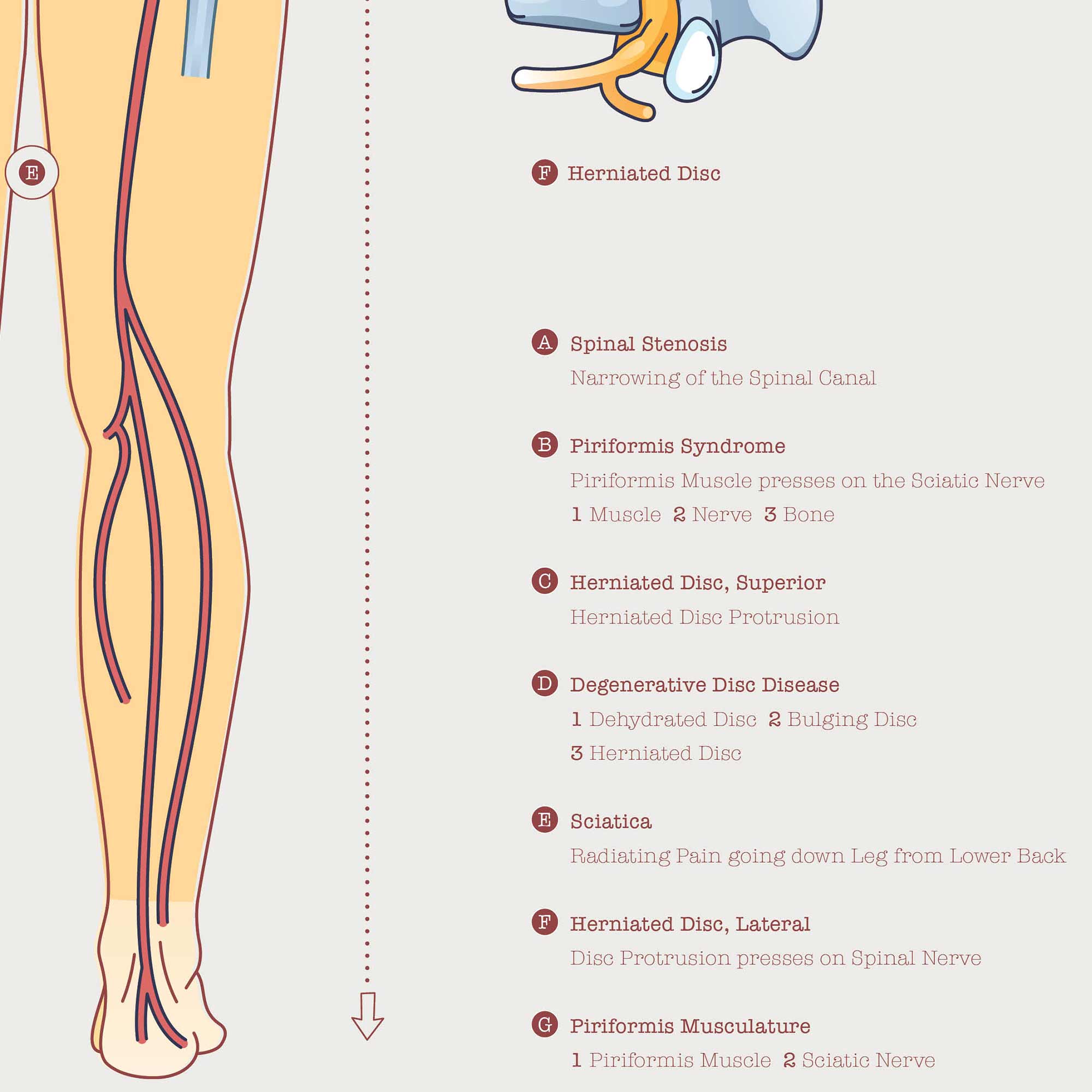
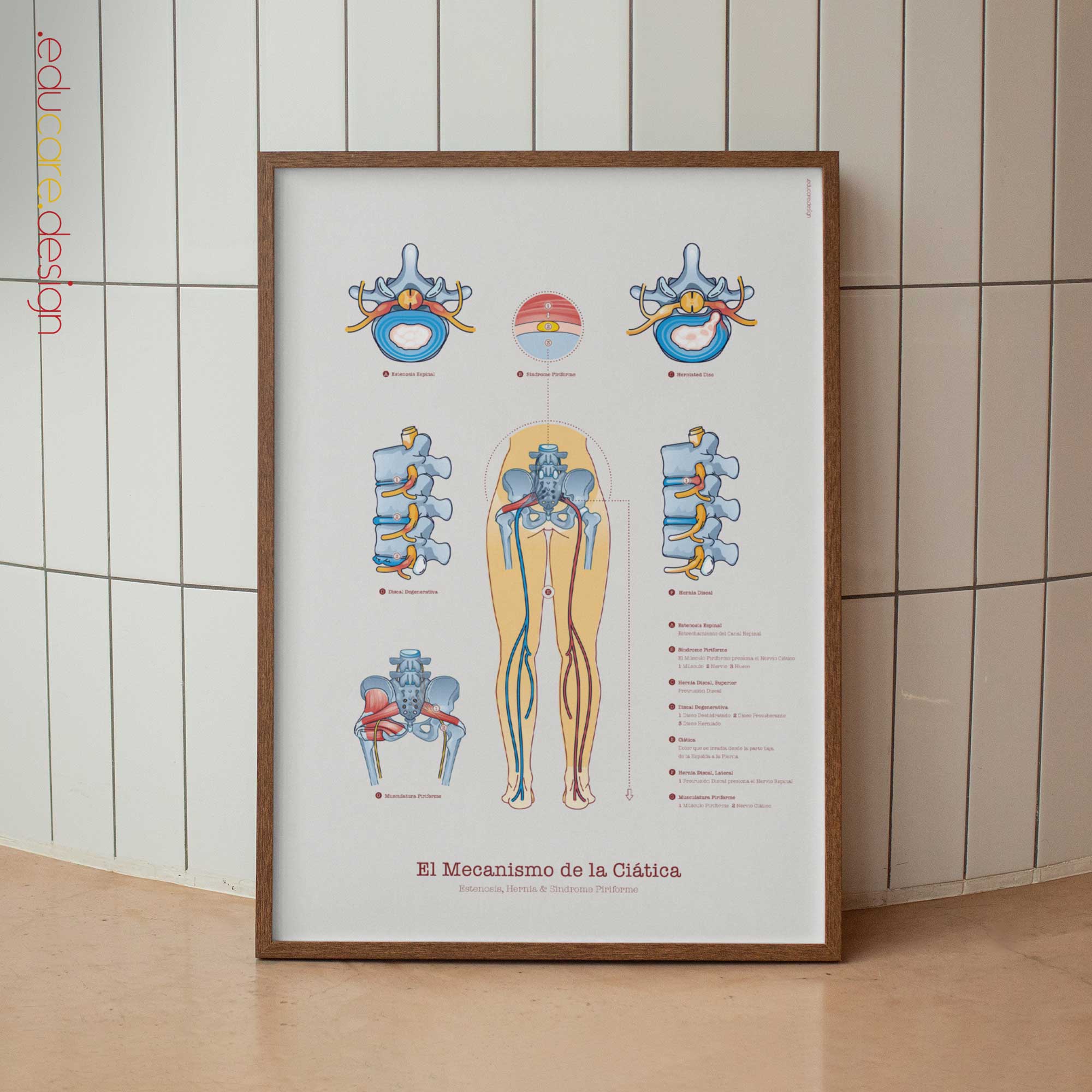
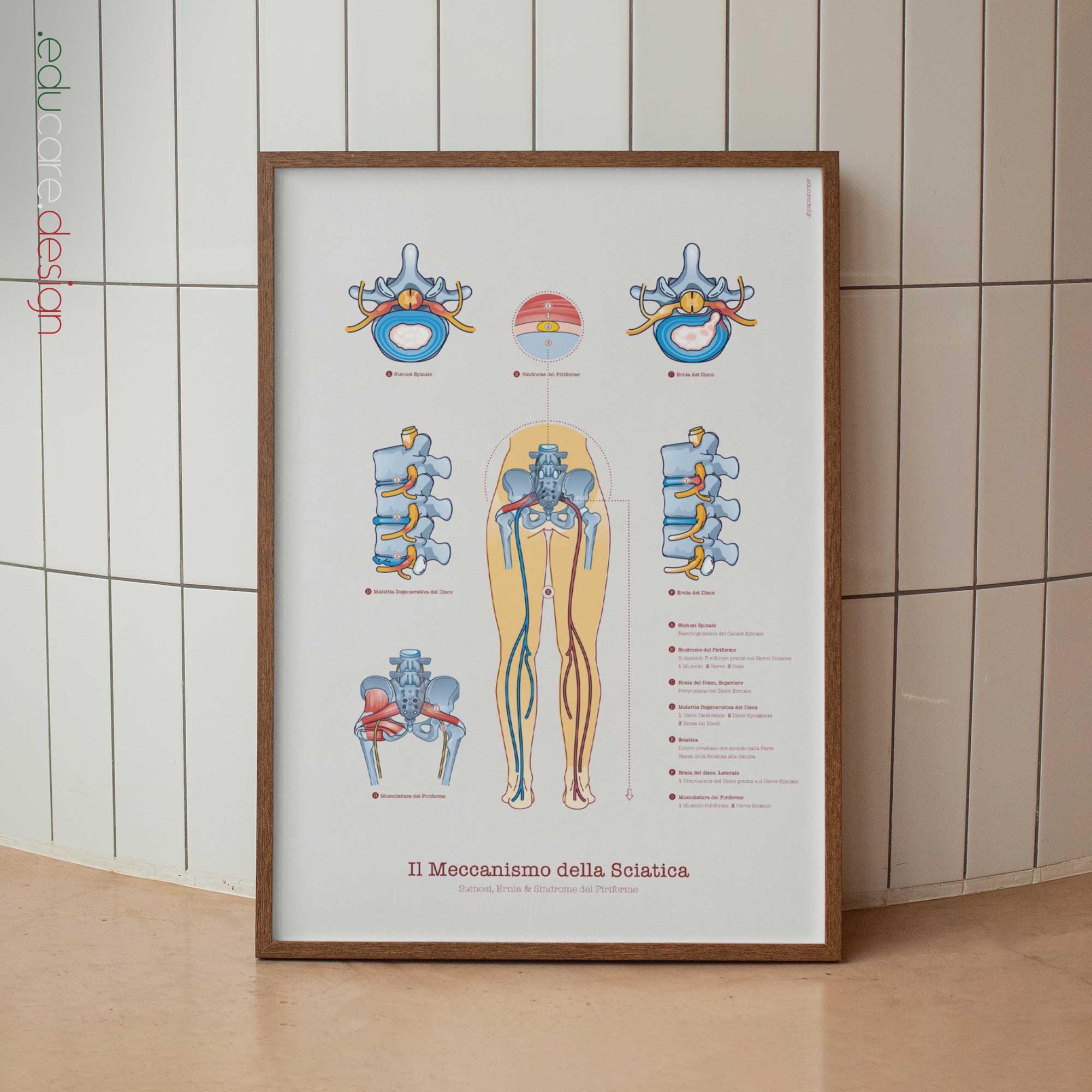
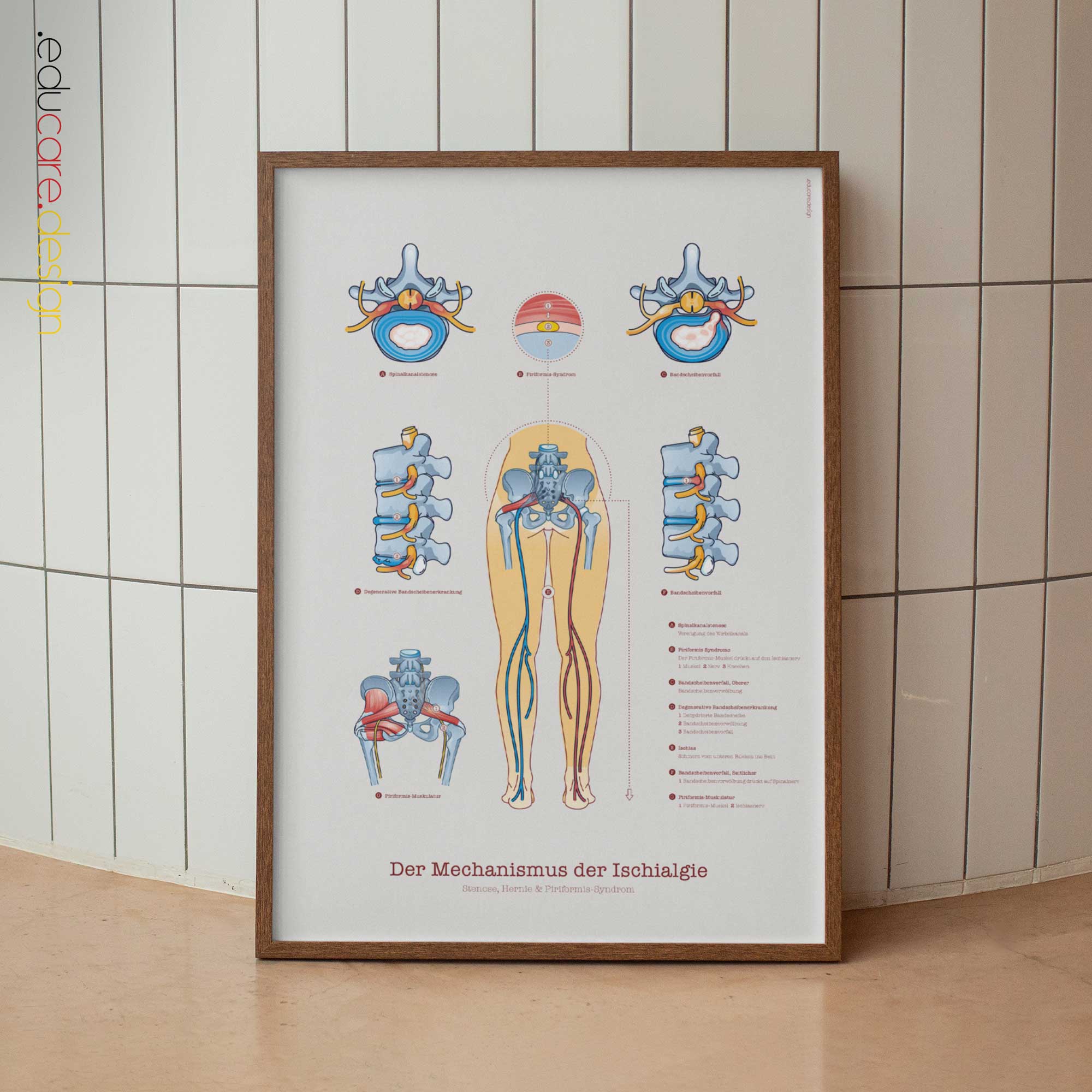
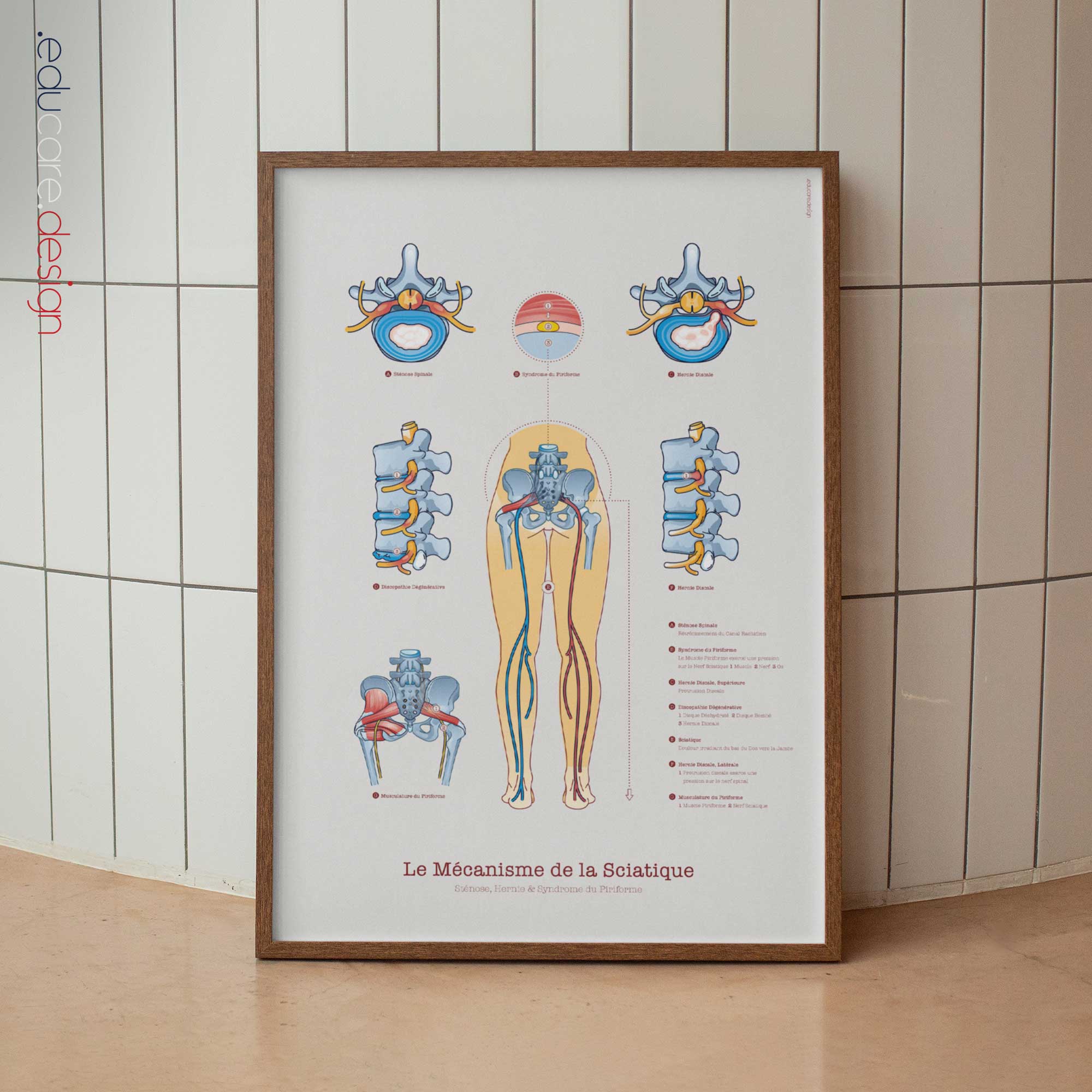
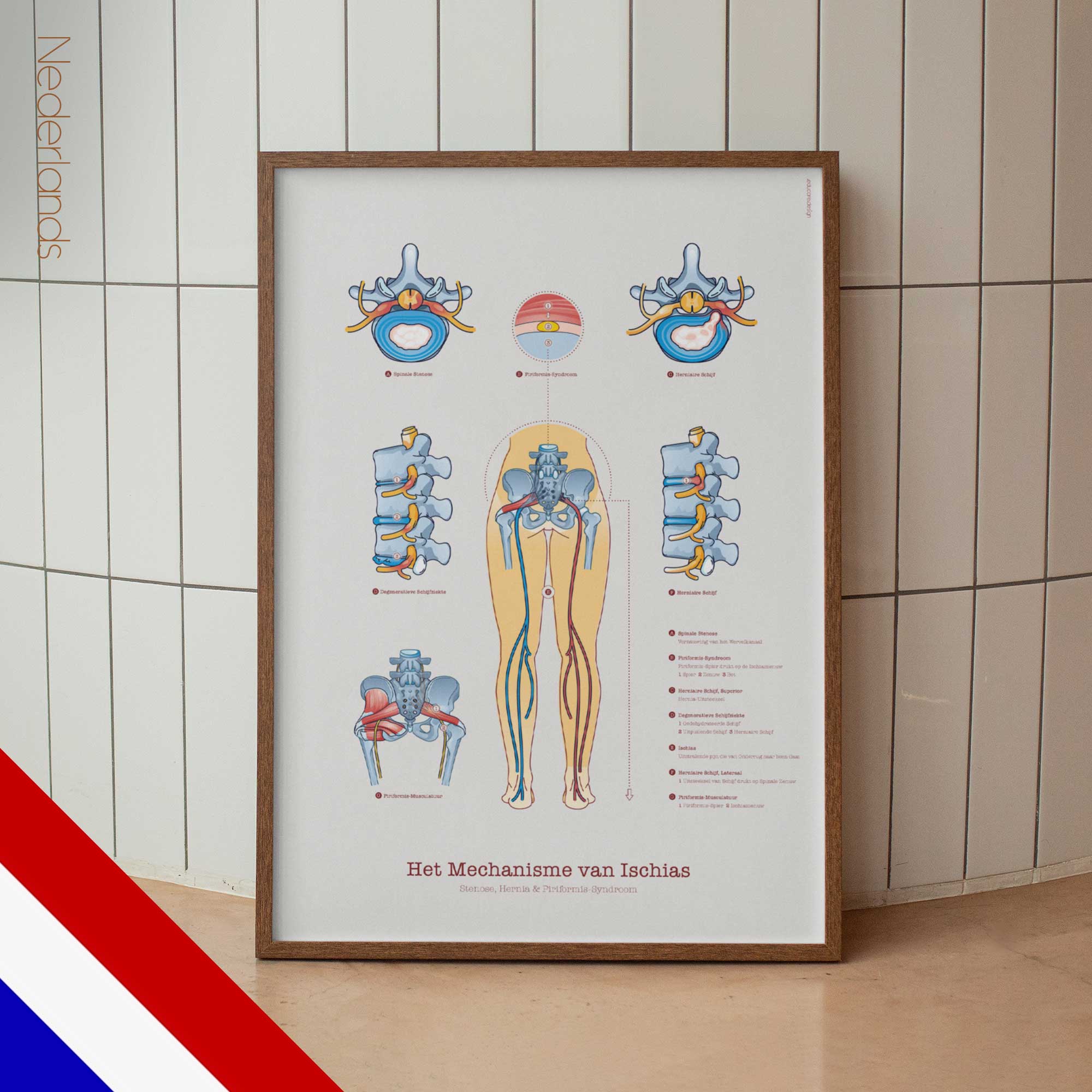
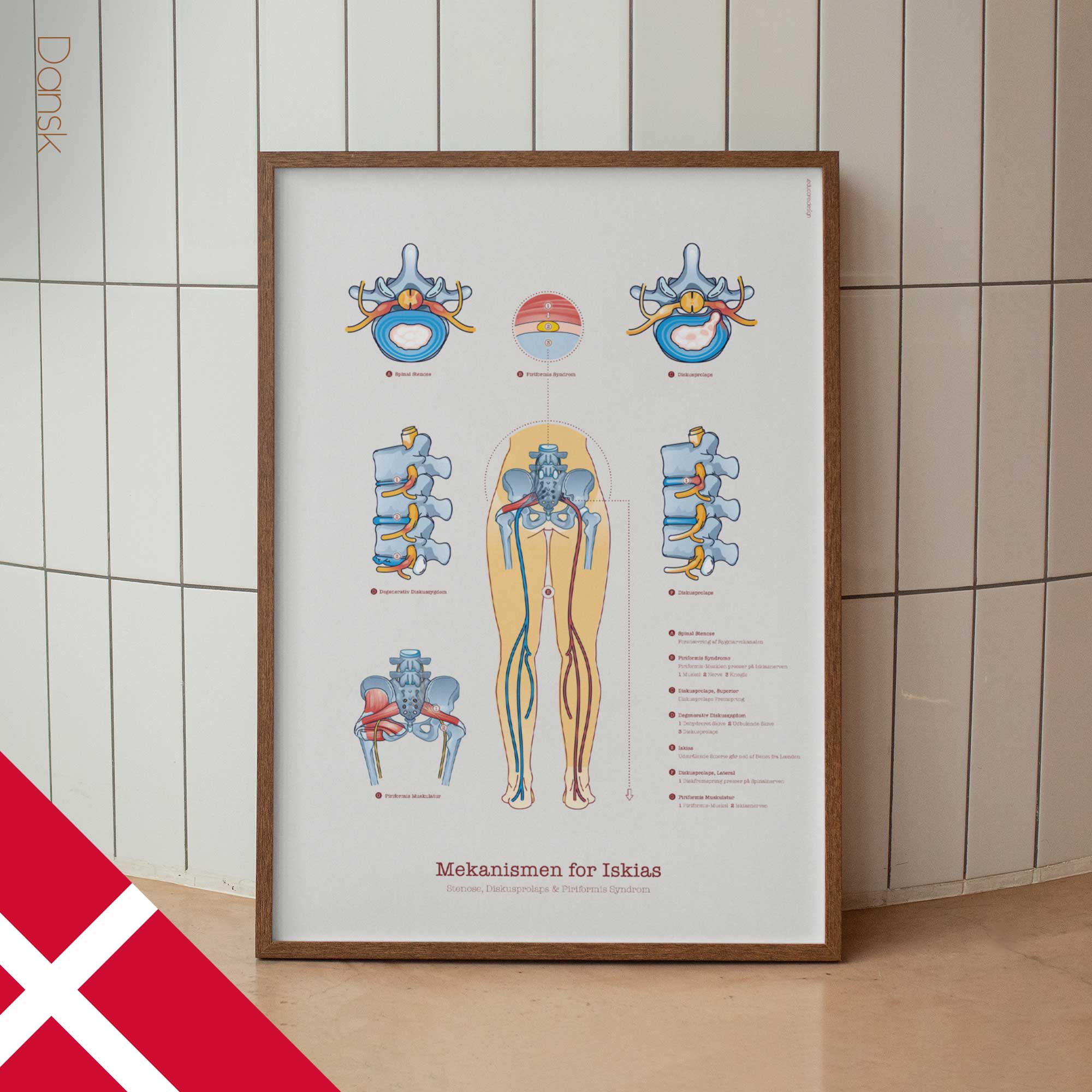
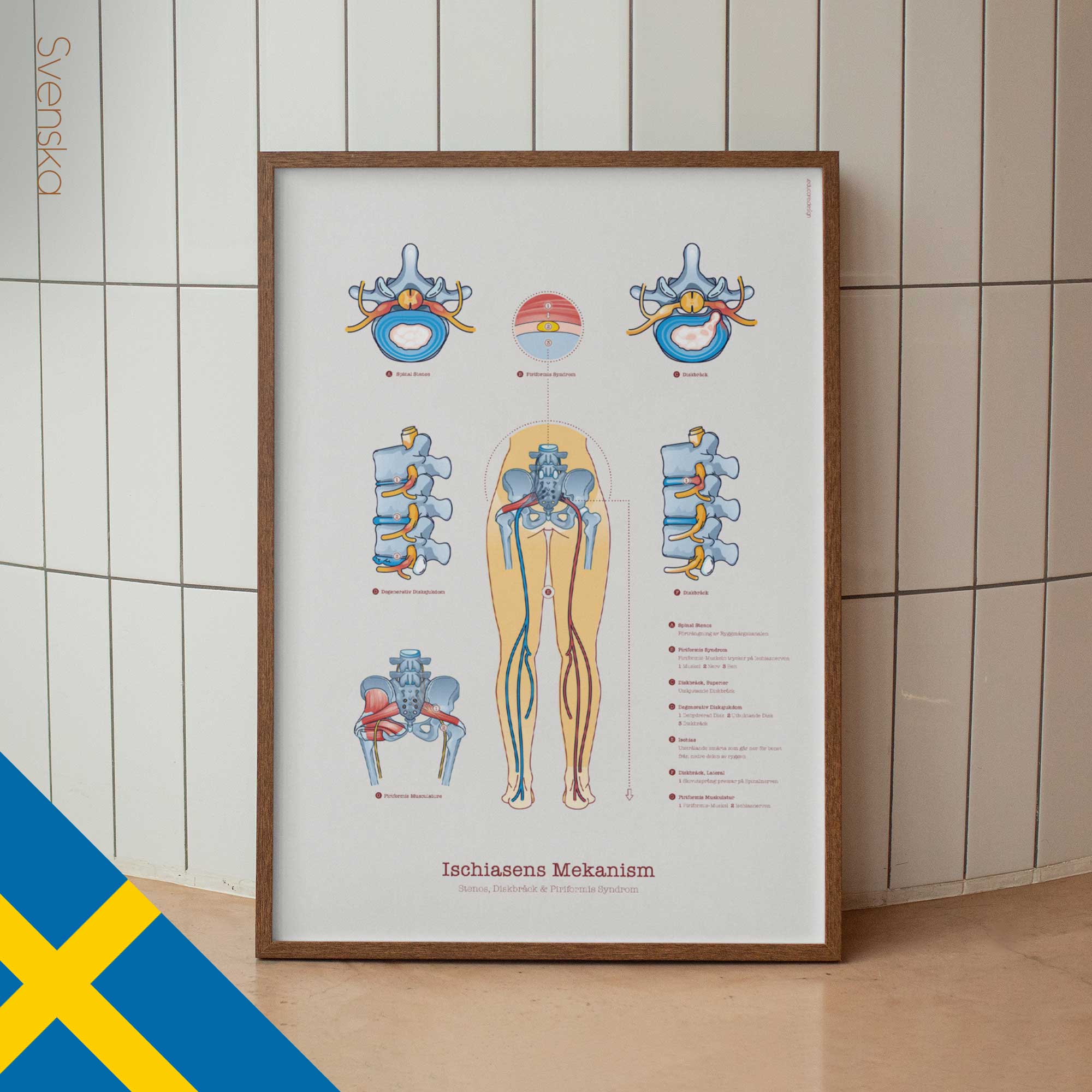
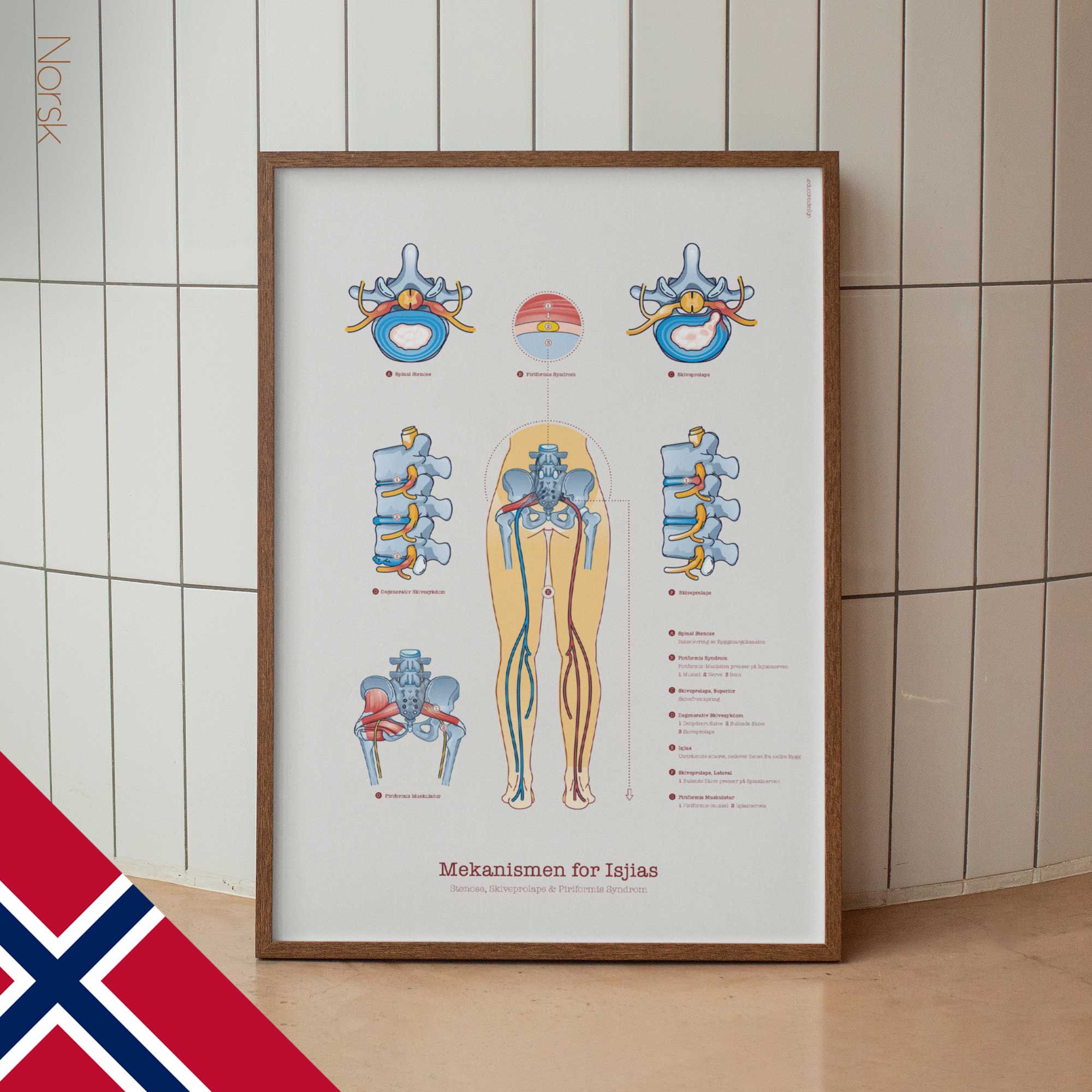
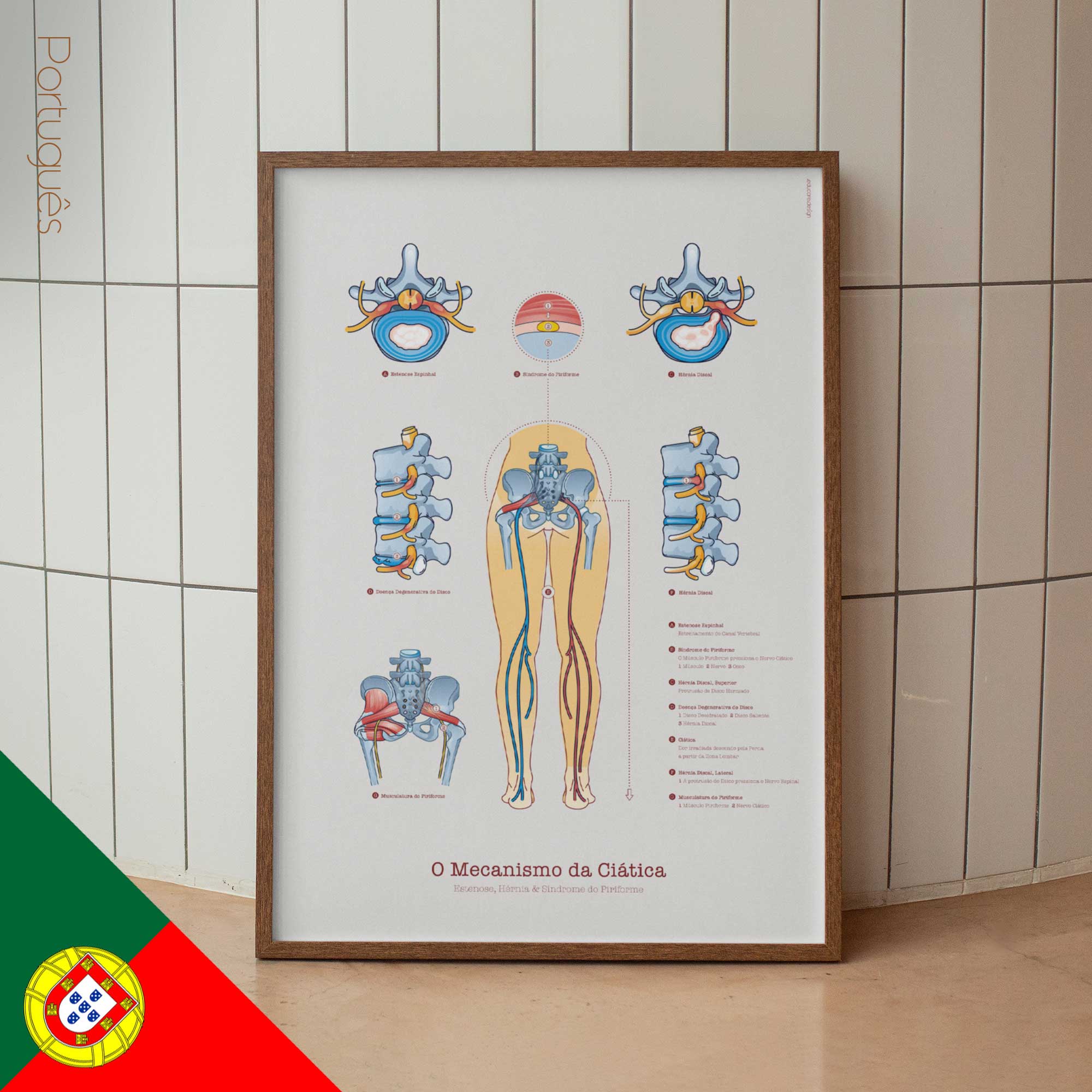
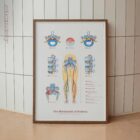
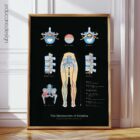
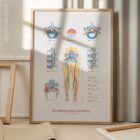
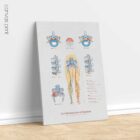
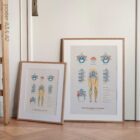
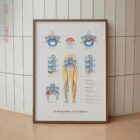
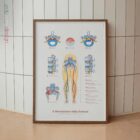
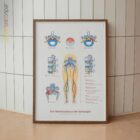
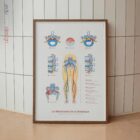
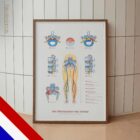
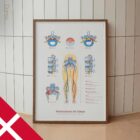
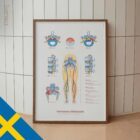
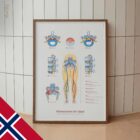
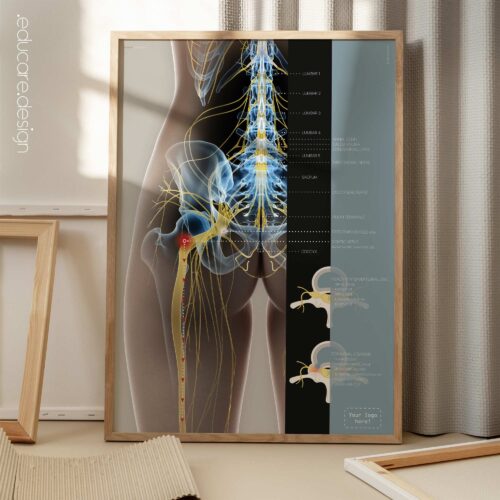
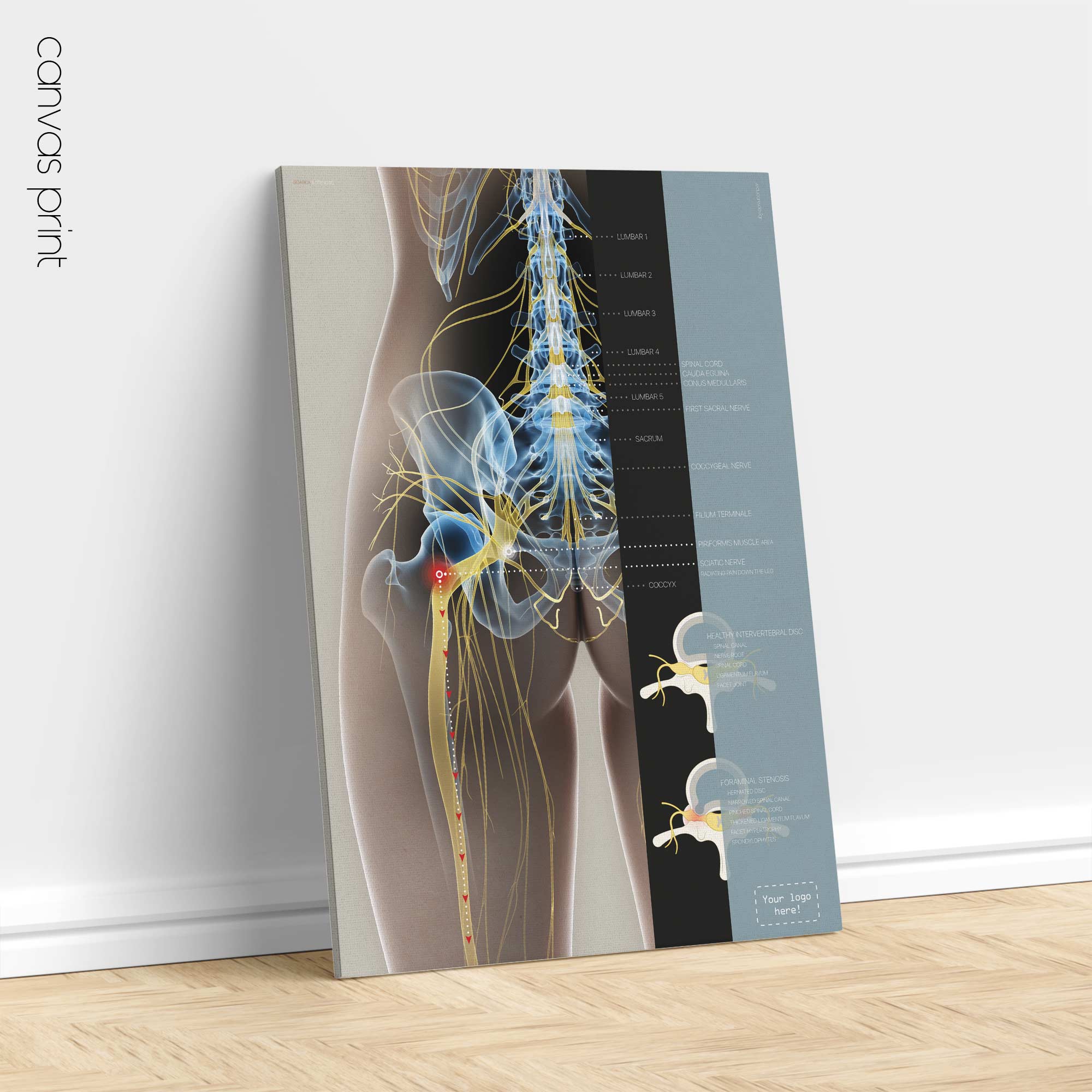
This chart analyses sciatica through its structural and neurological drivers rather than through symptoms alone. Instead of presenting leg pain as an isolated complaint, it traces the anatomical chain from lumbar nerve root irritation to distal radiation along the sciatic nerve — demonstrating how compression at the spine translates into pain, paraesthesia or weakness in the lower limb.
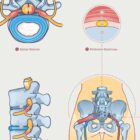
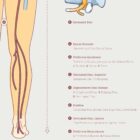
The composition separates the most common causative mechanisms into clearly defined visual scenarios: central spinal canal narrowing, lateral or foraminal disc protrusion, degenerative disc collapse and extra-spinal piriformis entrapment. Cross-sectional lumbar views clarify how disc material or reduced canal diameter compromises neural space, while lateral perspectives demonstrate how foraminal encroachment affects exiting nerve roots. The pelvic illustration then follows the sciatic nerve distally, reinforcing radicular distribution patterns down the posterior thigh, calf and foot.
Rather than overwhelming the viewer with complex pathology, the design focuses on clinical clarity by presenting spinal stenosis and canal narrowing, central and lateral disc herniation, degenerative disc changes and piriformis muscle compression of the sciatic nerve within one integrated framework. The chart also illustrates radicular pain patterns extending into the lower limb, allowing practitioners to differentiate between discogenic nerve root compression and peripheral muscular entrapment during consultation.
By distinguishing central compression, foraminal narrowing and extra-spinal entrapment, the artwork supports differential explanation of lumbar radiculopathy, nerve root irritation and sciatic neuropathic pain. It clarifies the relationship between intervertebral disc pathology, spinal canal dimensions and mechanical nerve tension — all within a visually accessible format.
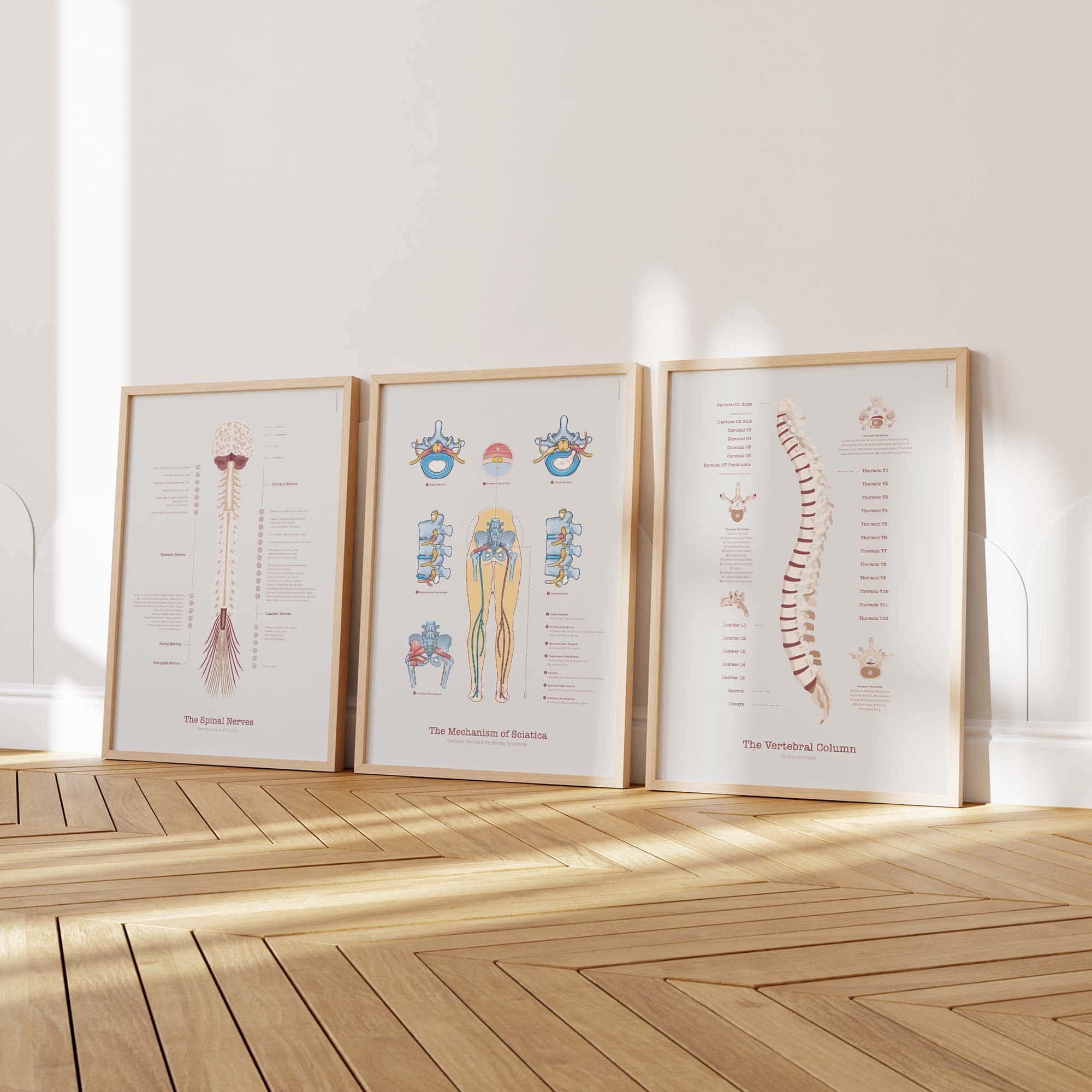
Mounted in a treatment environment, this becomes a high-efficiency clinical communication tool. Instead of describing nerve inflammation or compression abstractly, you can indicate the precise anatomical interface where disc, canal or muscle interacts with neural tissue. The result is faster patient comprehension, clearer diagnostic framing and stronger confidence in treatment rationale.
This is not a generic back-pain illustration. It is a structured anatomical explanation of sciatic nerve compression mechanisms, designed for precise patient education and professional clarity.
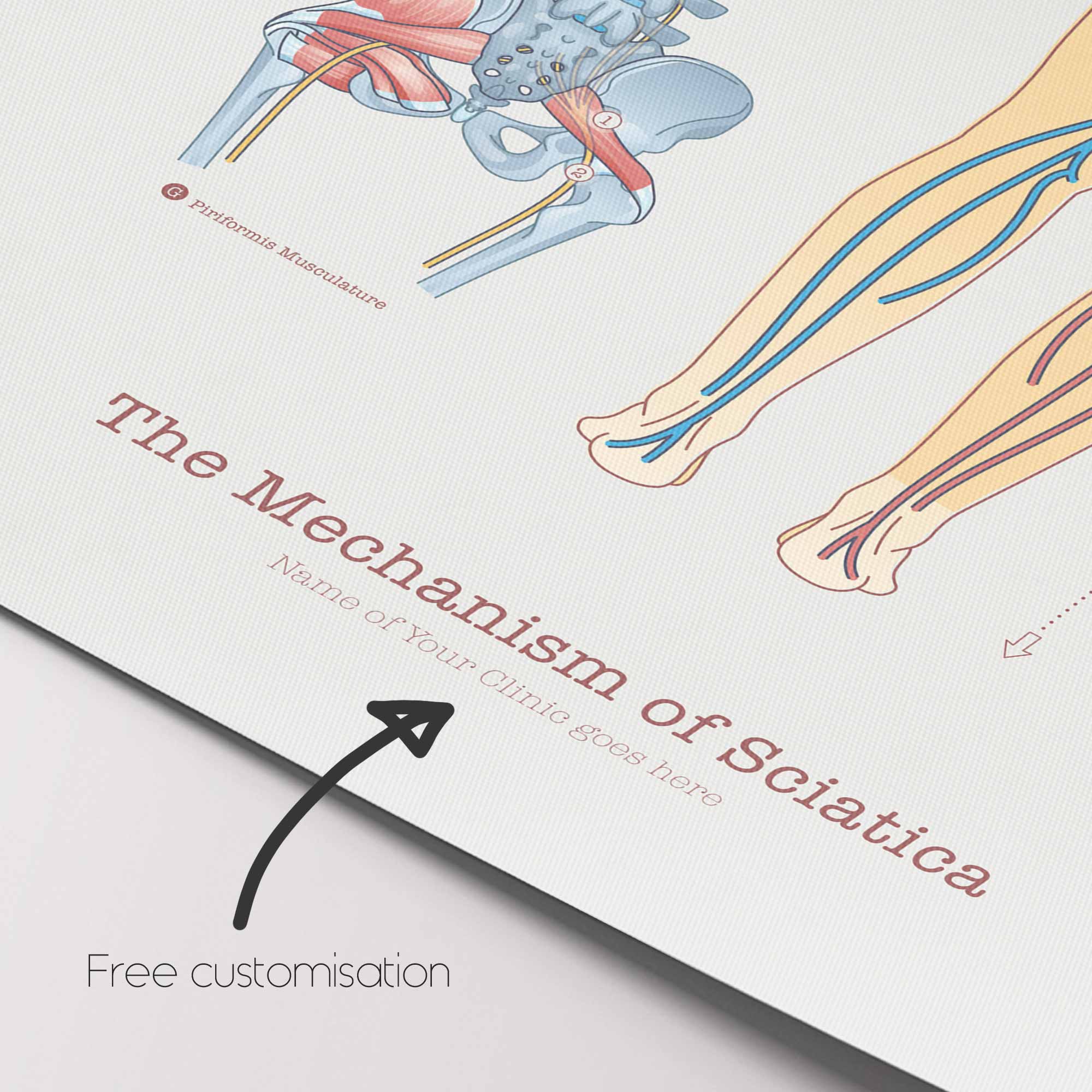
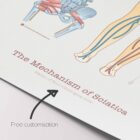
Free customisation with your clinic’s name.
For this artwork we offer to add your clinic’s name (or website address) for free! The name will go instead of the current sub-headline on the artwork; view an illustration of this in the image gallery.
 View this chart here on YouTube.
Black Edition.
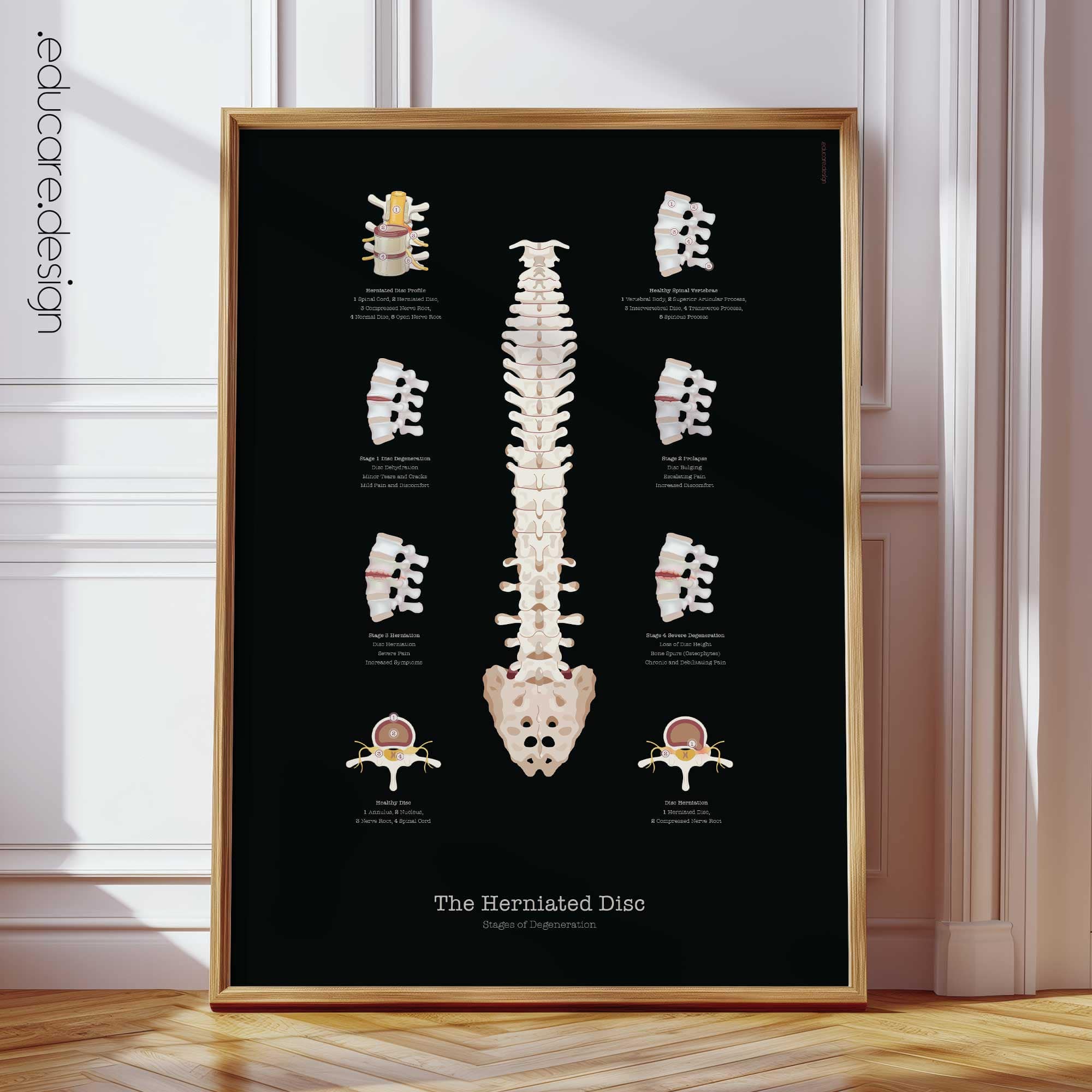
This chart is available to order in a special black edition, which can be previewed in the image gallery.
🇬🇧 View more details of the English version.
🇮🇹 Vedi i dettagli della versione italiana.
🇪🇸 Ver detalles de la versión en español.
🇩🇪 Details zur deutschen Version anzeigen.
🇫🇷 Voir les détails de la version française.
🇳🇱 Bekijk details van de Nederlandse versie.
🇵🇹 Veja mais detalhes da versão portuguesa.
🇸🇪 Se fler detaljer om den svenska versionen.
🇳🇴 Se flere detaljer om den norske versjonen.
🇩🇰 Se flere detaljer af den danske version.
Make it part of your clinic!
⬇ Order here.