














Part of:
Movement & Muscles
Also relevant to:
Neuro & Regulation
Often displayed with:
Spinal Nerves Set, Pelvic Ligaments and Sacroiliac Biomechanics
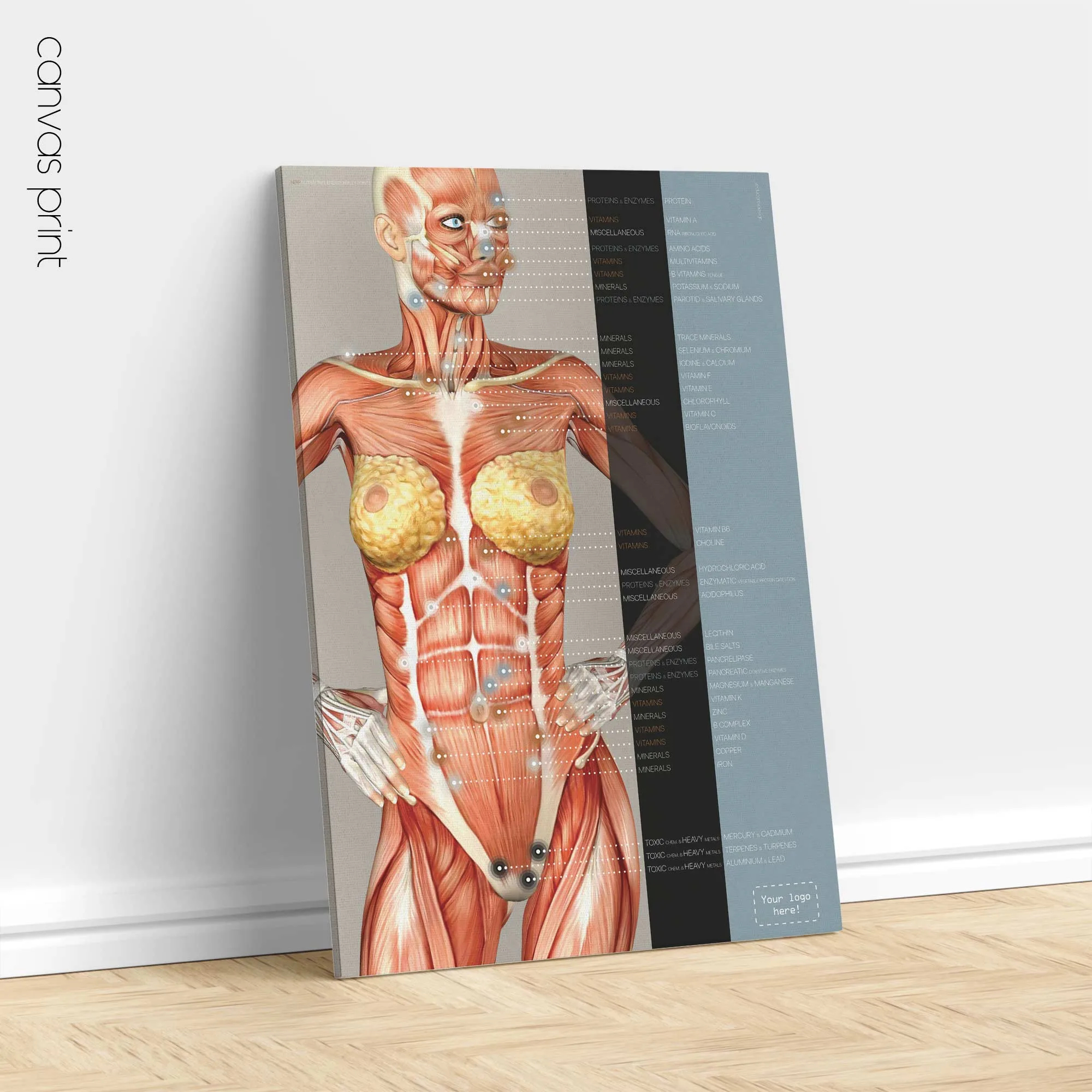
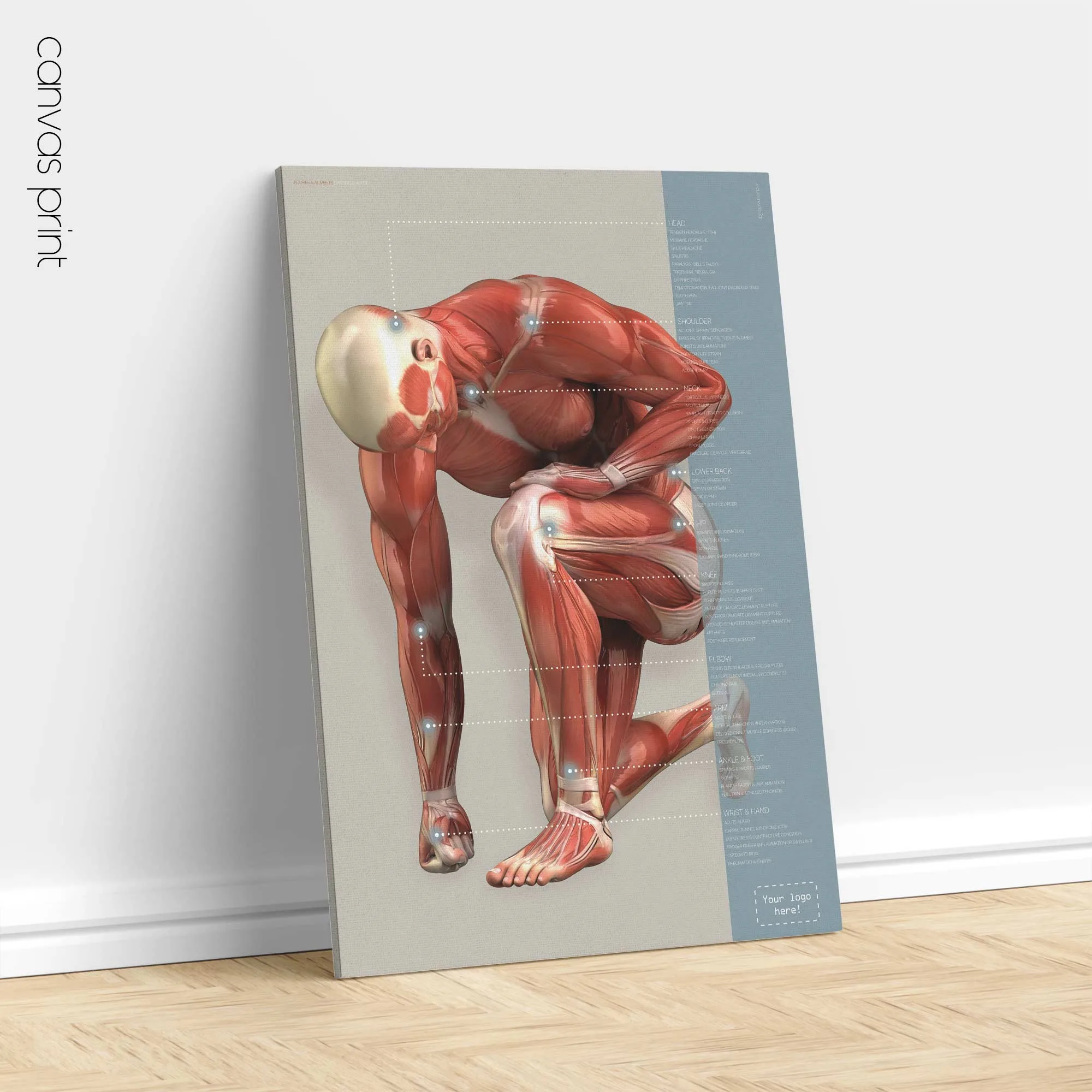
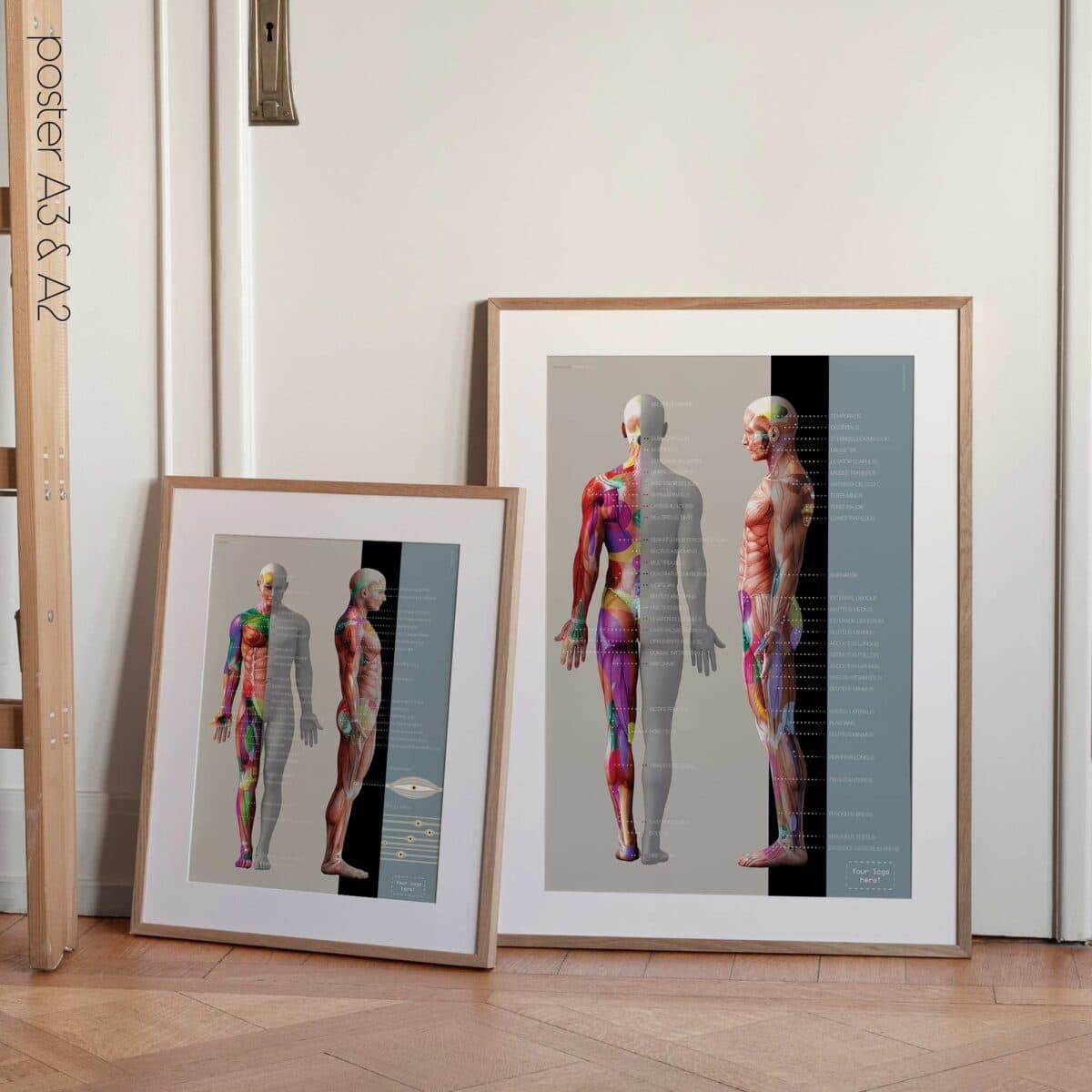
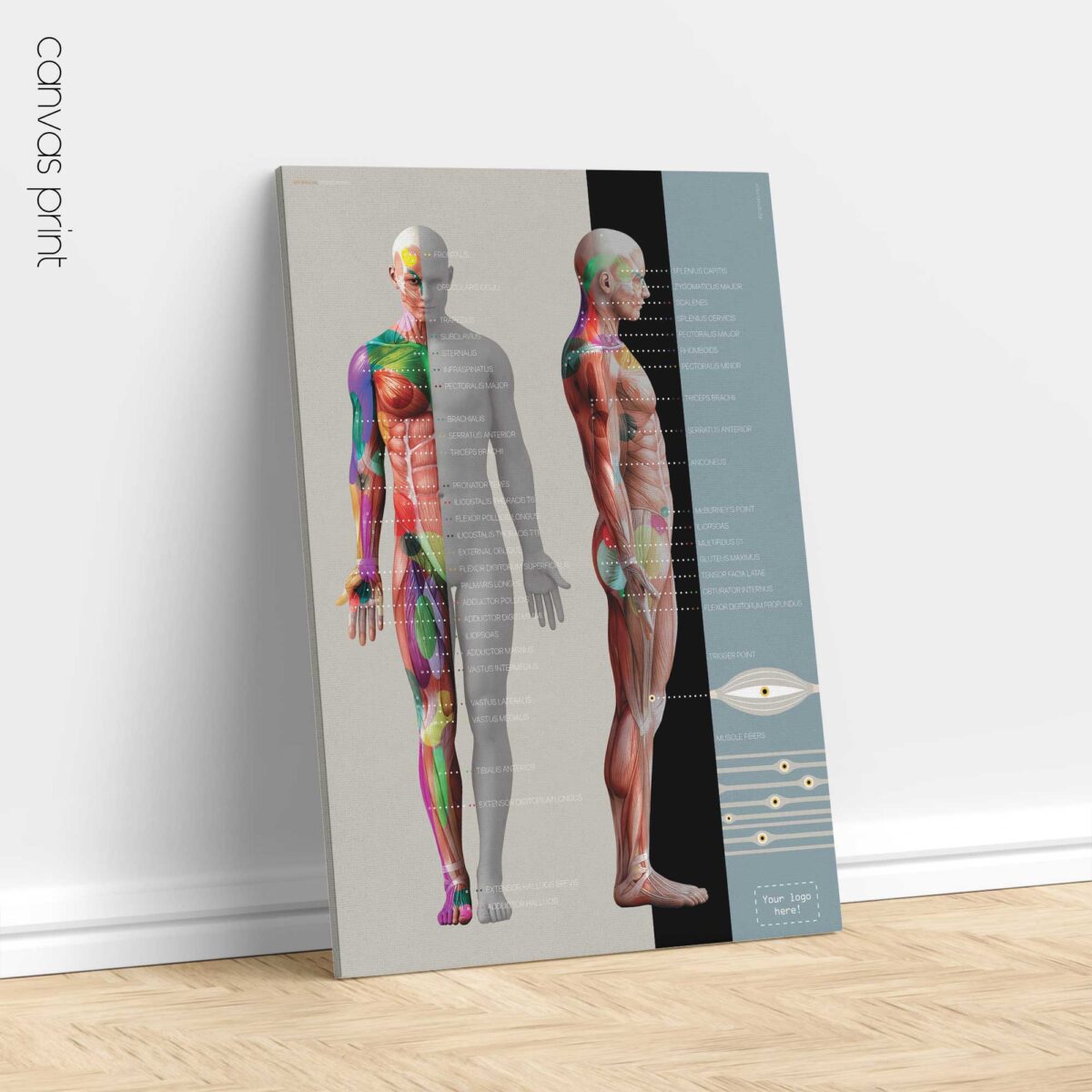
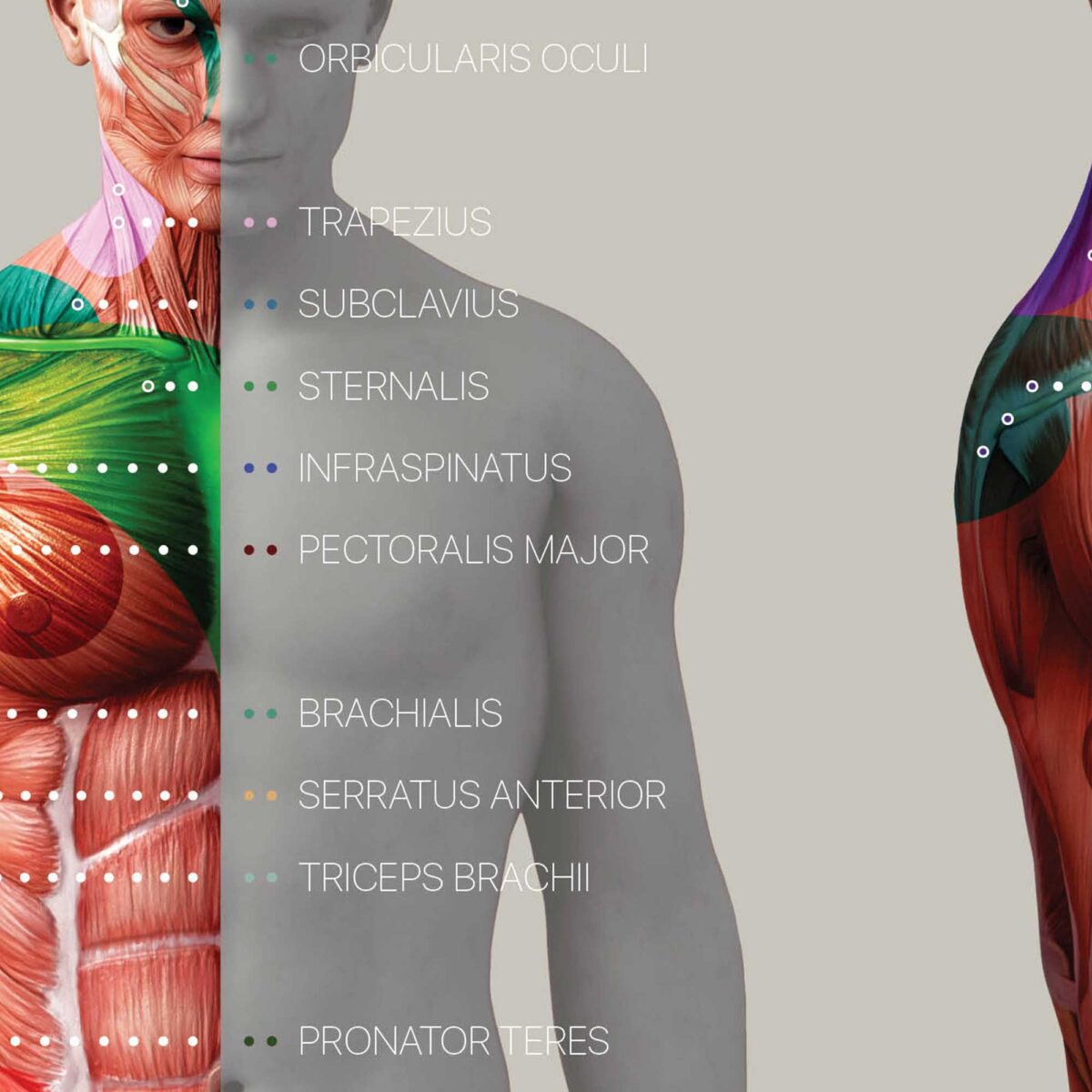
Available as poster prints (frames not included), canvas prints (built-in-frames), and print-it-yourself PDF files. Browse the image gallery to view the options for this artwork, incl. types and sizes, and optional logo placement. ⚠️ Names of muscles and trigger points are in medical latin.
★★★★★ “I ordered 5 pictures in different designs and sizes, all of them look perfect and make my practice rooms more beautiful…” – 🇩🇪 Physiotherapie Hagen
✓ How this chart supports patient education.
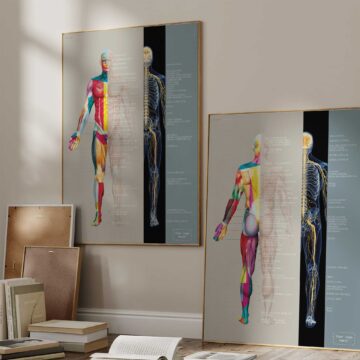
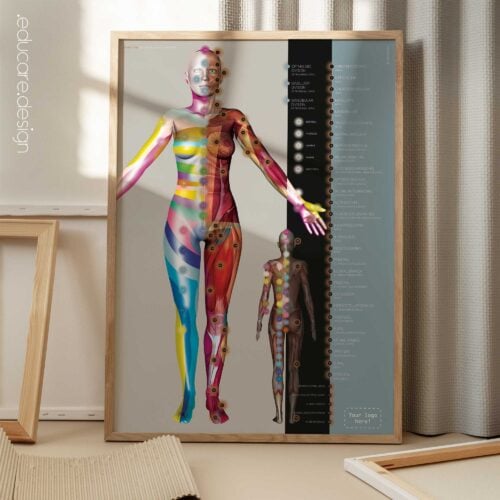
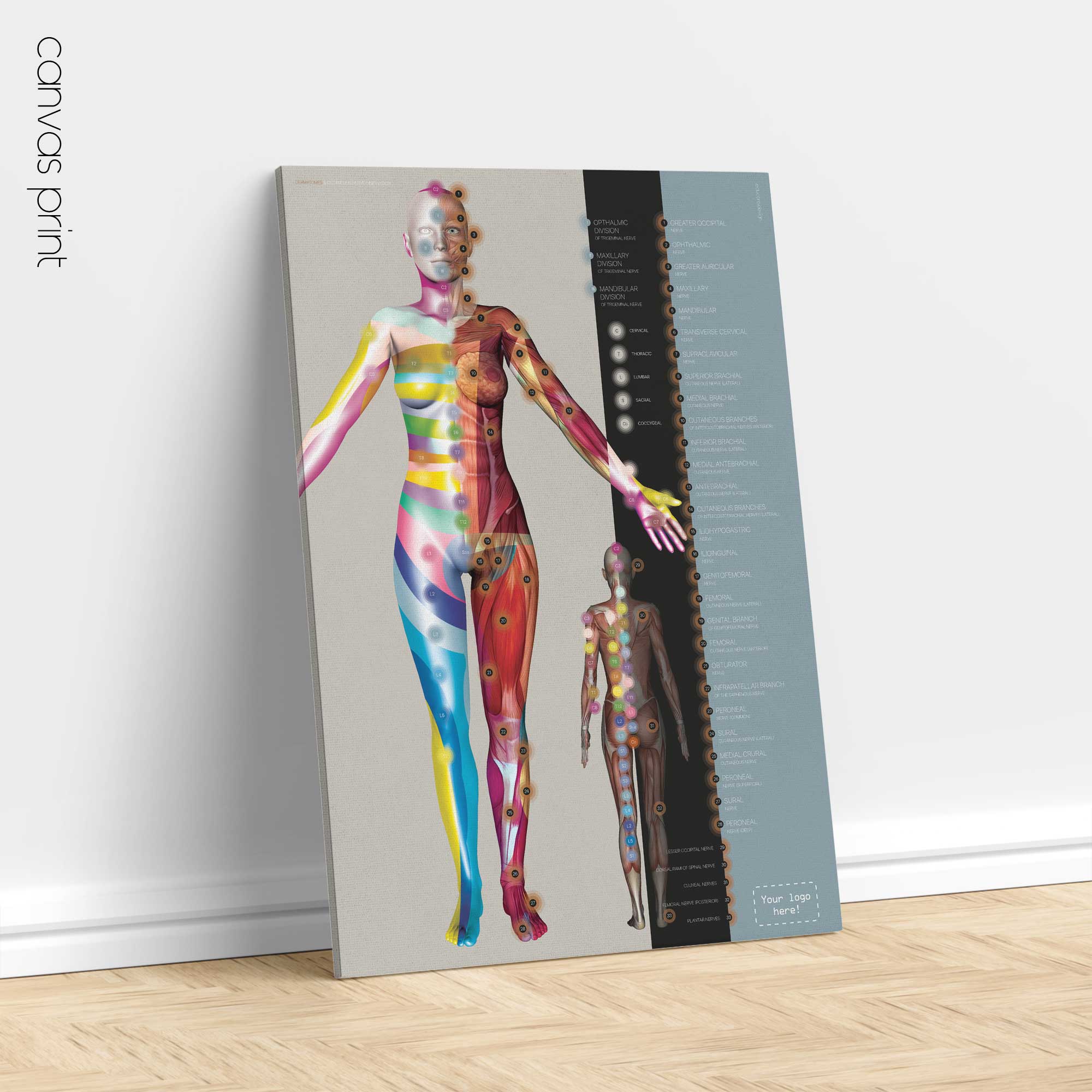
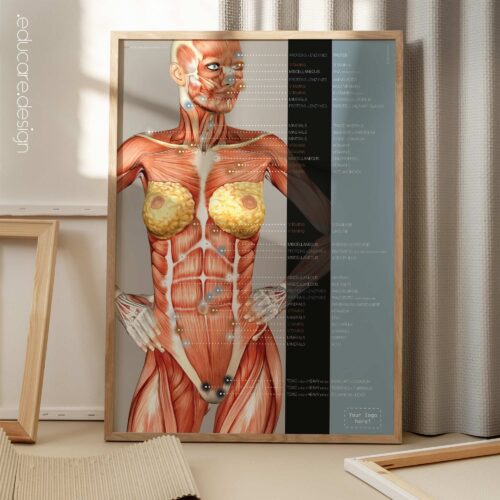
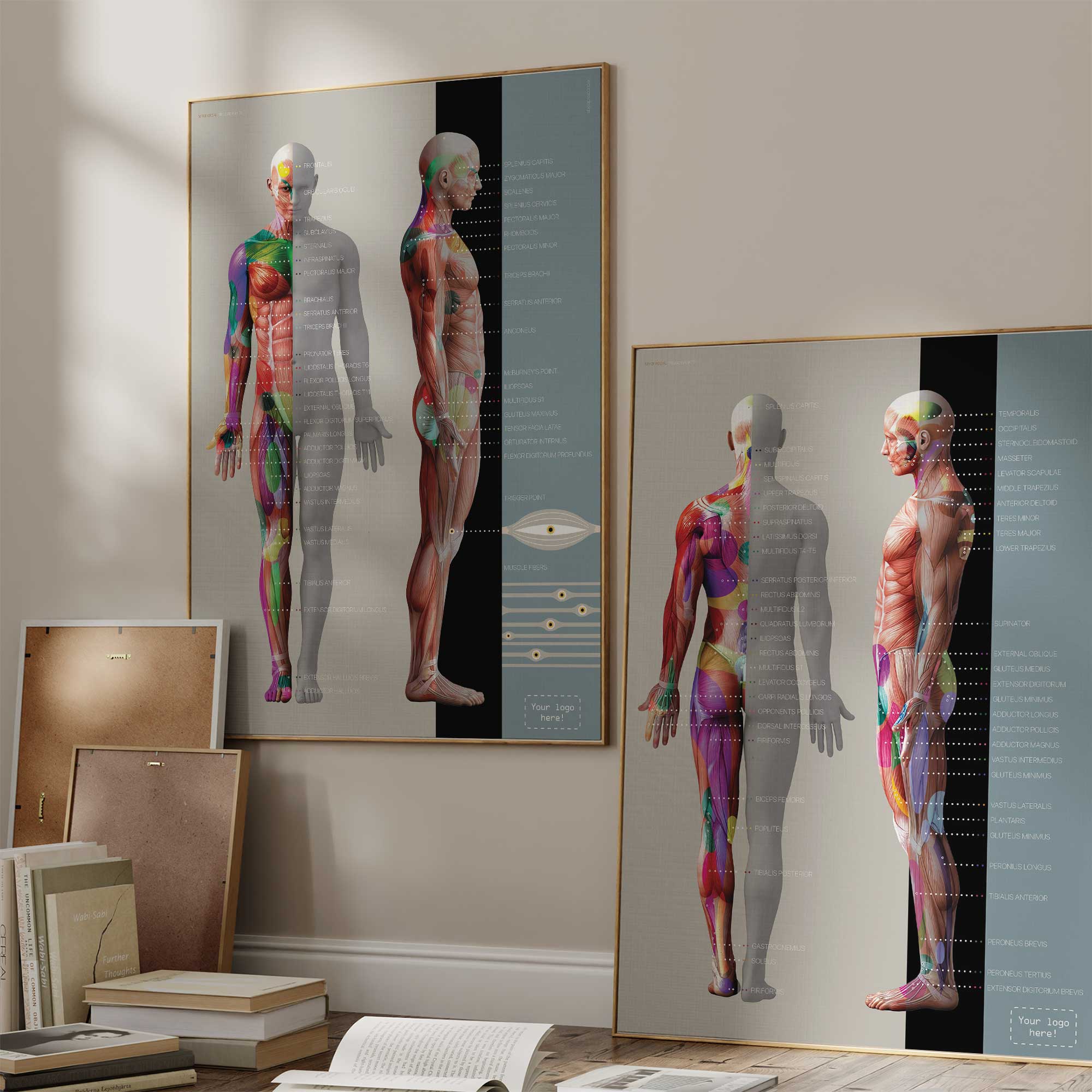
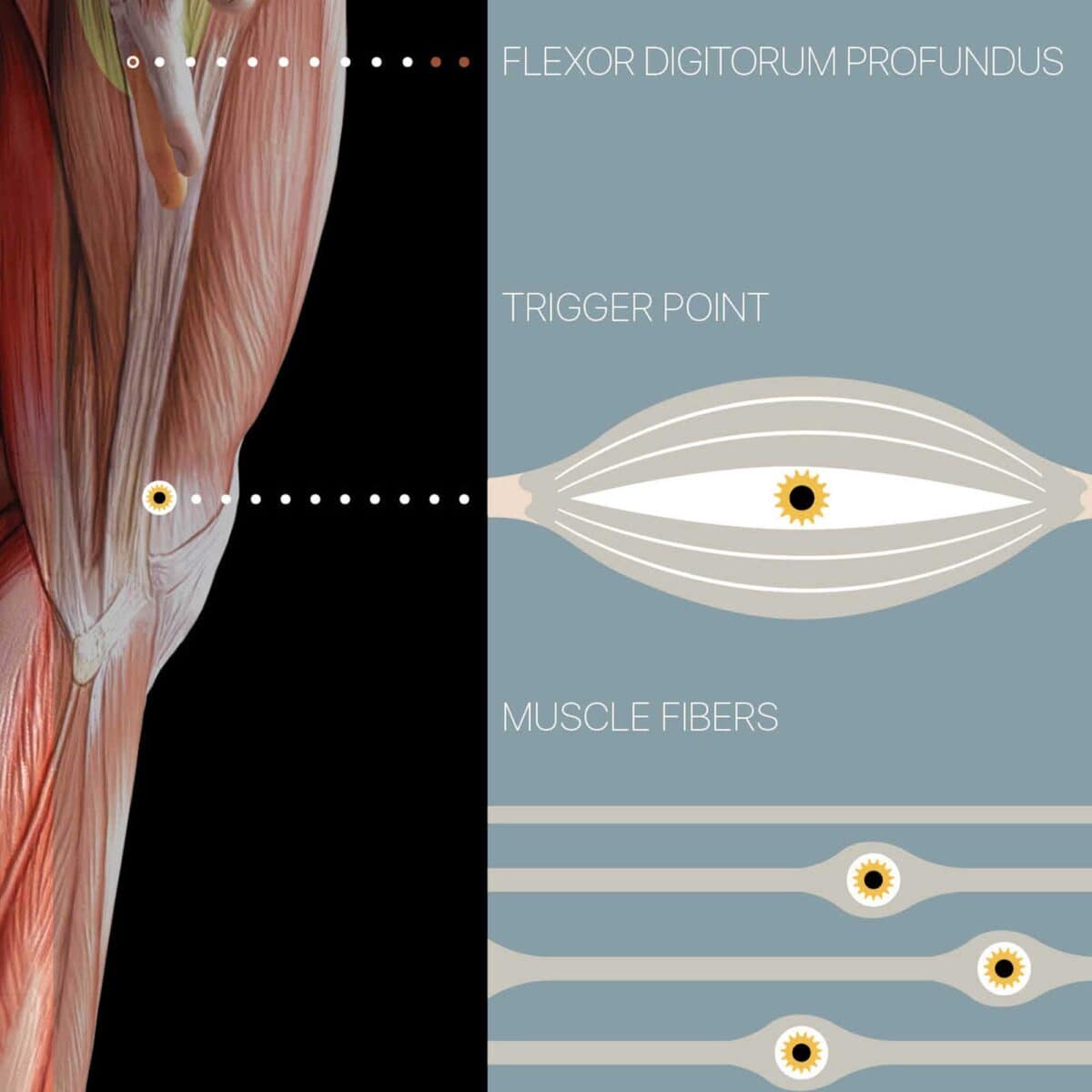
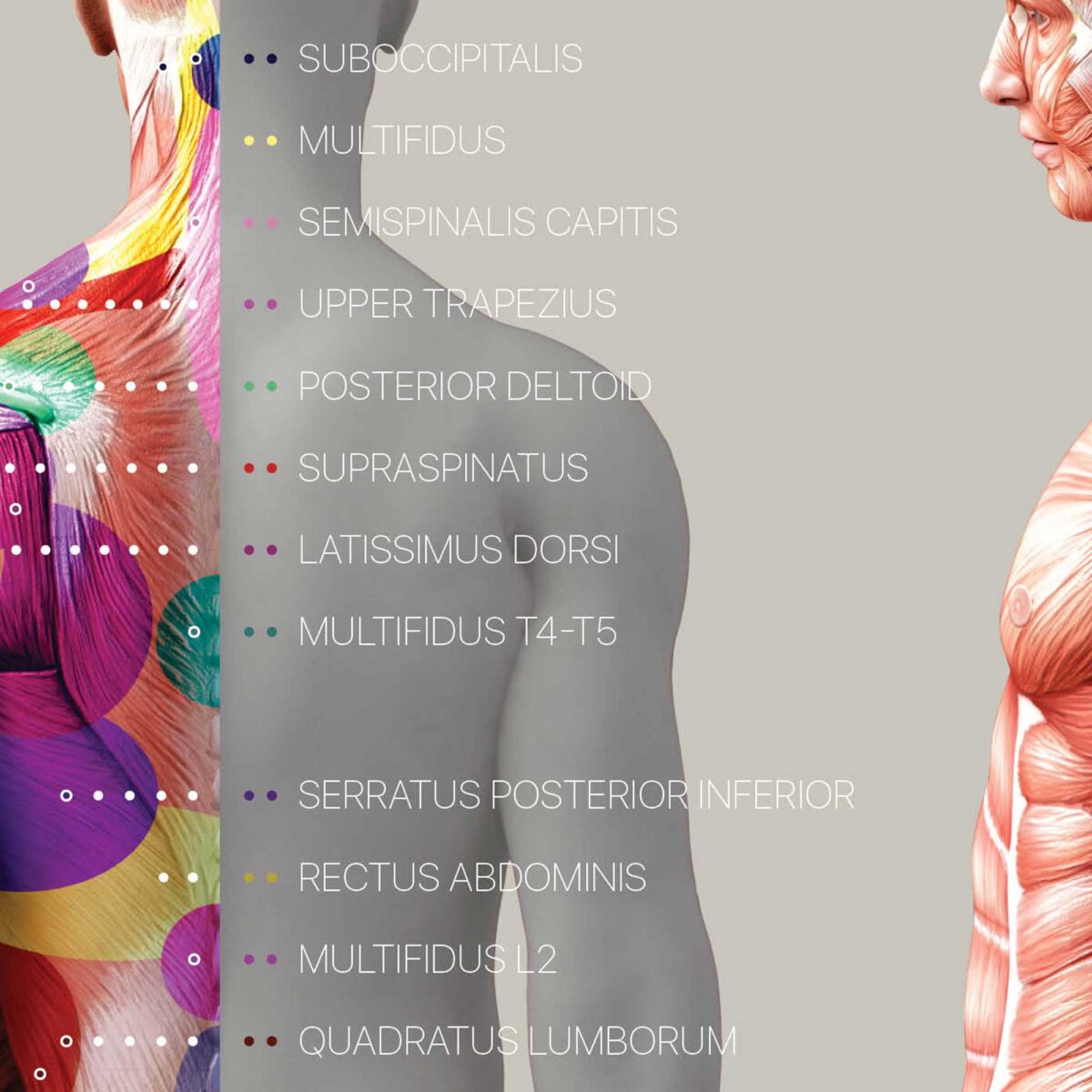
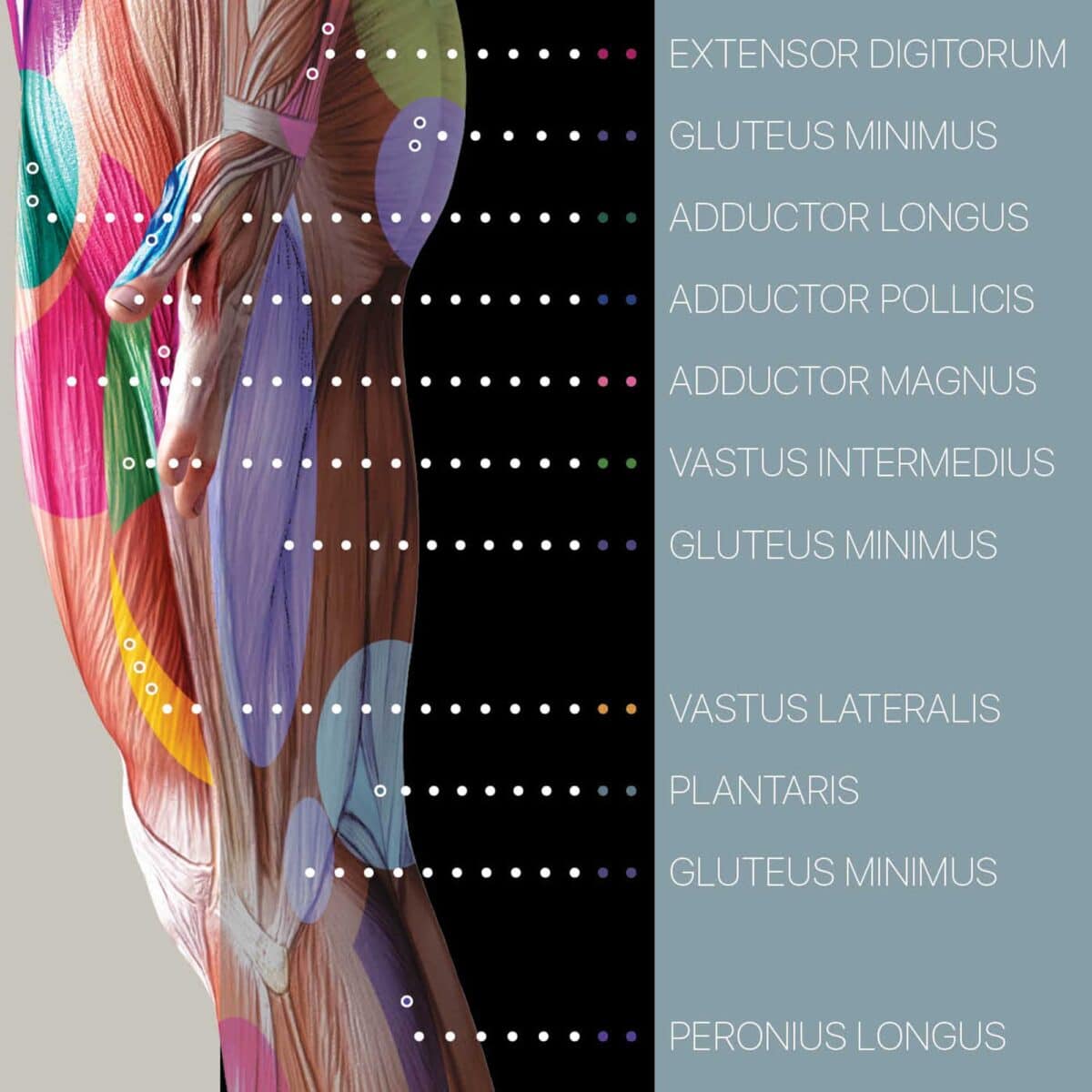
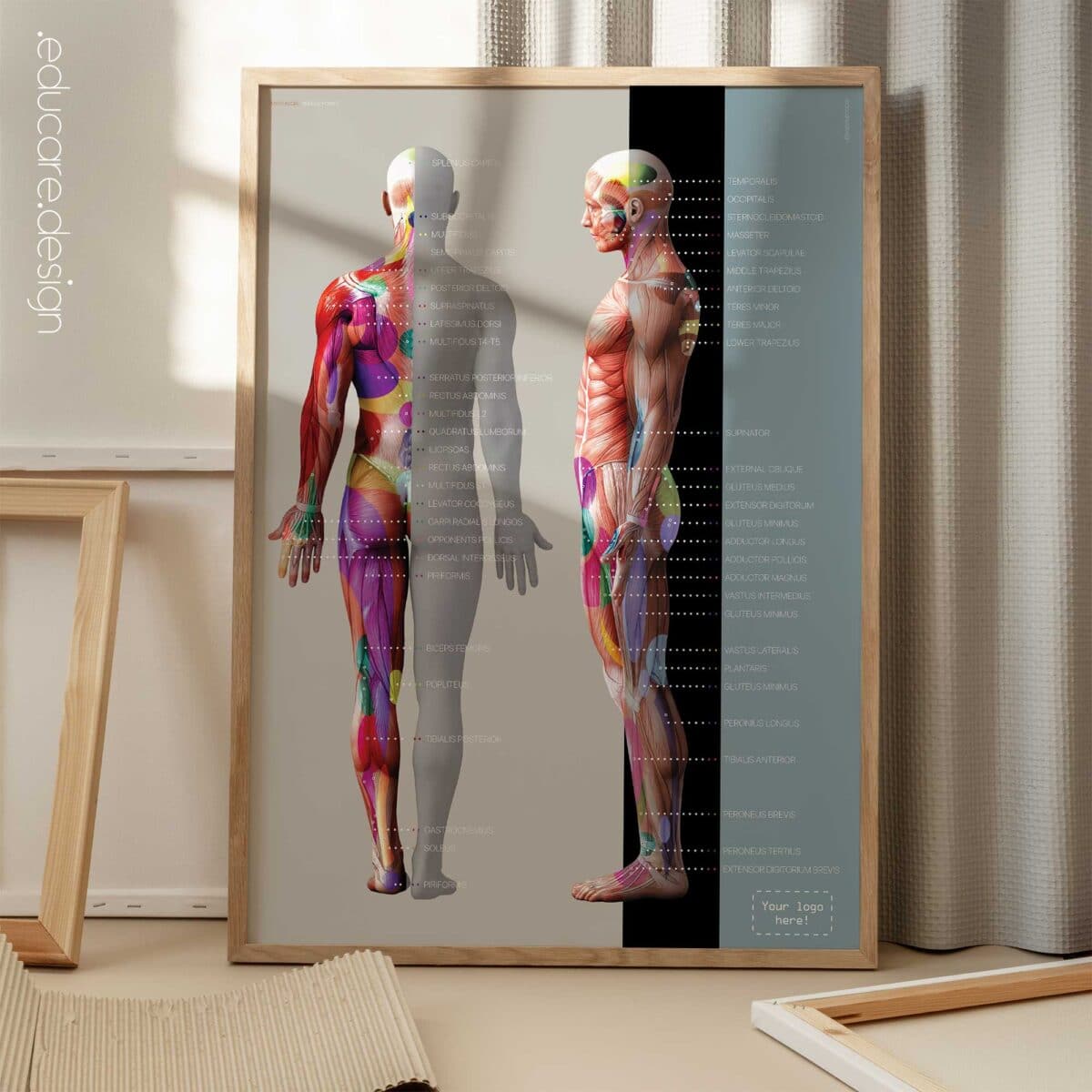
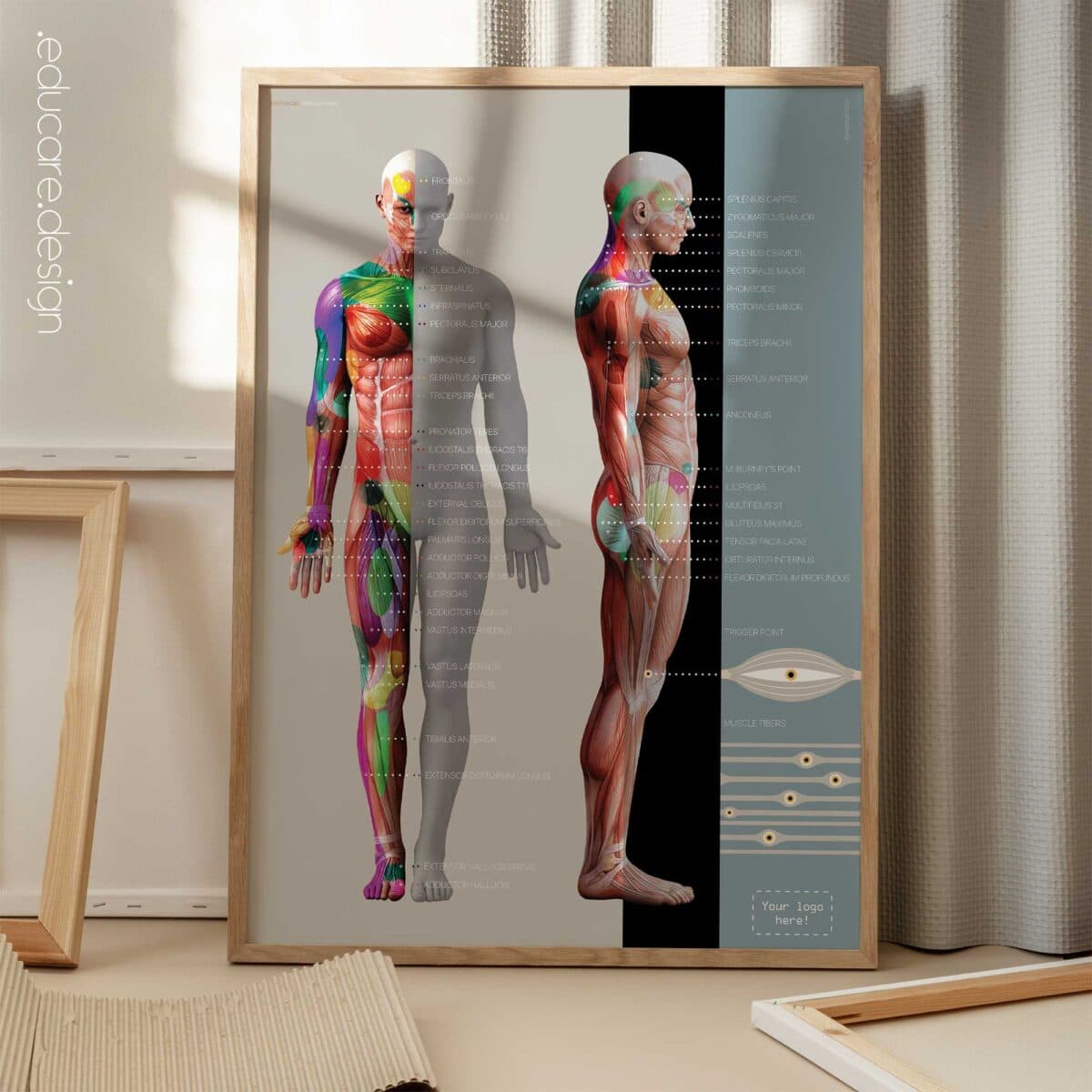
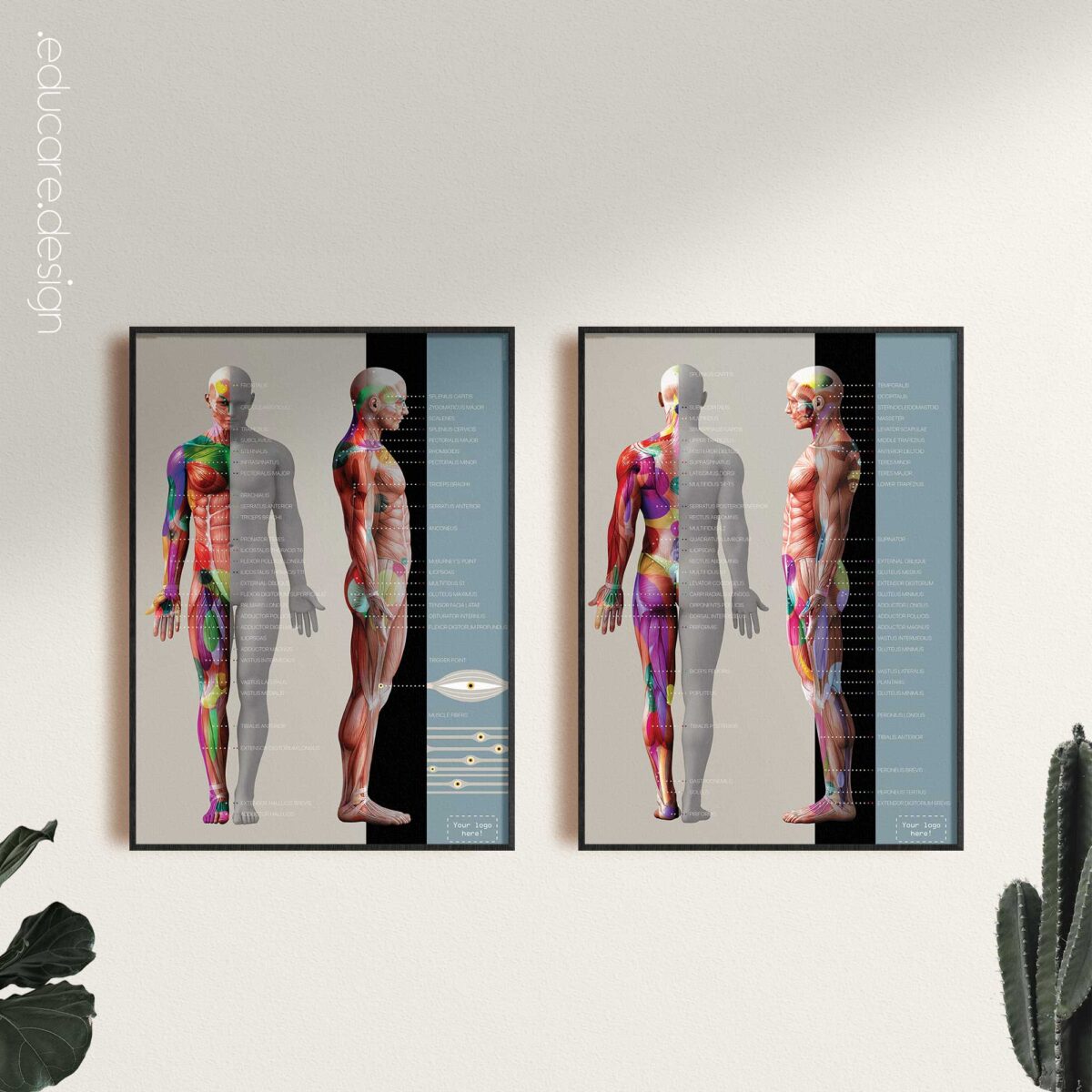
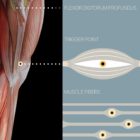
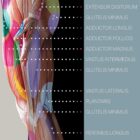
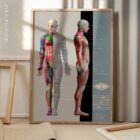
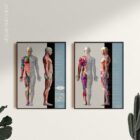
This Myofascial Trigger Points Set helps practitioners explain myofascial trigger points, muscle pain patterns and the relationship between local muscle tension and referred pain areas. It gives patients a clear visual reference for understanding how trigger points can relate to familiar pain patterns in the head, neck, shoulders, back, hips, arms and legs. Useful for explaining trigger point anatomy, referred pain patterns, myofascial pain, muscle tension, manual therapy findings and treatment-room education in physiotherapy, chiropractic, osteopathy, massage therapy, sports therapy and rehabilitation clinics.