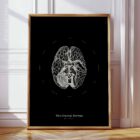
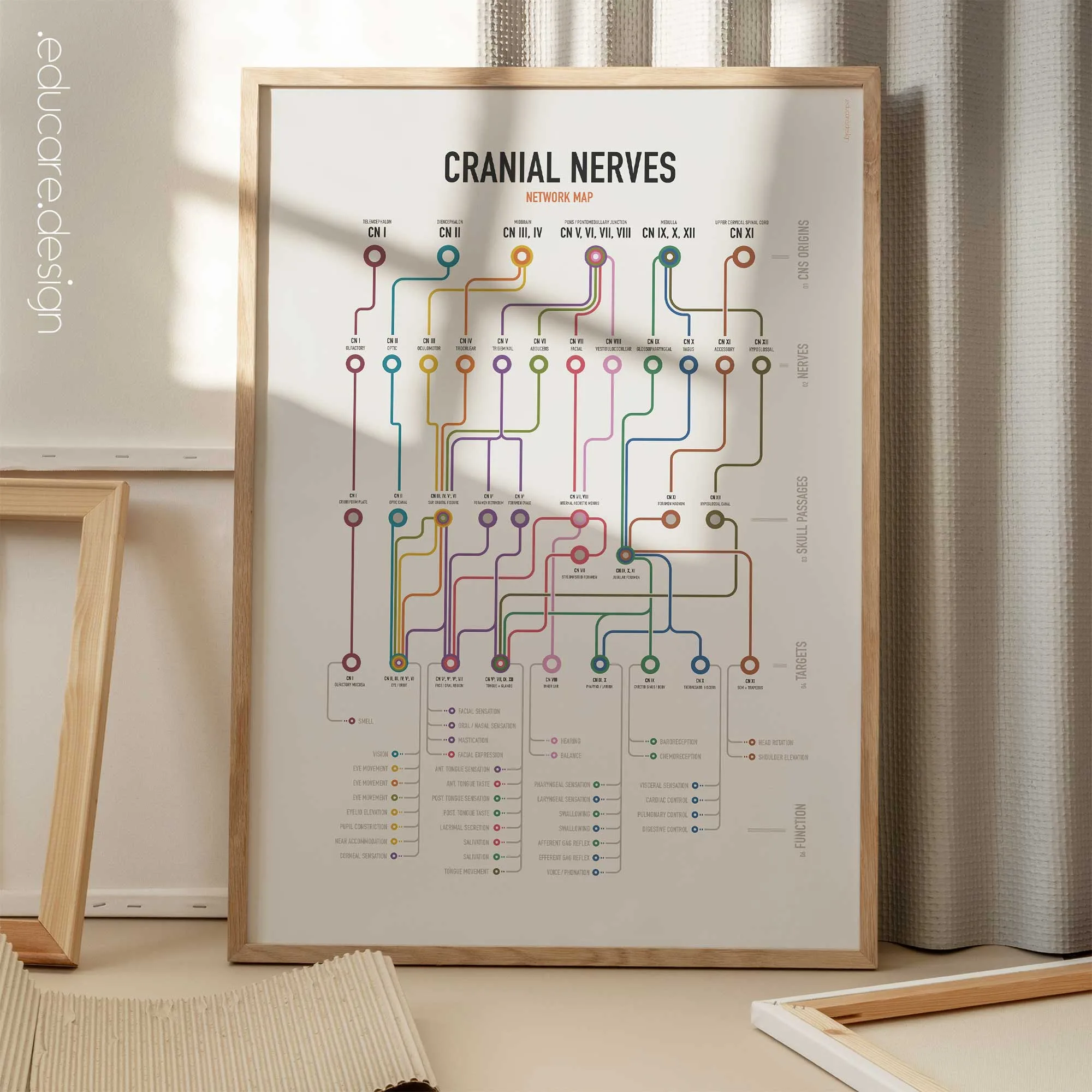
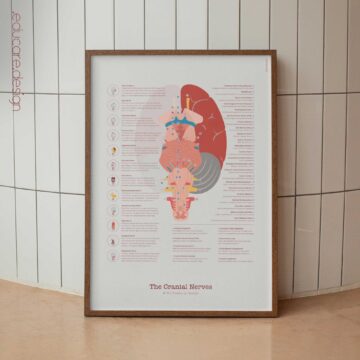
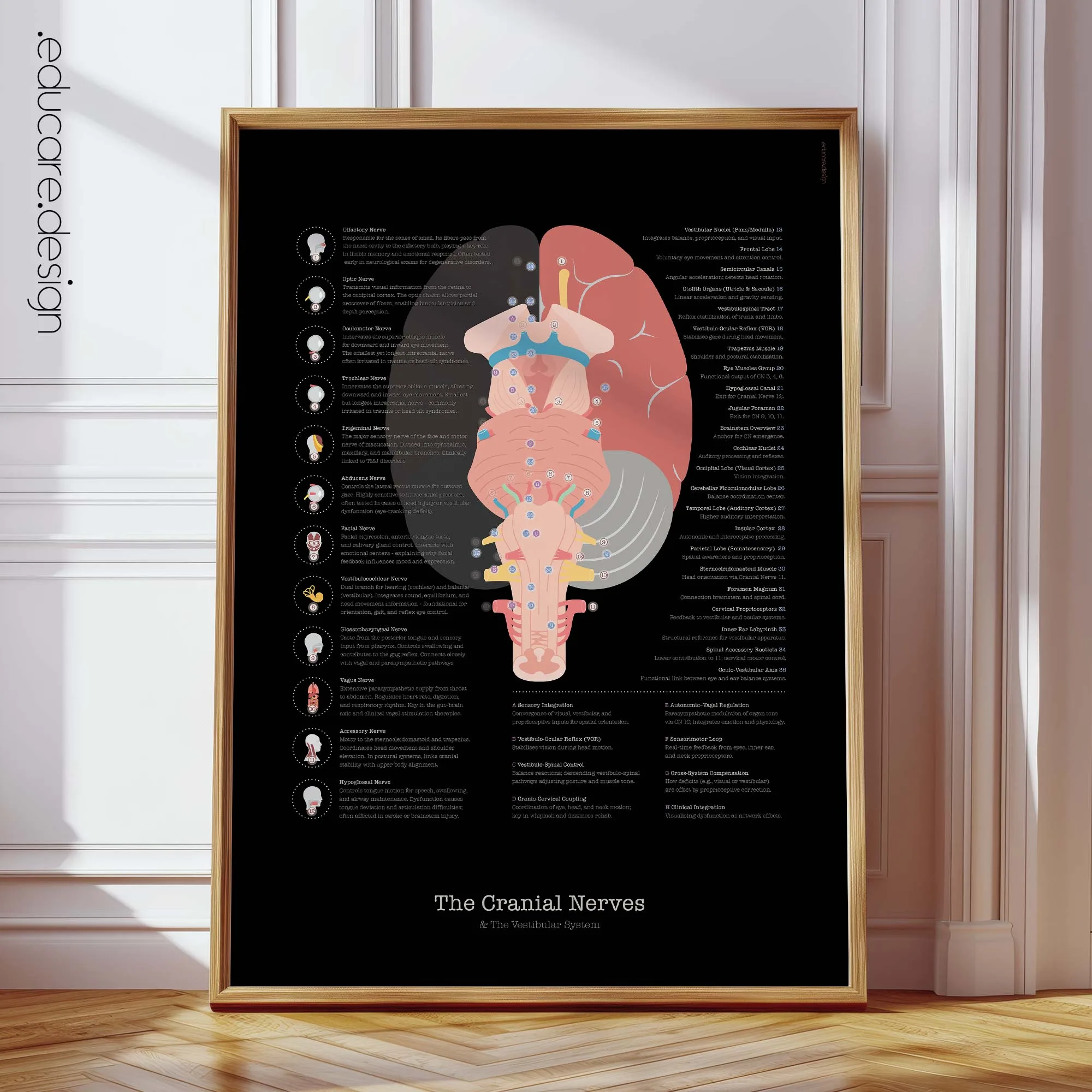
This vintage anatomy chart presents the twelve cranial nerves as they emerge from the base of the brain, revealing the intricate network that connects the brain to the sensory and motor systems of the head and neck.
Cranial nerves play a fundamental role in human physiology. They transmit sensory information such as smell, vision, hearing and taste, while also controlling eye movements, facial expression, swallowing and other essential functions. Unlike spinal nerves, these neural pathways arise directly from the brain, forming a compact yet highly specialised communication system.
The illustration highlights the cranial nerves as they appear on the inferior surface of the brain. Each nerve is carefully identified with numbered references placed directly on the anatomy and linked to a circular index surrounding the figure. This layout allows the viewer to trace the nerves from their origins while maintaining the visual clarity of the overall composition.
Rendered in the style of classical anatomical engraving, the chart uses fine linework and controlled shading to communicate depth and anatomical detail. The delicate tonal modelling emphasises the complex contours of the brainstem, cerebellum and cerebral hemispheres. Adapted to the educare.design aesthetic, the artwork combines this historical illustration style with precise typography and a restrained colour palette. The result is a chart that integrates naturally into contemporary clinical interiors while preserving the character of traditional anatomical prints.
Displayed in a clinic, consultation room or teaching environment, The Cranial Nerves serves both as a neurological reference and as a distinctive visual statement — highlighting the remarkable complexity of the human nervous system.
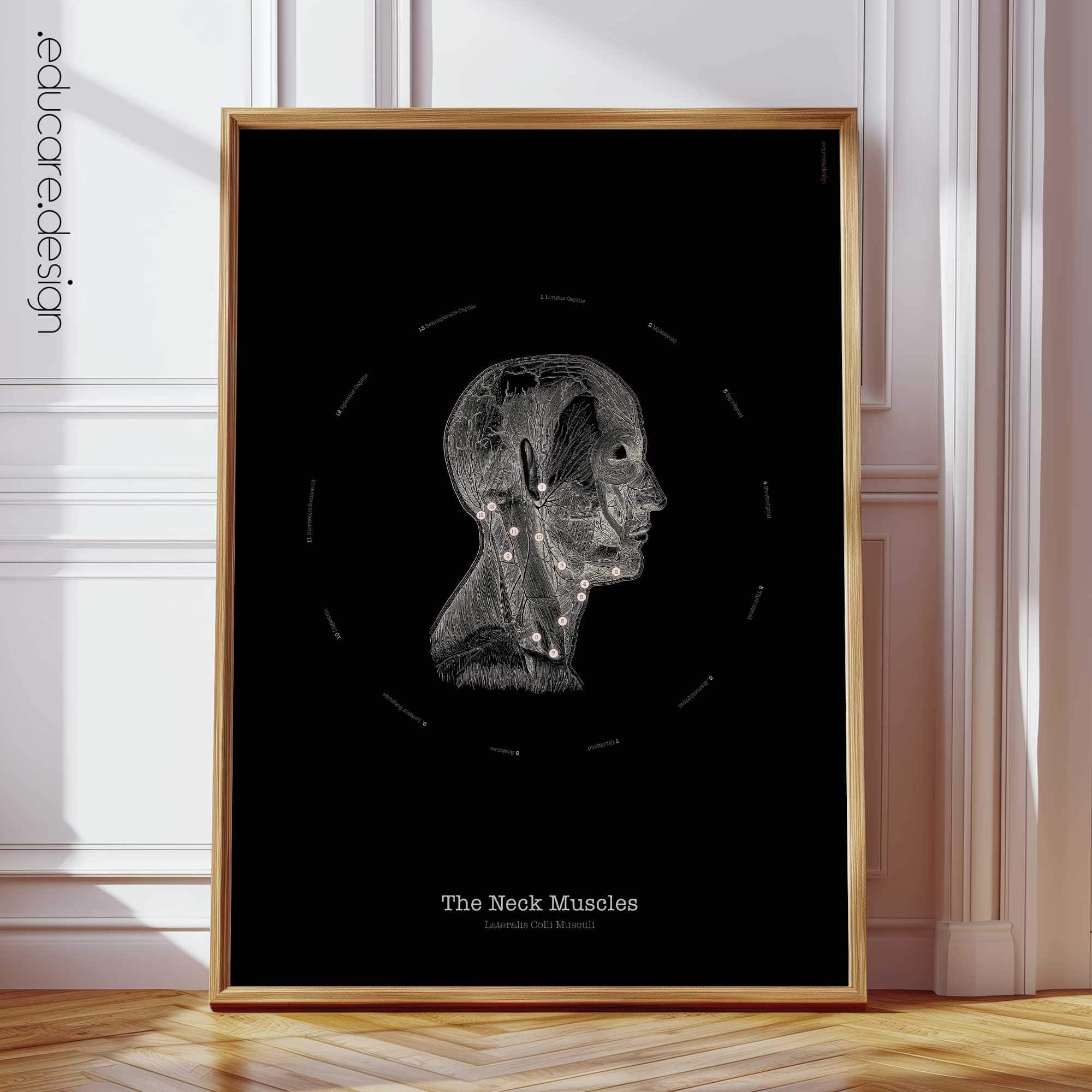
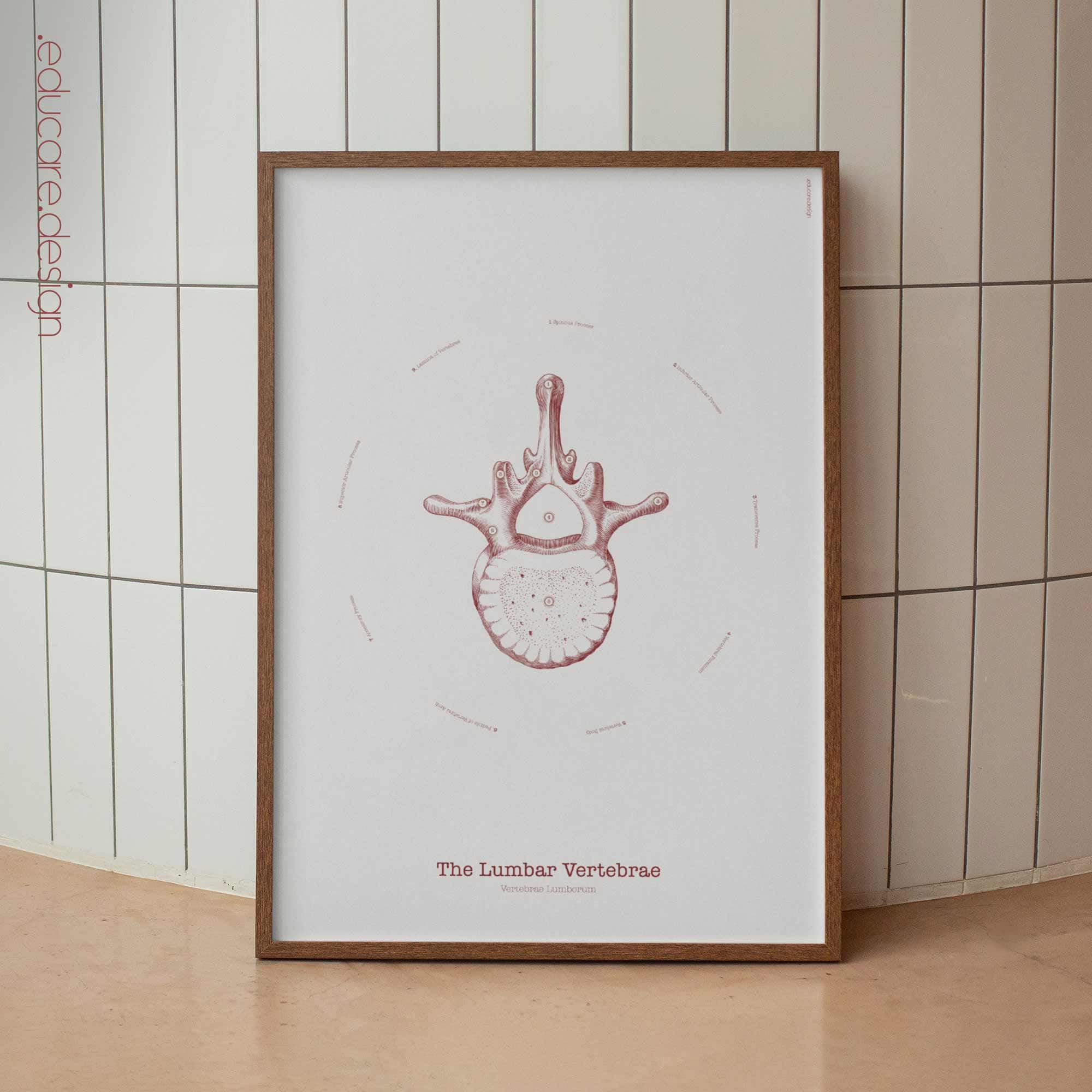
Available in Light and Black Editions.
The artwork is offered in two distinct expressions:
A soft neutral edition that integrates effortlessly into Scandinavian and minimalist clinical interiors.
A black edition that introduces dramatic contrast, transforming classical anatomy into a bold, gallery-style statement.
Both versions maintain identical anatomical precision and layout structure, allowing practitioners to select the atmosphere that best complements their space without compromising educational clarity. The result is neither purely vintage nor purely modern. It is anatomical heritage curated for contemporary clinical environments. Displayed alone, it functions as a refined focal point. Combined with minimal line charts, it adds historical depth without visual conflict.
Classical anatomy, rebalanced for modern practice.
 View this chart here on YouTube.
Make it part of your clinic!
⬇ Order here.