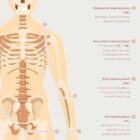
Amputations and Prosthetic Pressure Distribution

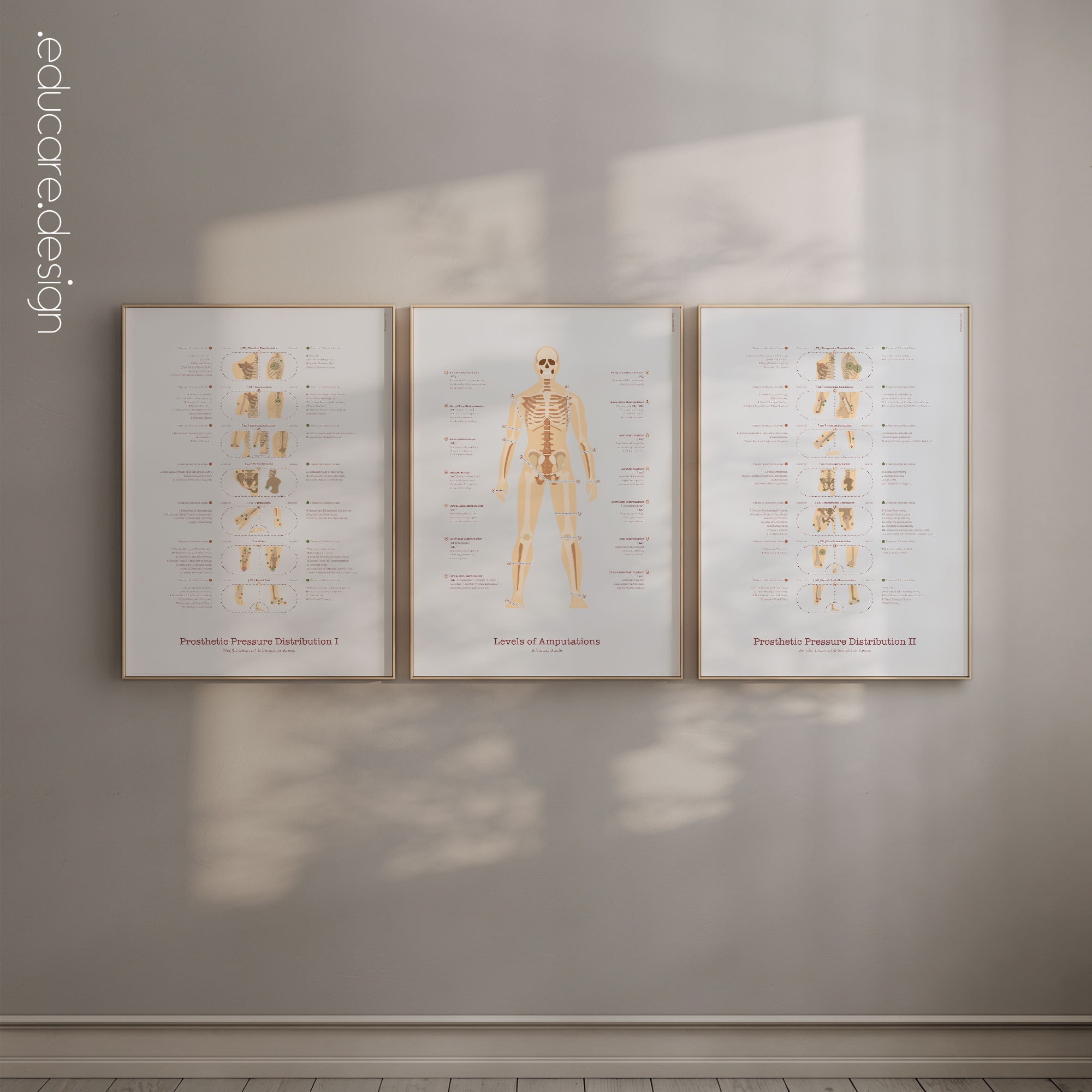
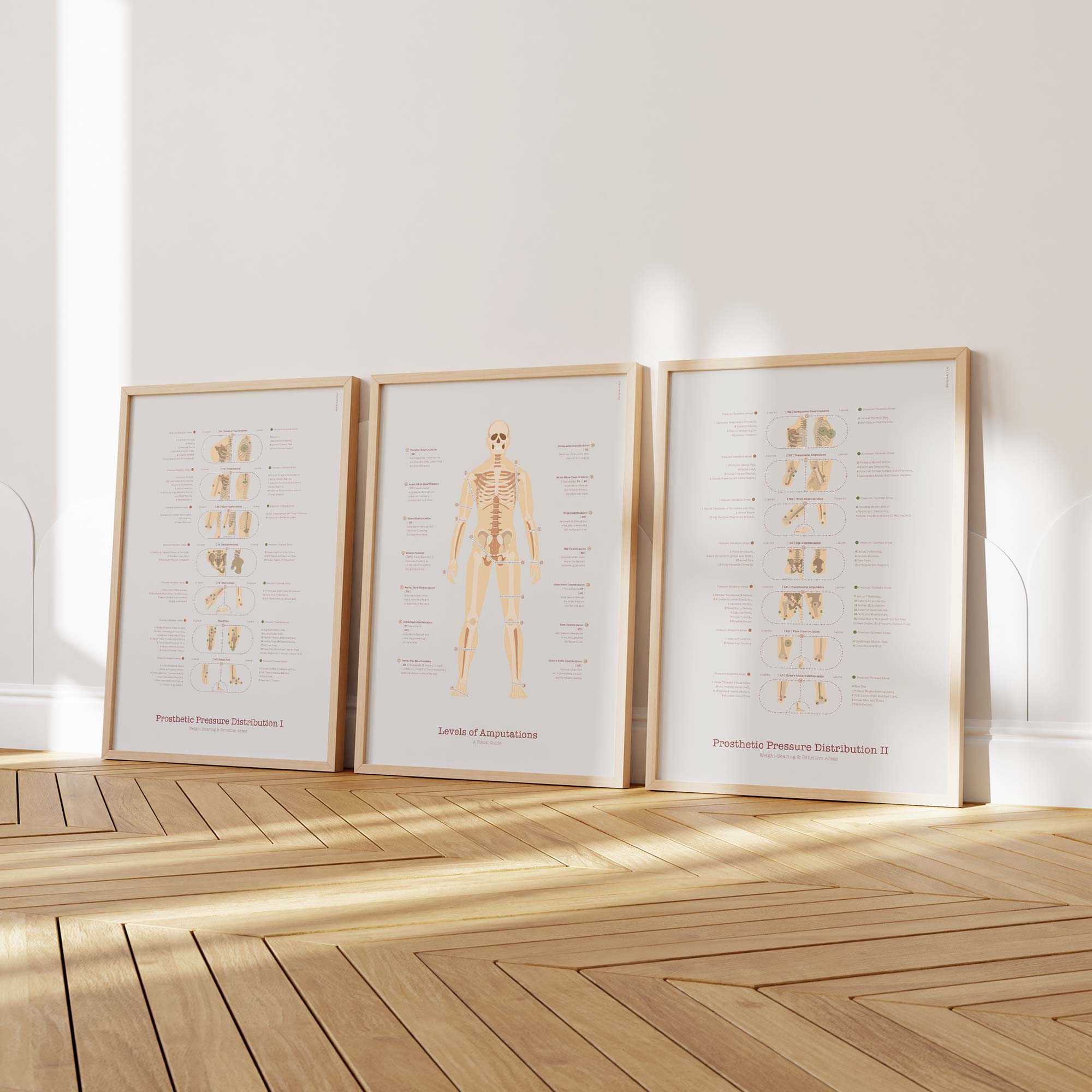
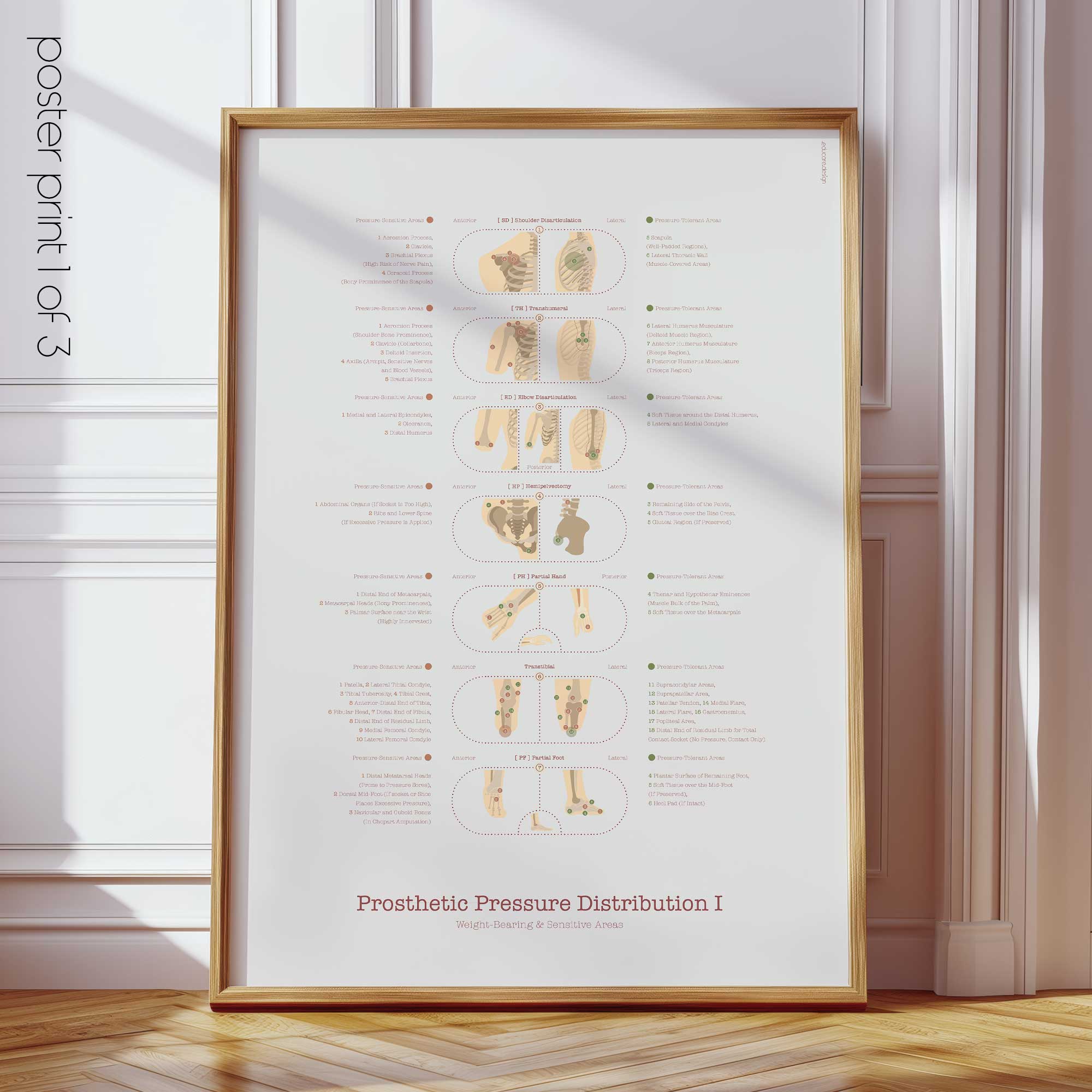
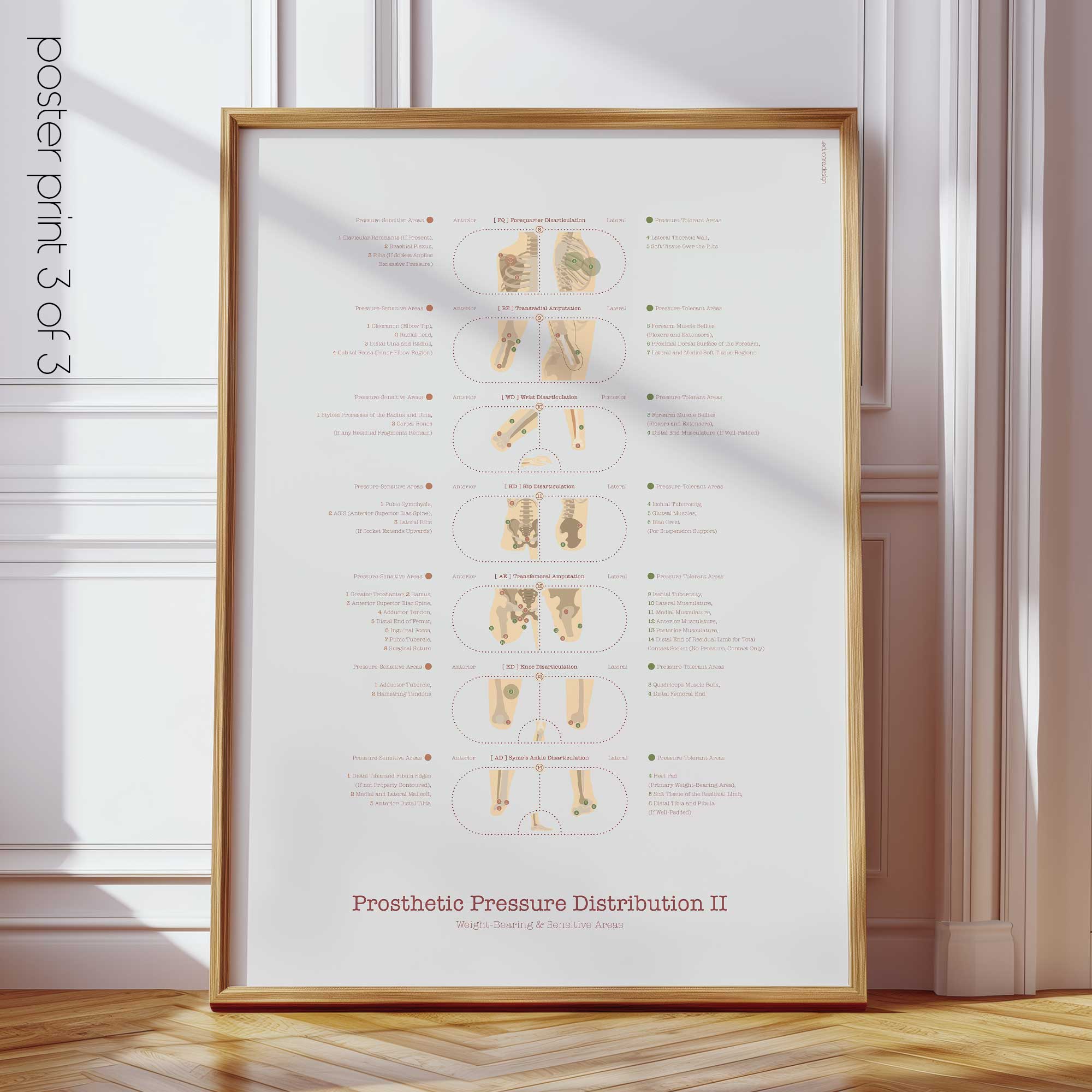
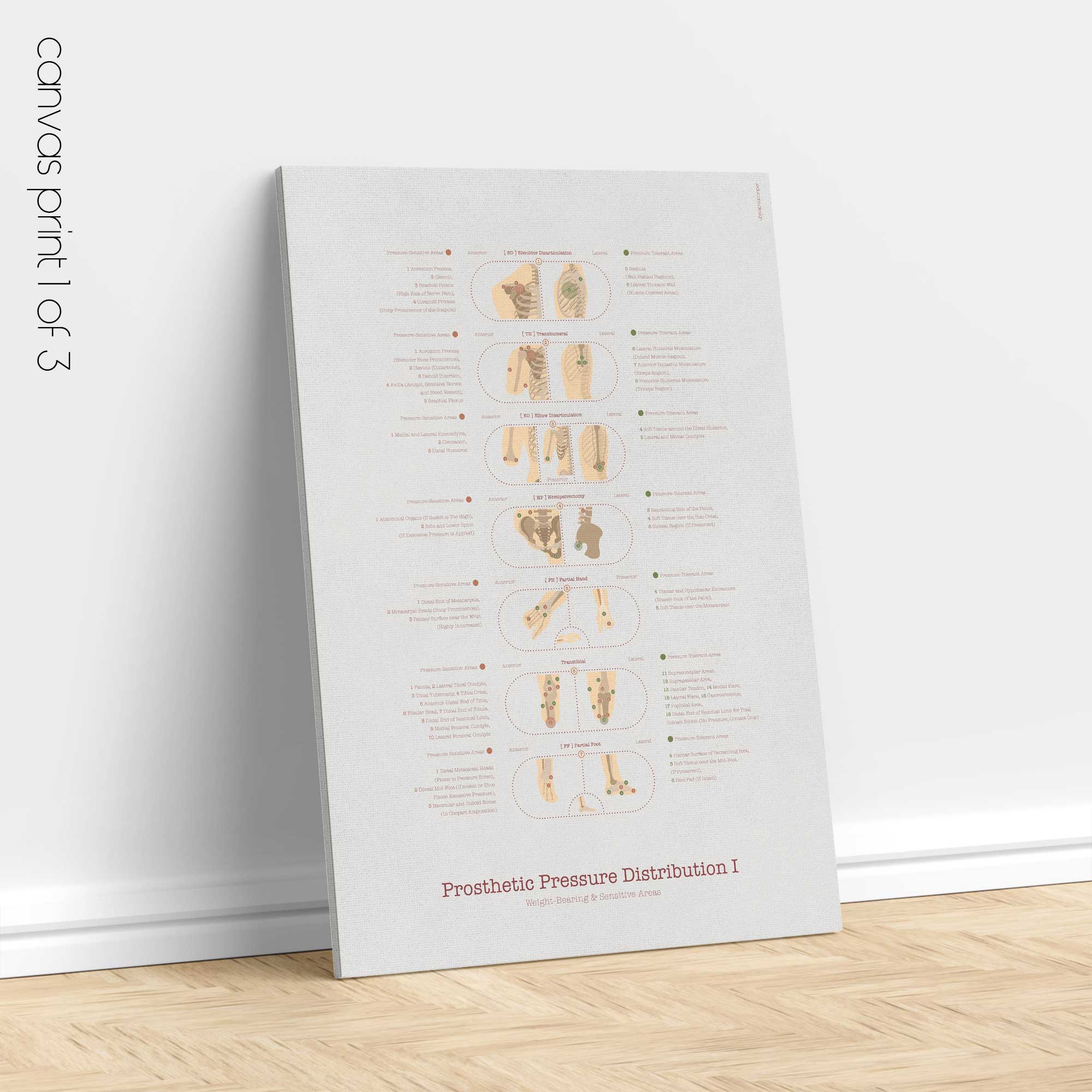
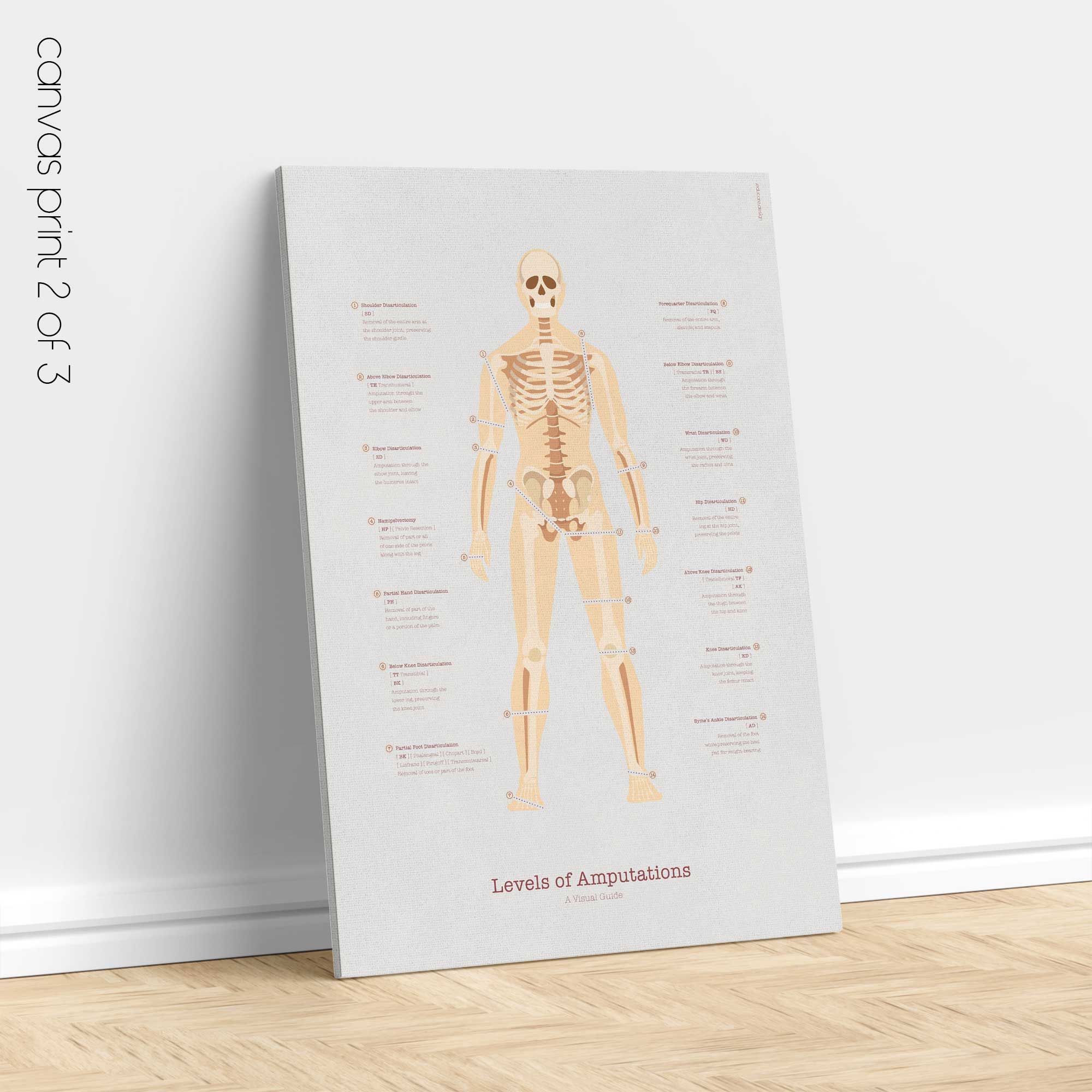
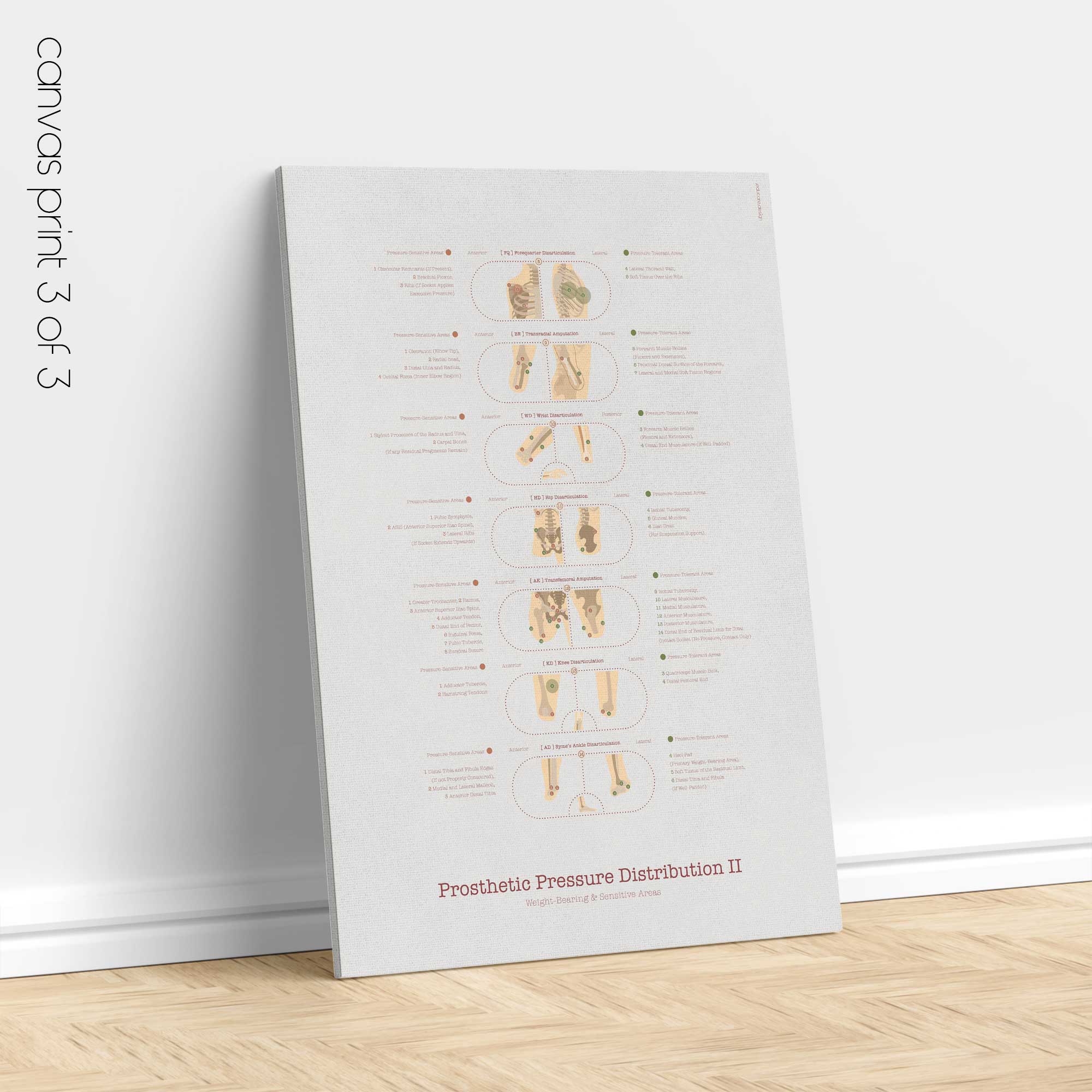
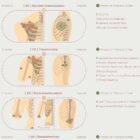
A Structured 3-Chart Clinical Reference Set. This three-chart set integrates anatomical amputation levels with prosthetic pressure distribution principles into one coherent visual system. The central chart presents clearly defined upper and lower limb amputation levels, ranging from partial foot to forequarter disarticulation. Flanking charts map pressure-sensitive and pressure-tolerant areas of the residual limb, providing essential context for prosthetic socket design and load management.

Rather than separating surgical classification from prosthetic biomechanics, this set connects the two. The middle chart establishes structural orientation. The surrounding charts translate that structure into interface mechanics — illustrating how forces are distributed across soft tissue, bony prominences and load-bearing zones within a prosthetic socket. Numbered identifiers align across all three artworks, allowing rapid cross-reference during consultation or teaching.

Amputation fundamentally alters load transfer, joint mechanics and weight distribution. Successful prosthetic integration depends on understanding where pressure can be tolerated and where it must be carefully relieved. By visually distinguishing these regions, the set supports informed socket assessment, clearer patient education and improved interdisciplinary communication.

Designed for prosthetists, orthopaedic specialists, physiotherapists and rehabilitation teams, this set functions as more than anatomical artwork. It is a clinical communication tool that bridges surgical level, biomechanical adaptation and prosthetic interface strategy.

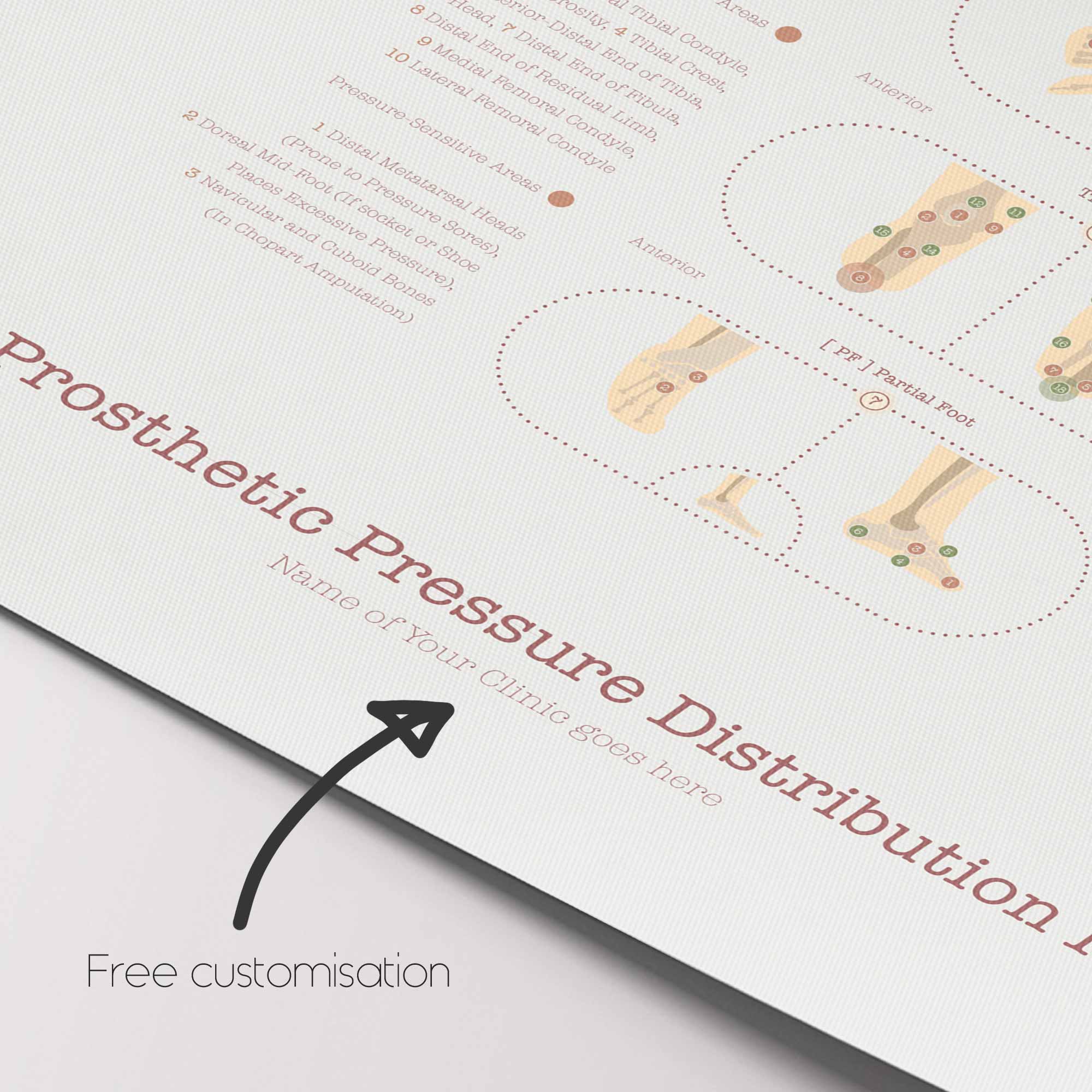
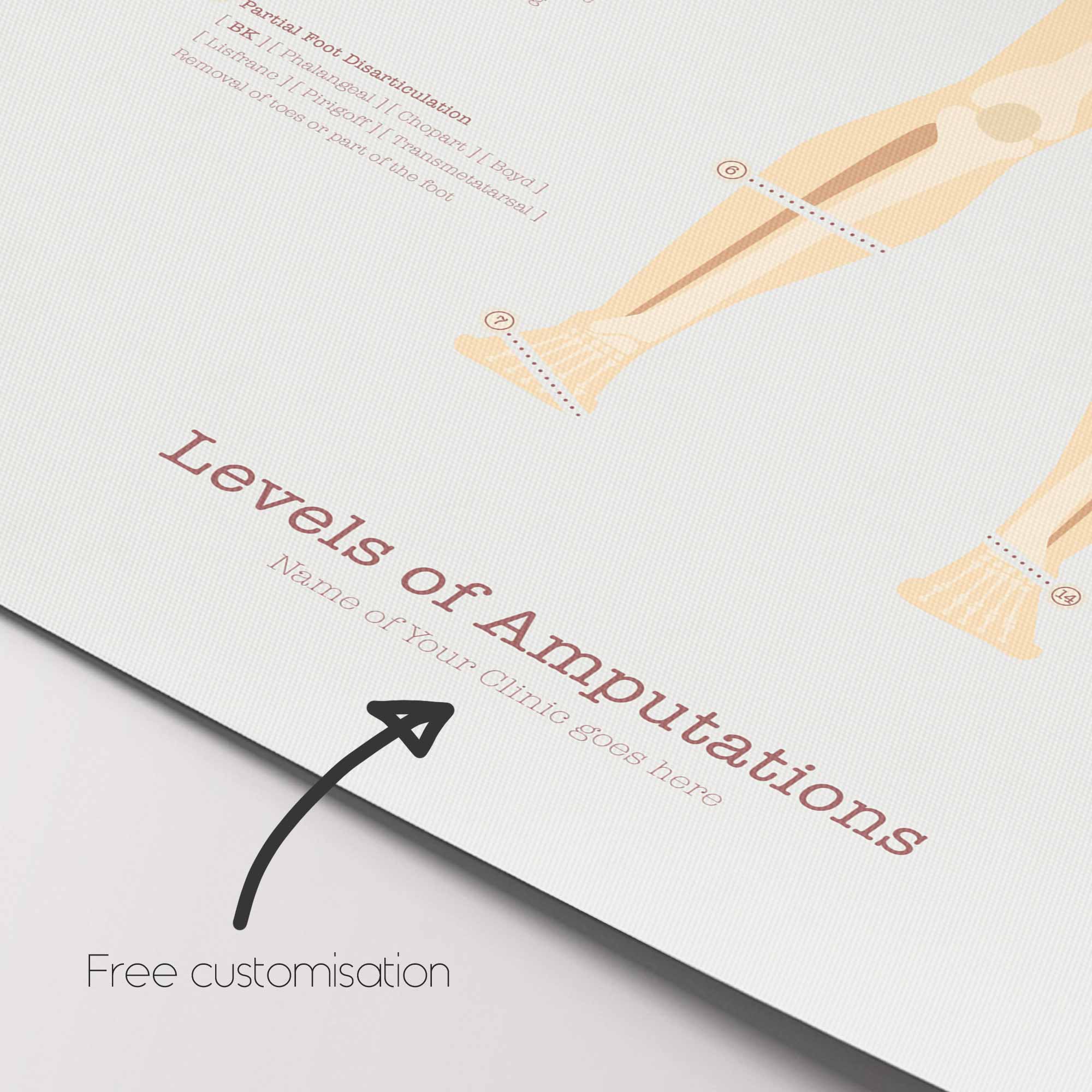
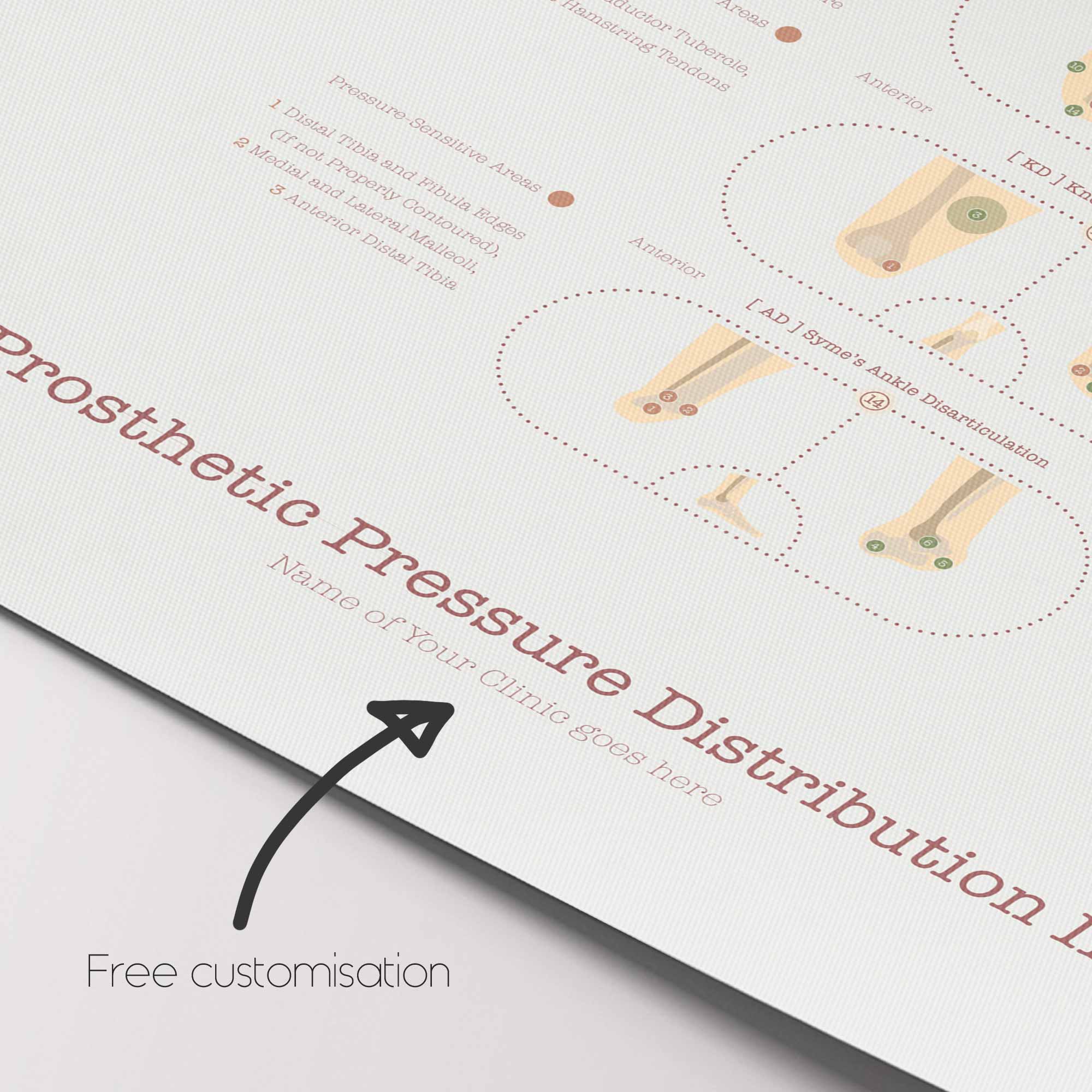
Free customisation with your clinic’s name.
For this set we offer to add your clinic’s name (or website address) for free! The name will go instead of the current sub-headline on the three artworks; view an illustration of this in the image gallery.

View this chart here on YouTube.

Make it part of your clinic!
Order here.

Part of:
Spine & Structure
Also relevant to:
Movement & Muscles
Often displayed with:
Vitruvian Amputee

Available as poster prints (frames not included), canvas prints (built-in-frames), and print-it-yourself PDF files. Browse the image gallery to view the options for this artwork, incl. types and sizes, optional name or website placement

Developed in collaboration with Dr. Hoggatt.
Dr. Michael Hoggatt earned his Bachelor of Science from Jackson State University, Master’s in Prosthetics and Orthotics from Northwestern University, Master of Science from Texas Woman’s University, and Doctorate in Physical Therapy from Duke University. He is a Certified Strength and Conditioning Specialist (CSCS) and holds certifications in Functional Range Conditioning (FRC) and Functional Range Assessment (FRA).

In addition to his clinical practice, Dr. Hoggatt provides specialized consultations and strength and conditioning programs for amputees and Paralympic track and field hopefuls. His expertise lies in optimizing performance and rehabilitation for athletes and individuals with complex functional needs. Dr. Hoggatt brings a multidisciplinary approach to his practice, combining advanced education with hands-on experience to deliver innovative care solutions.

His collaboration ensures that the anatomical levels and prosthetic representation reflect real-world clinical reasoning and performance application.