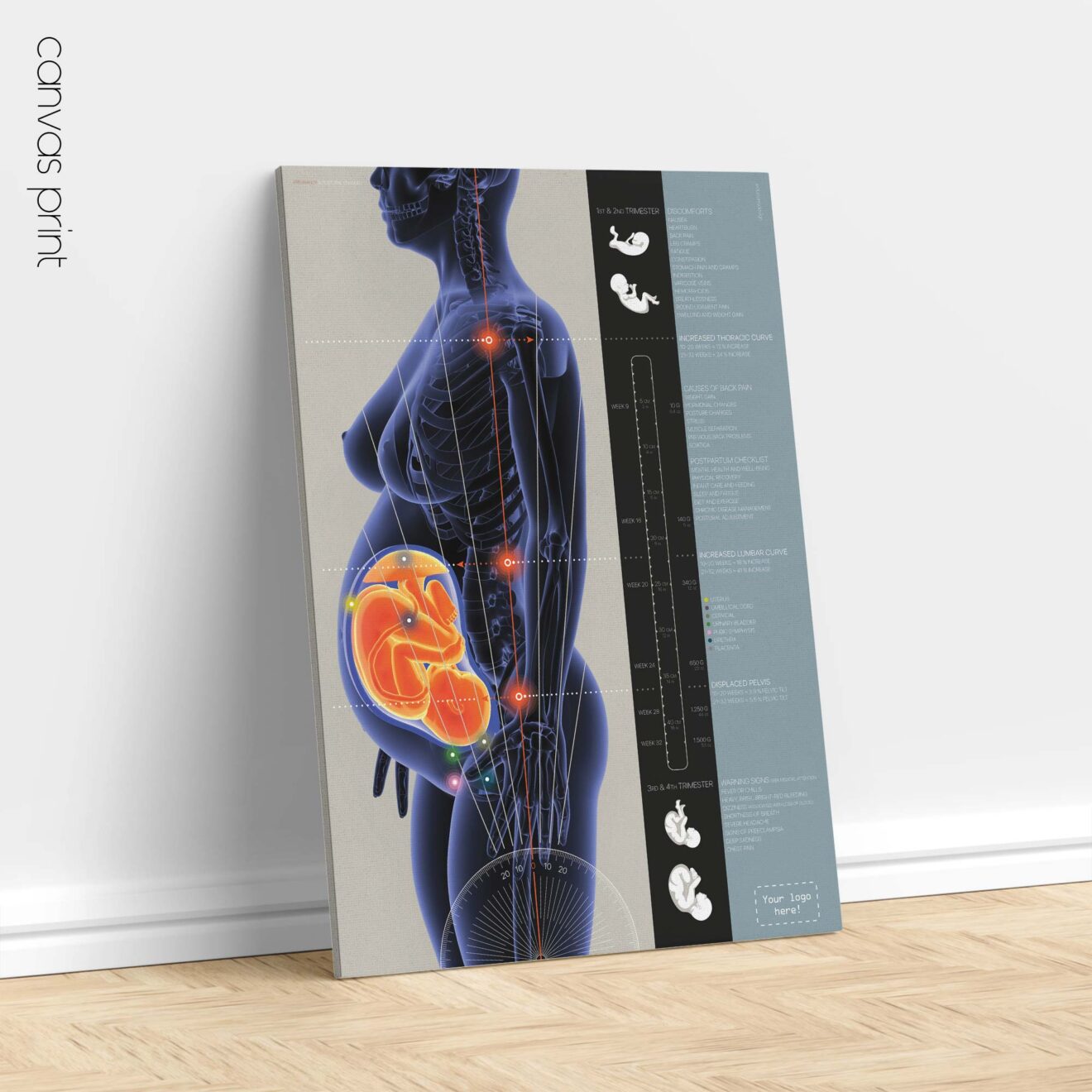
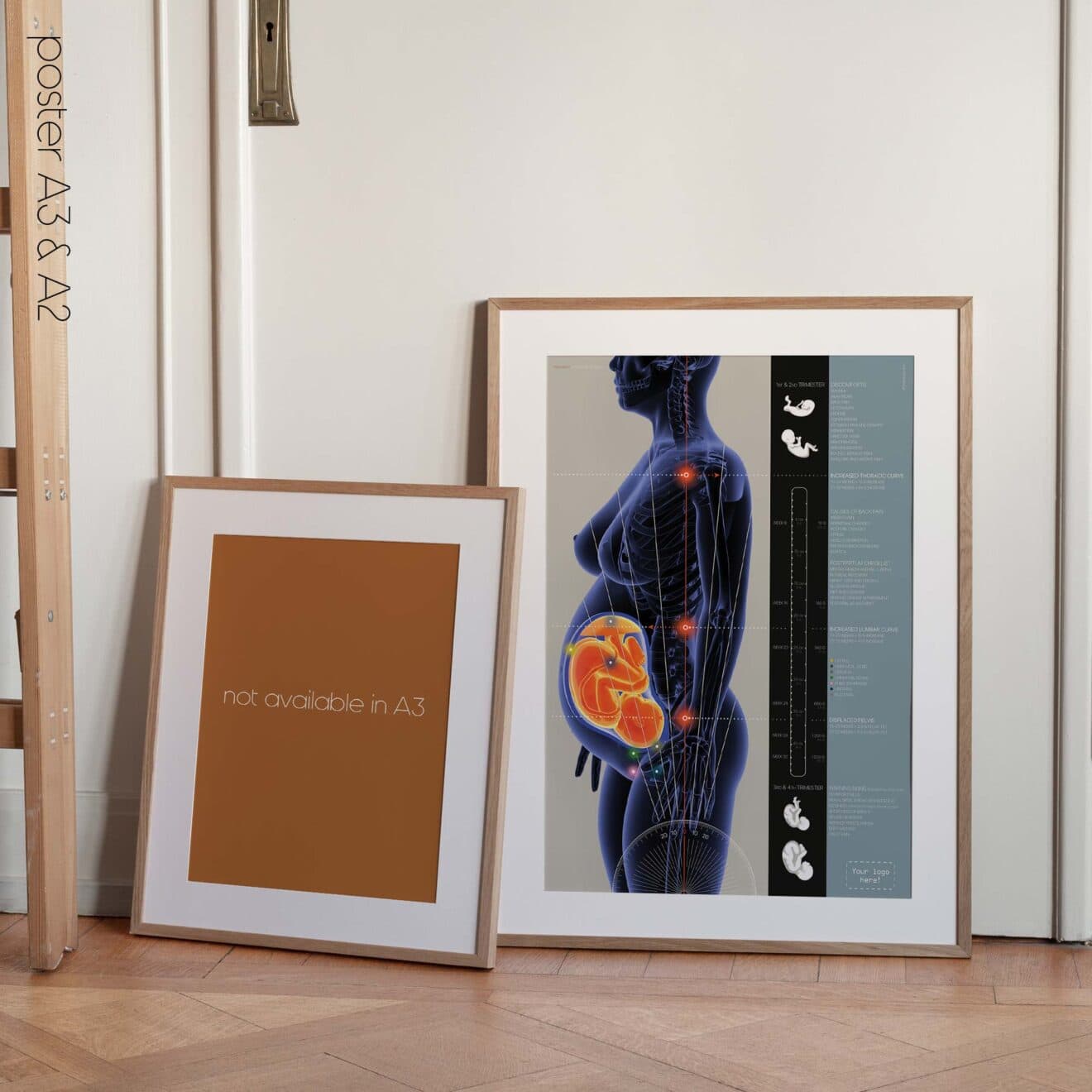
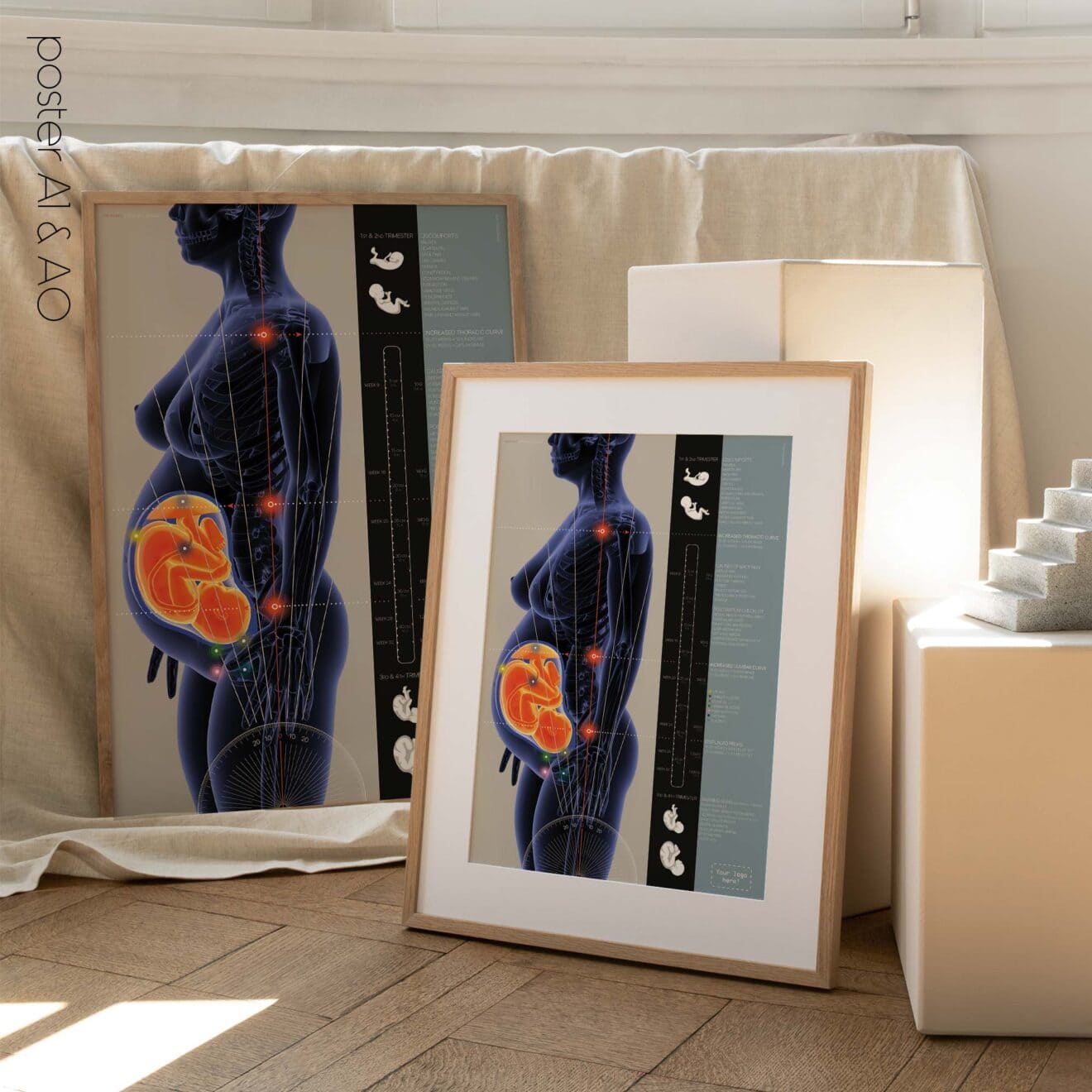
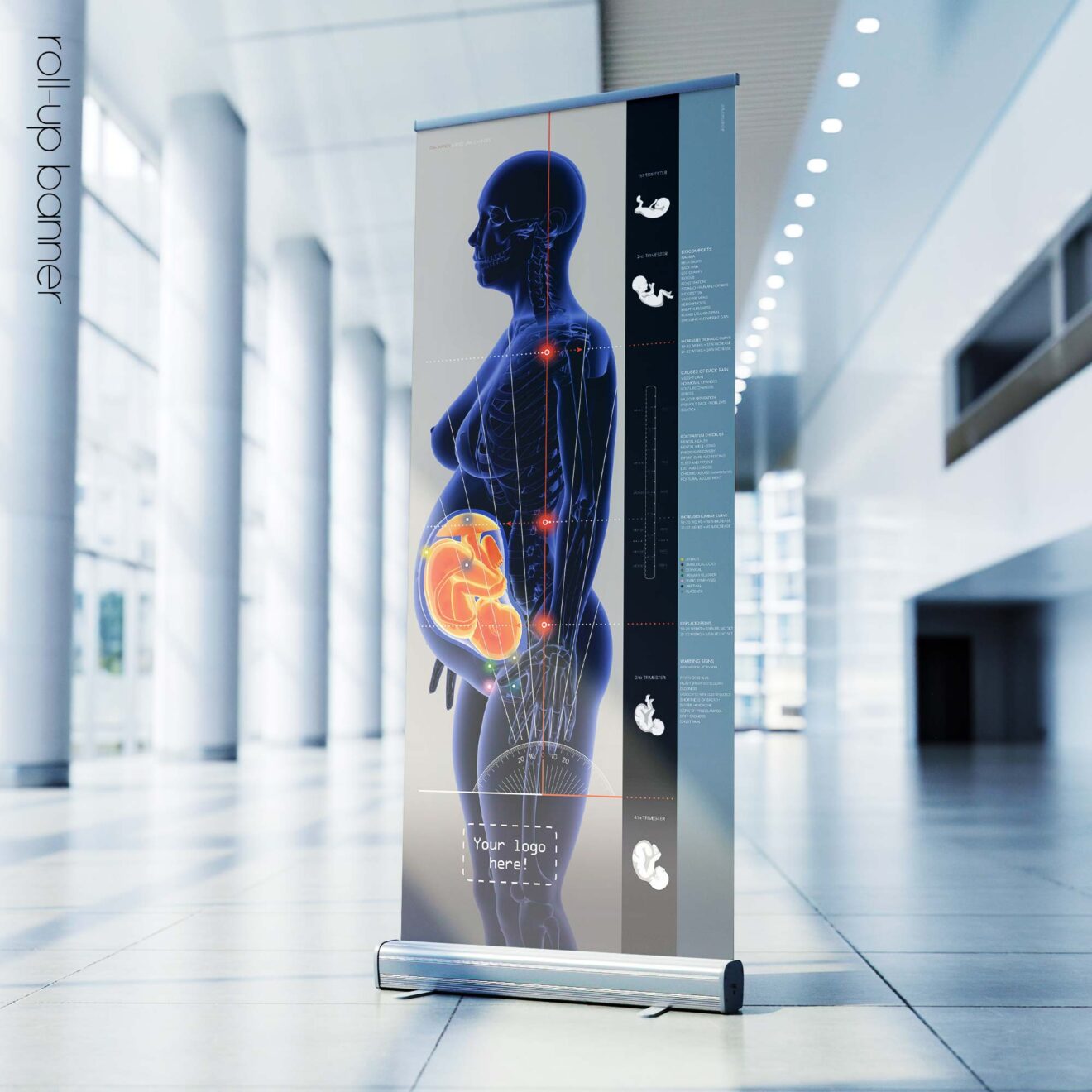
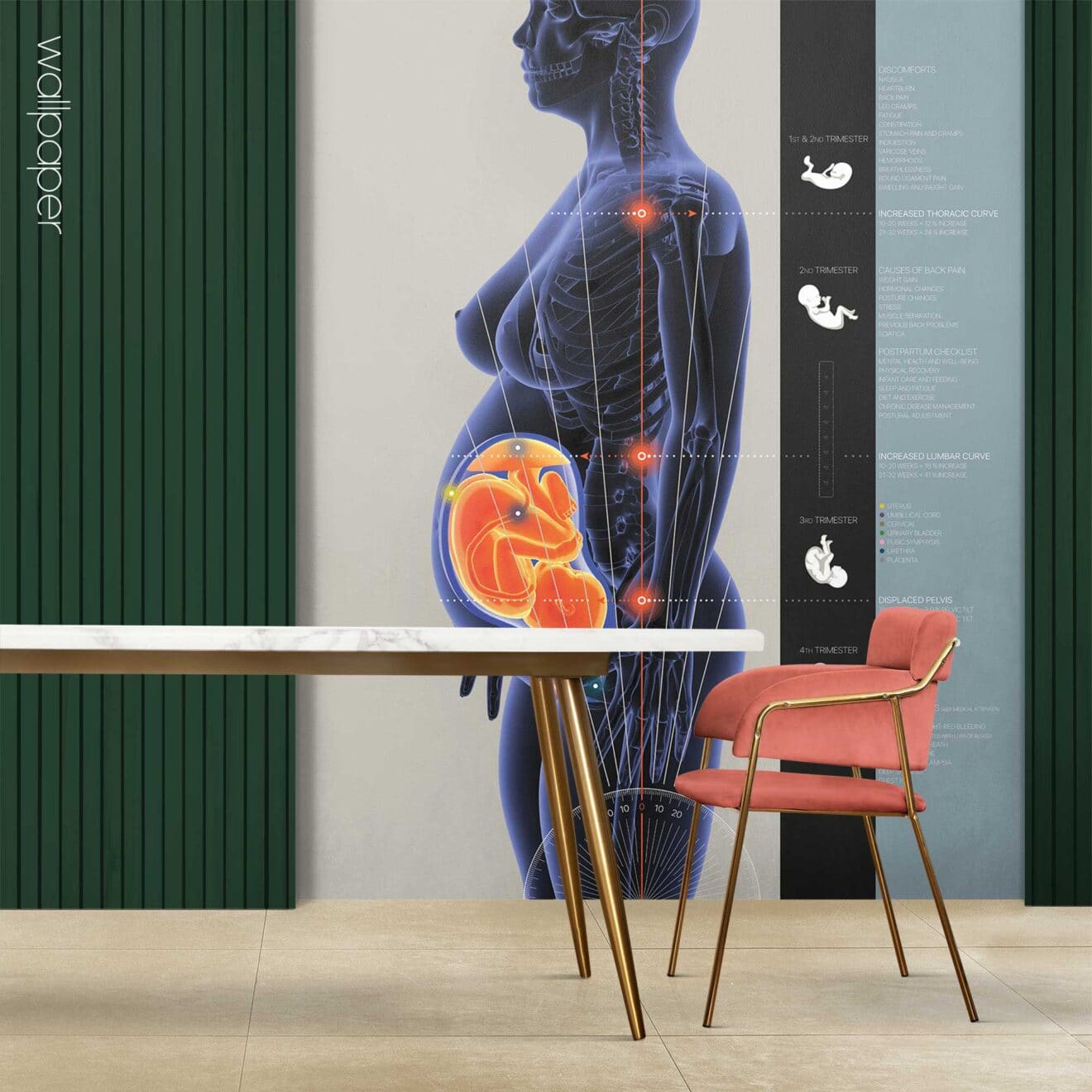
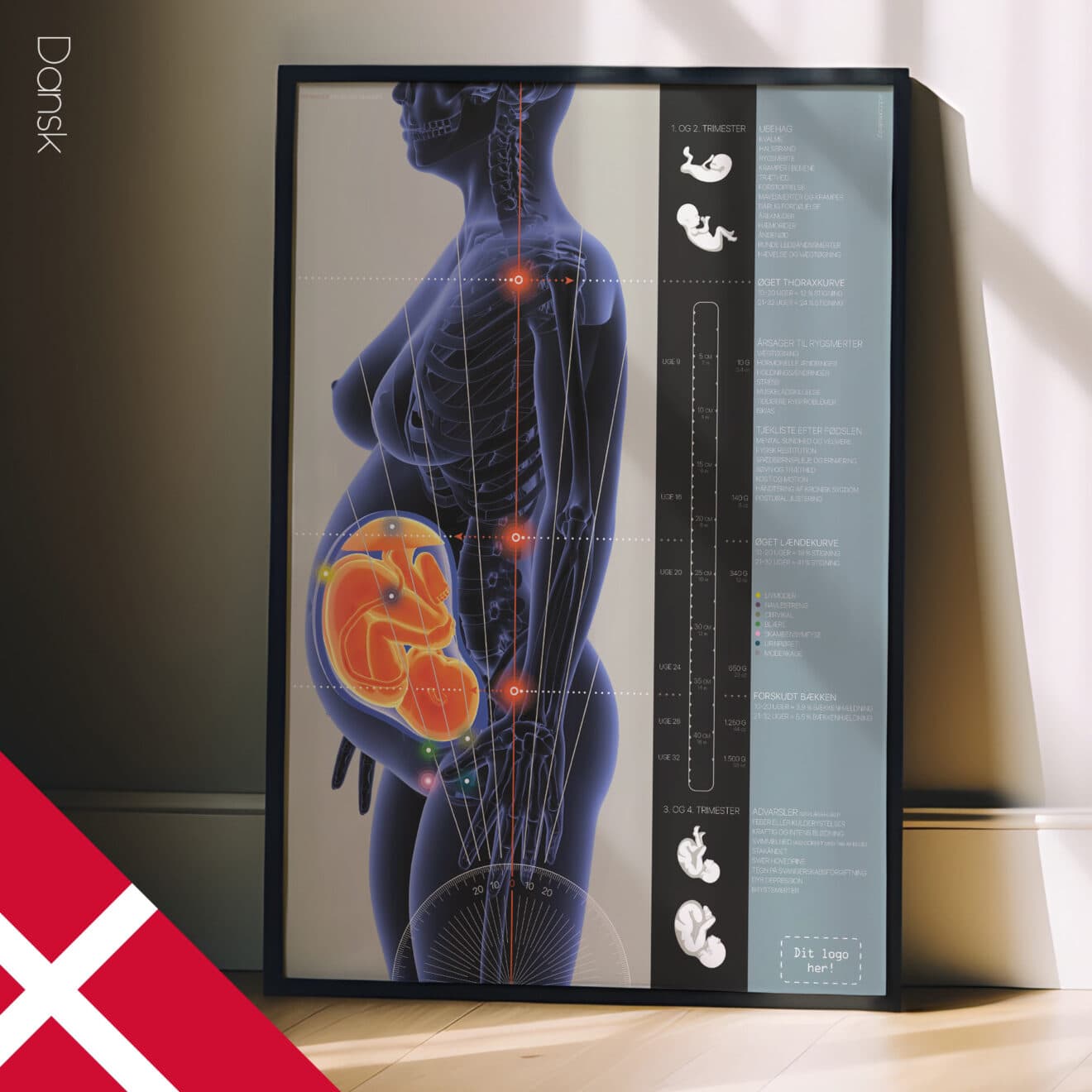
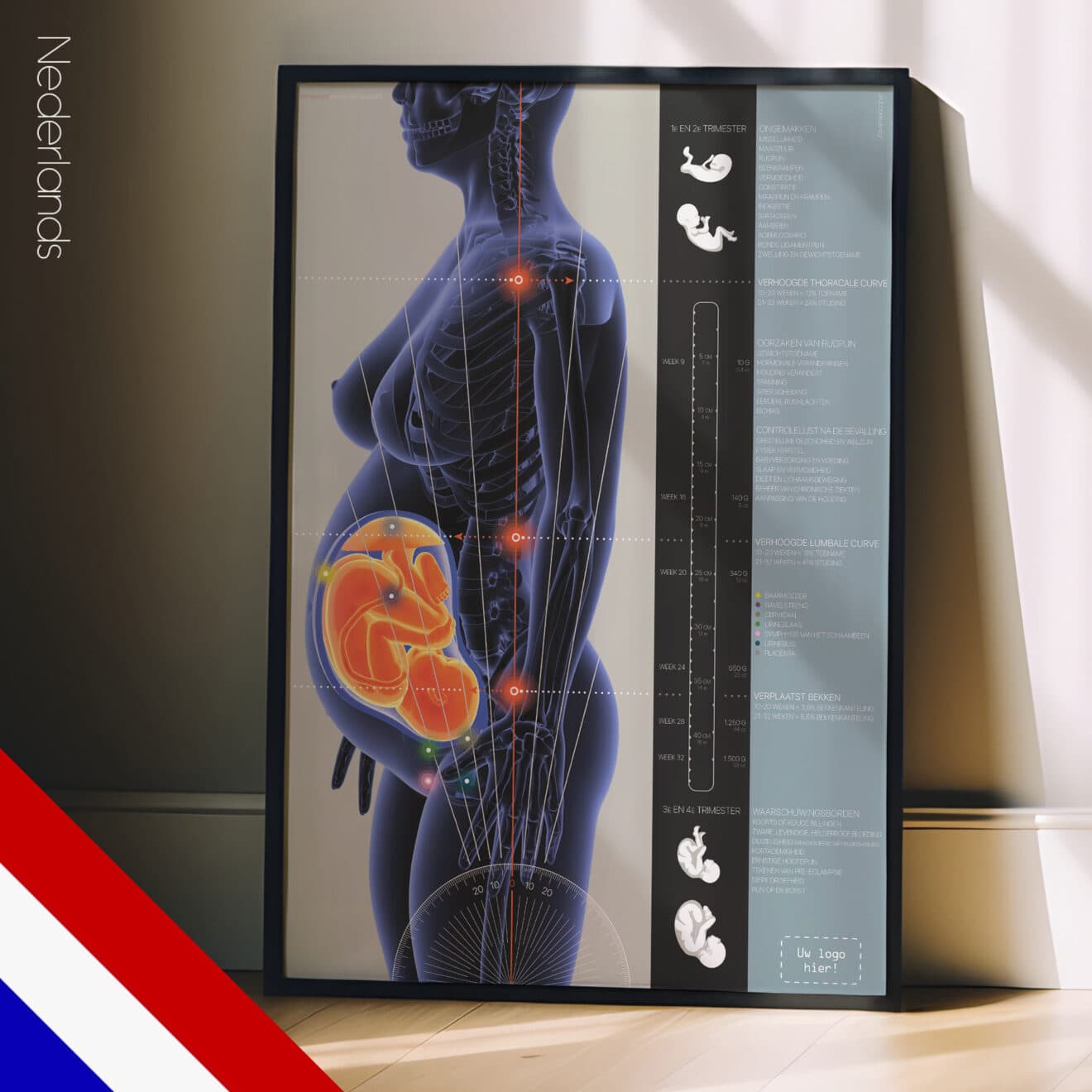
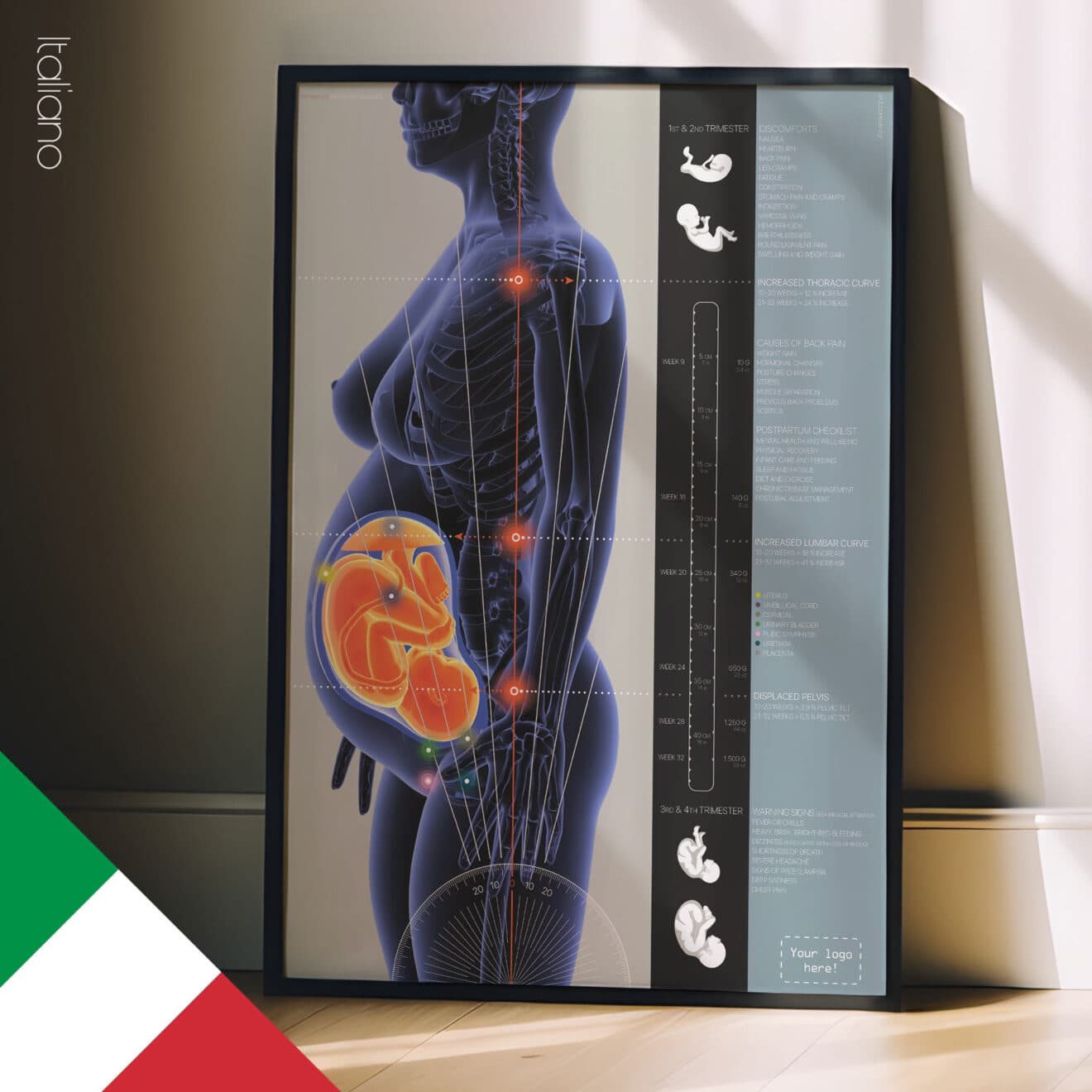
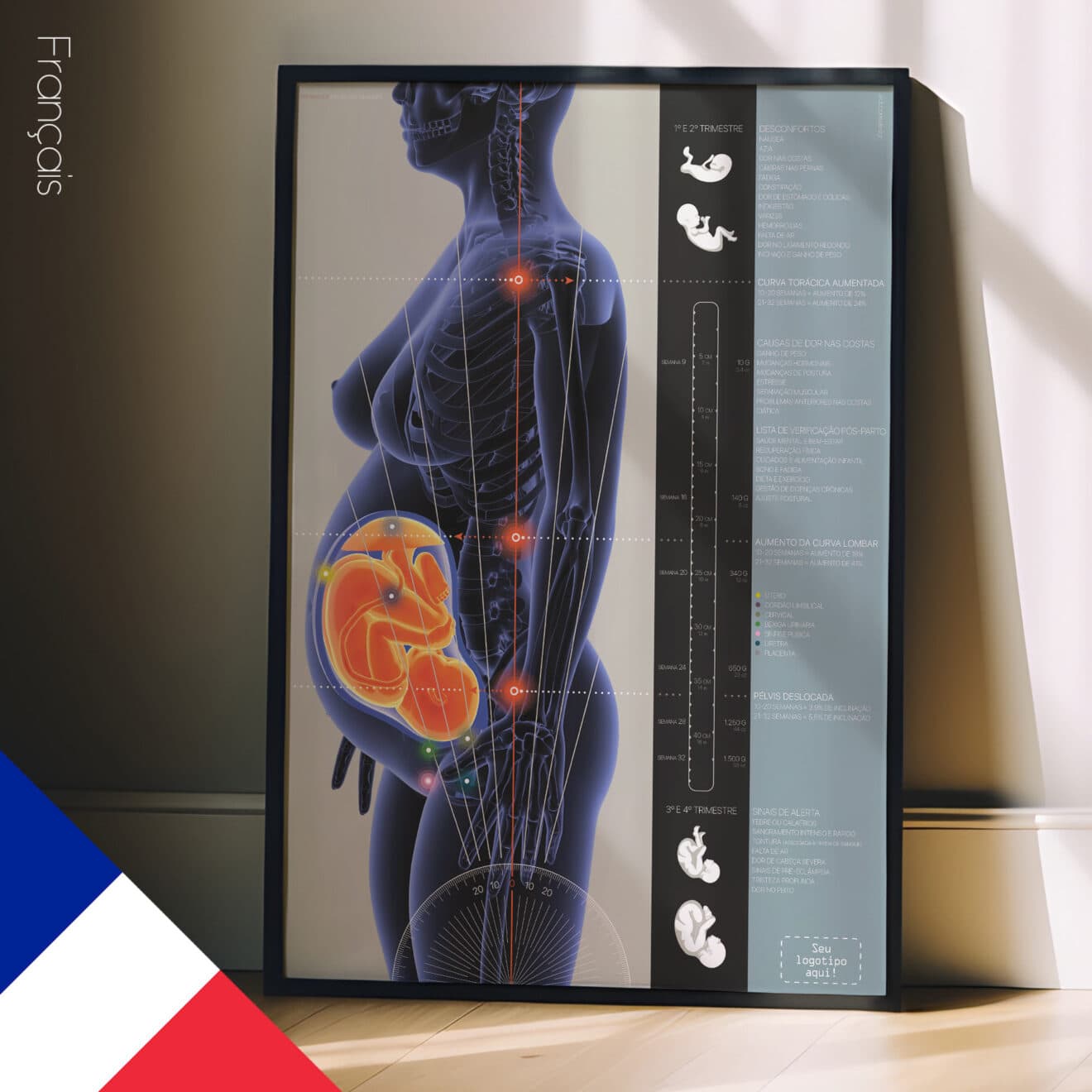
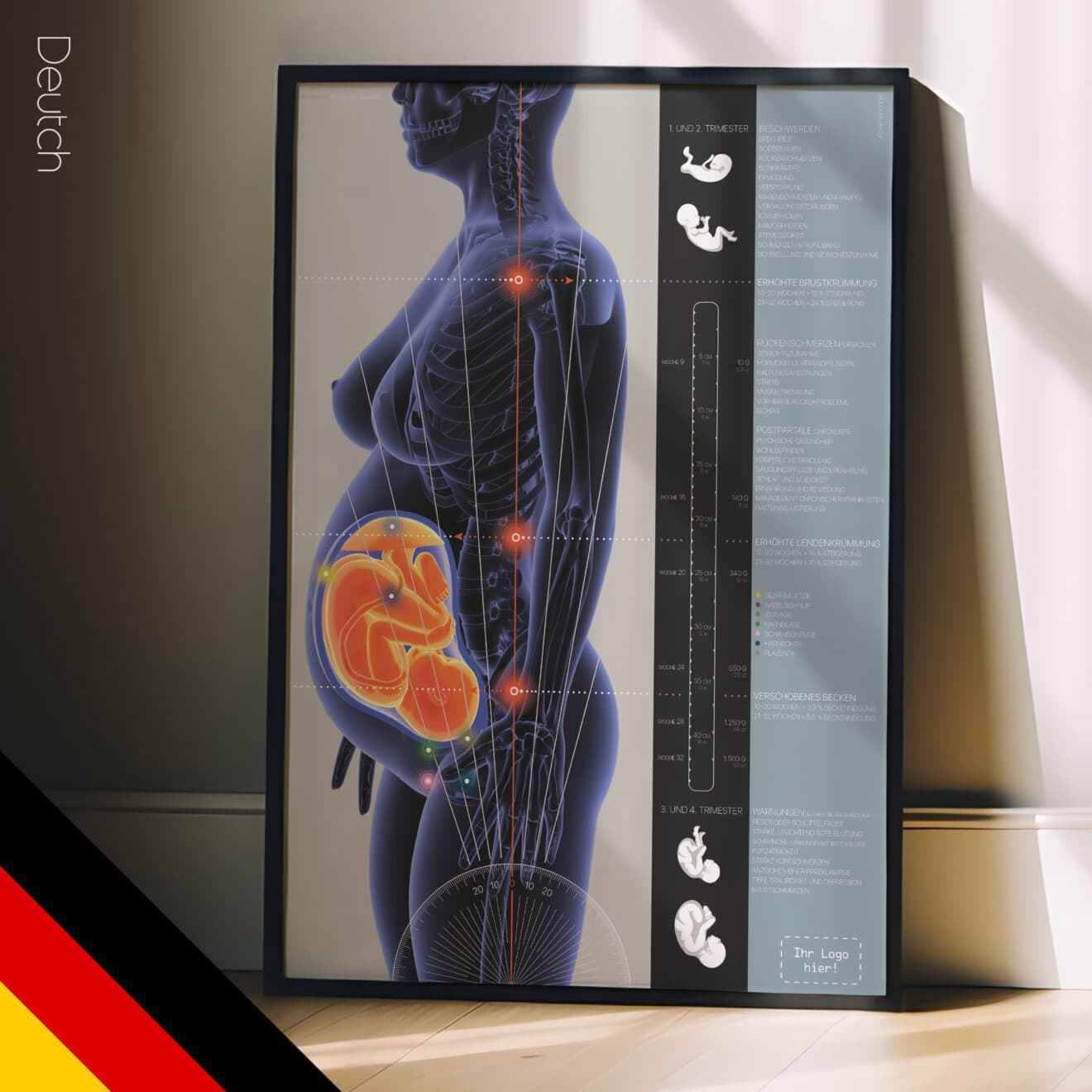
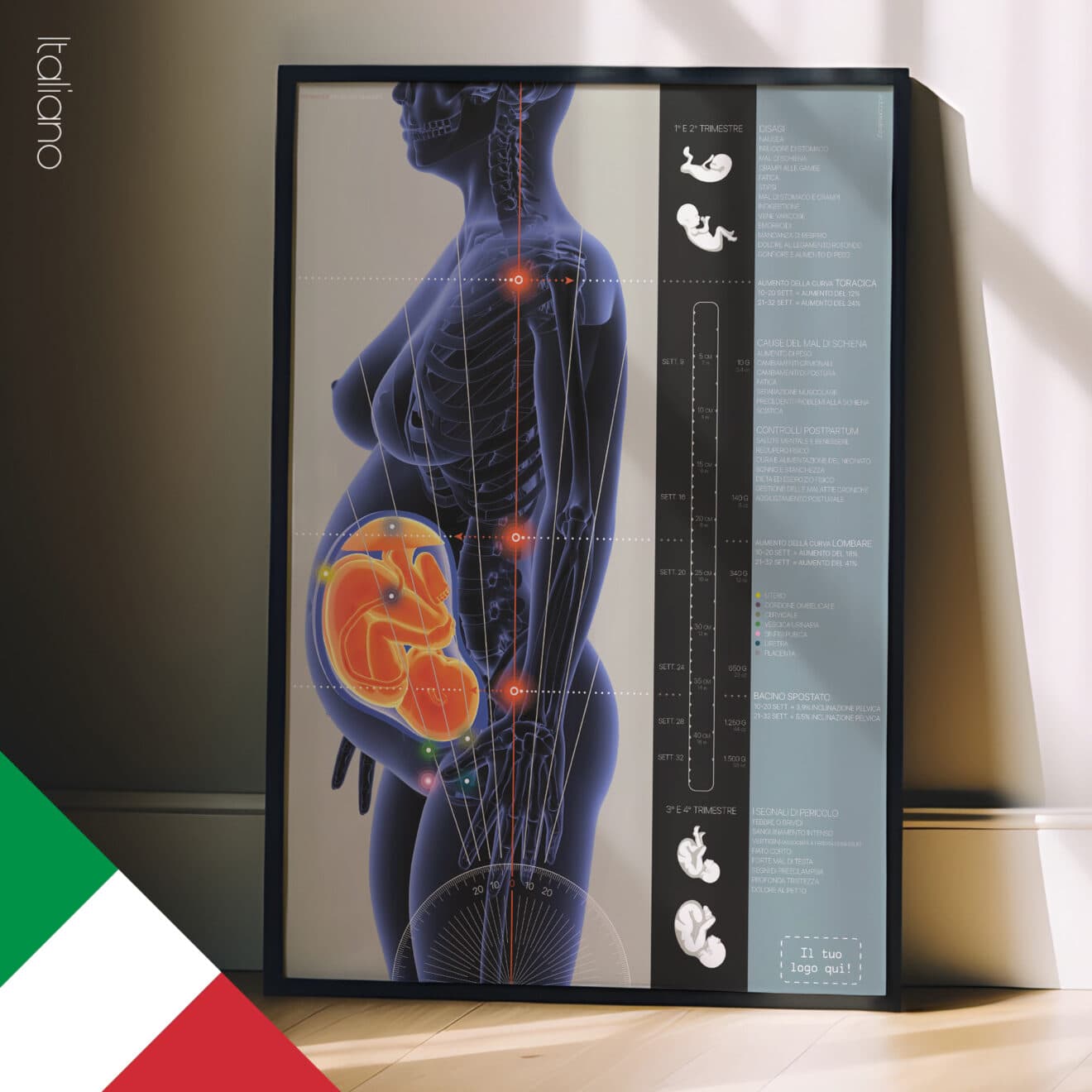
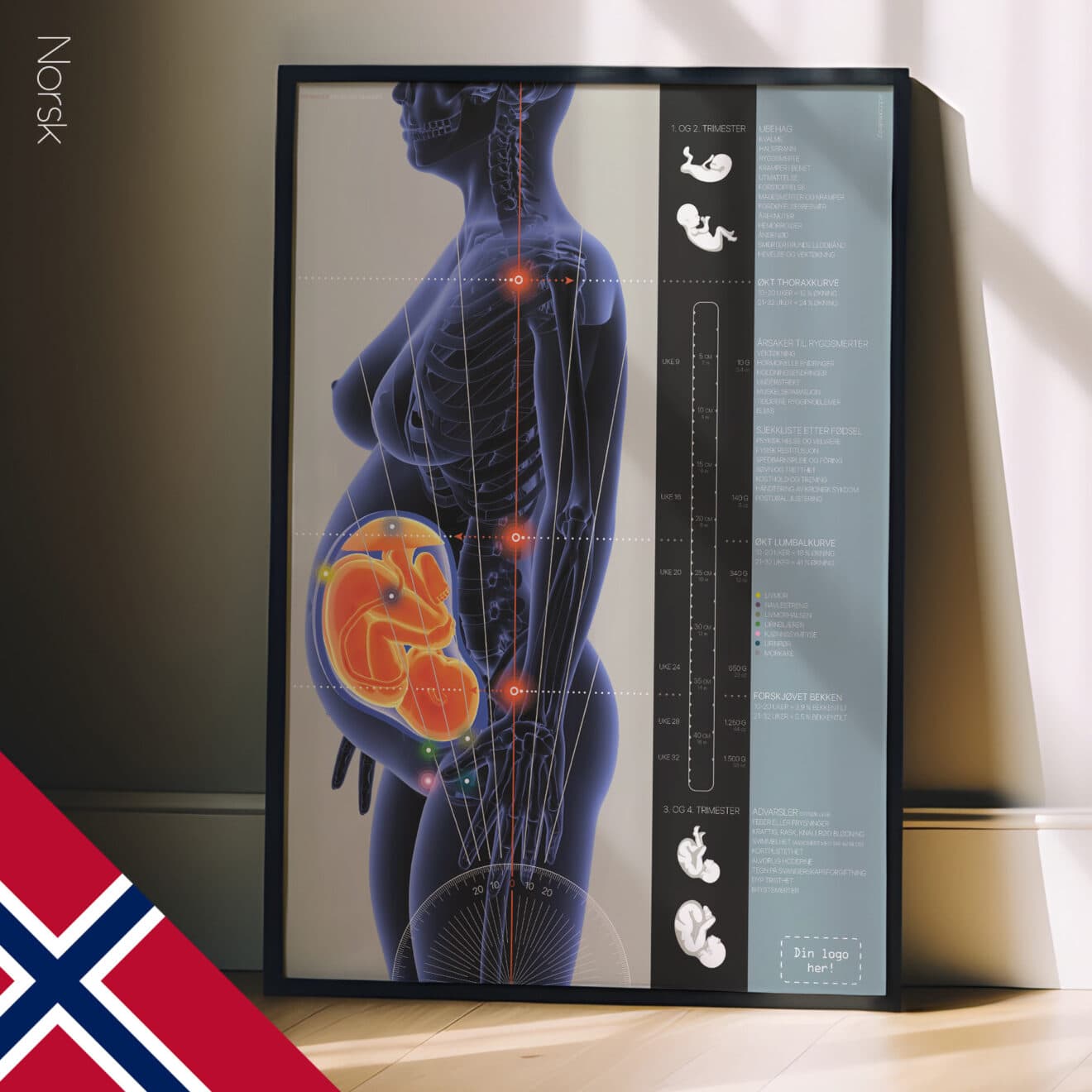
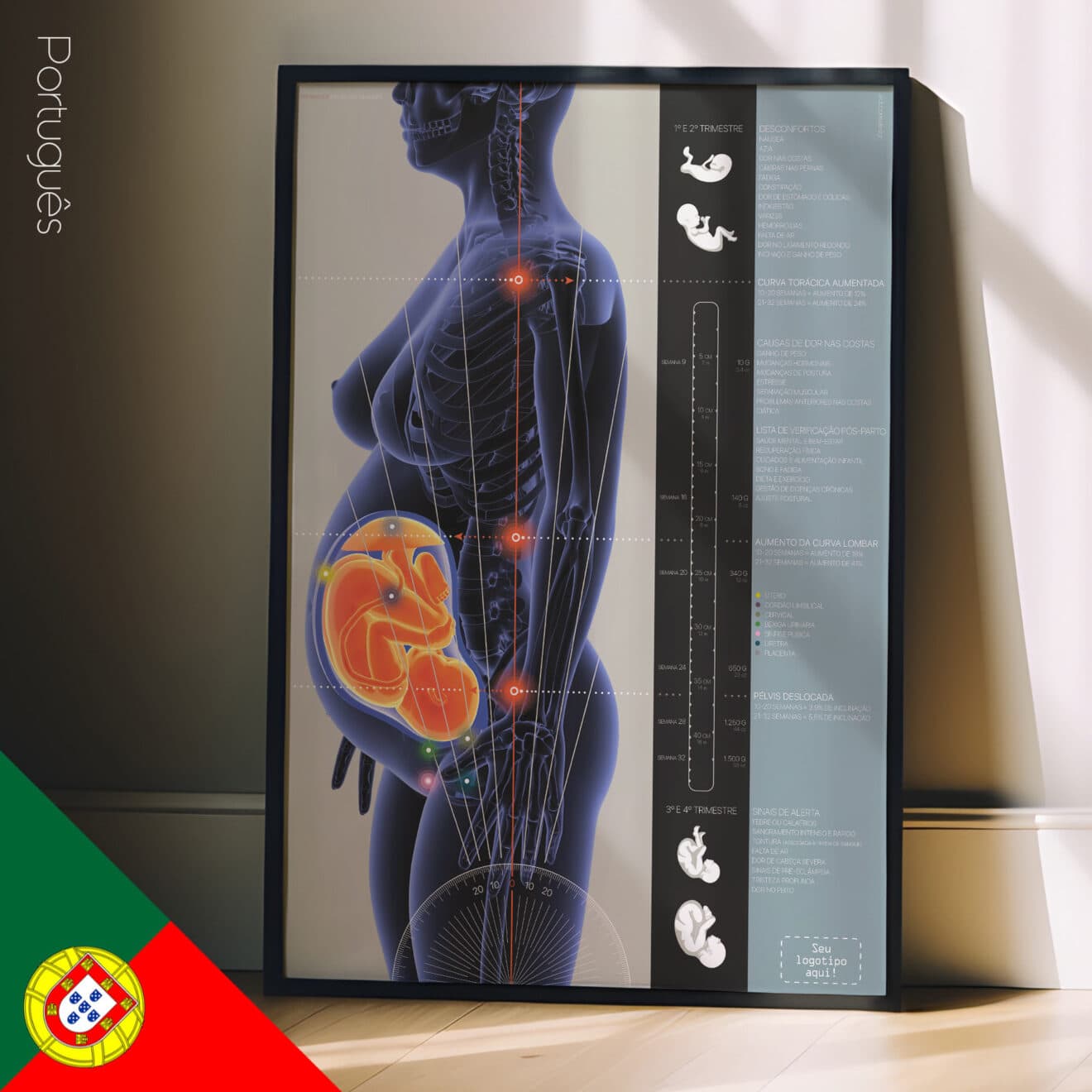
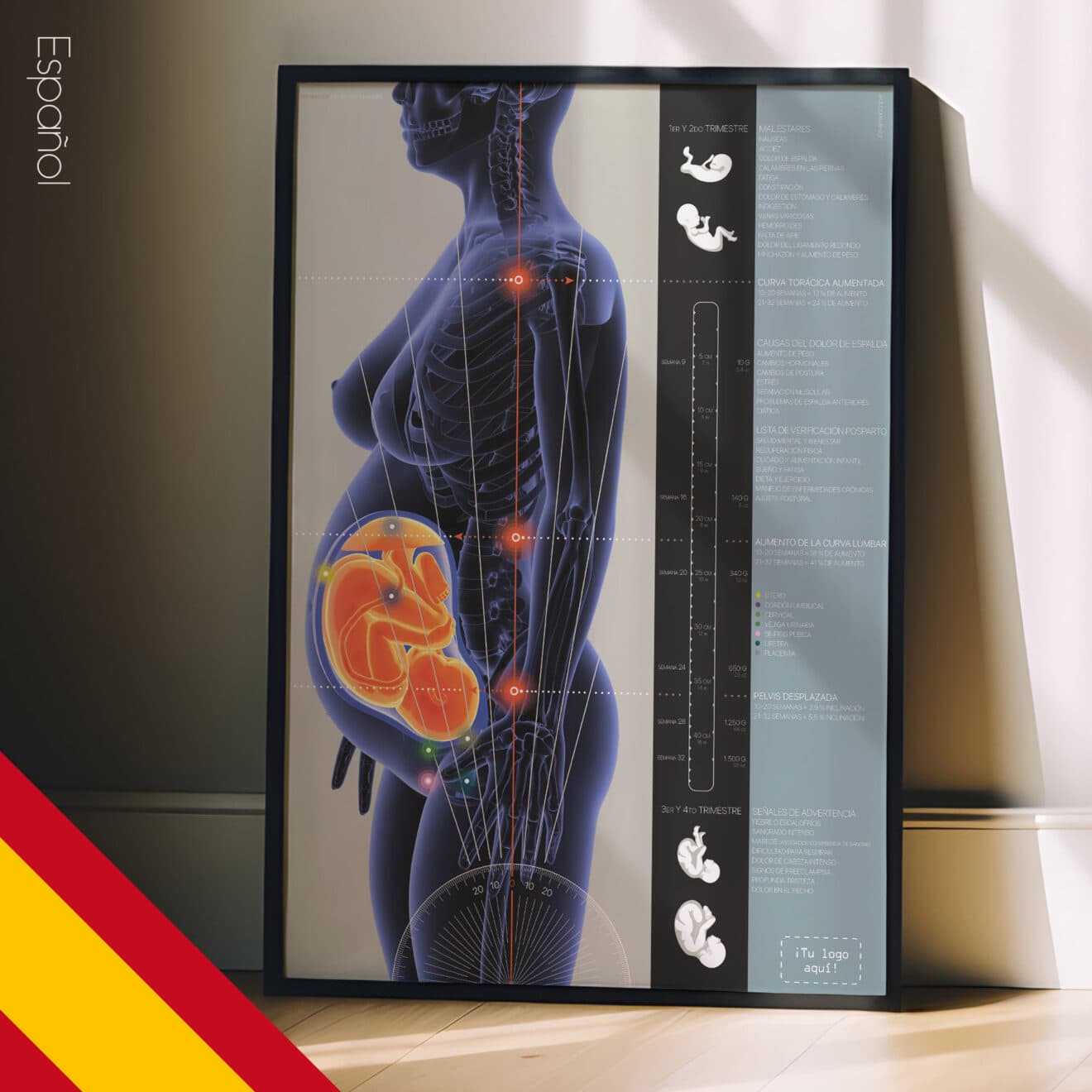
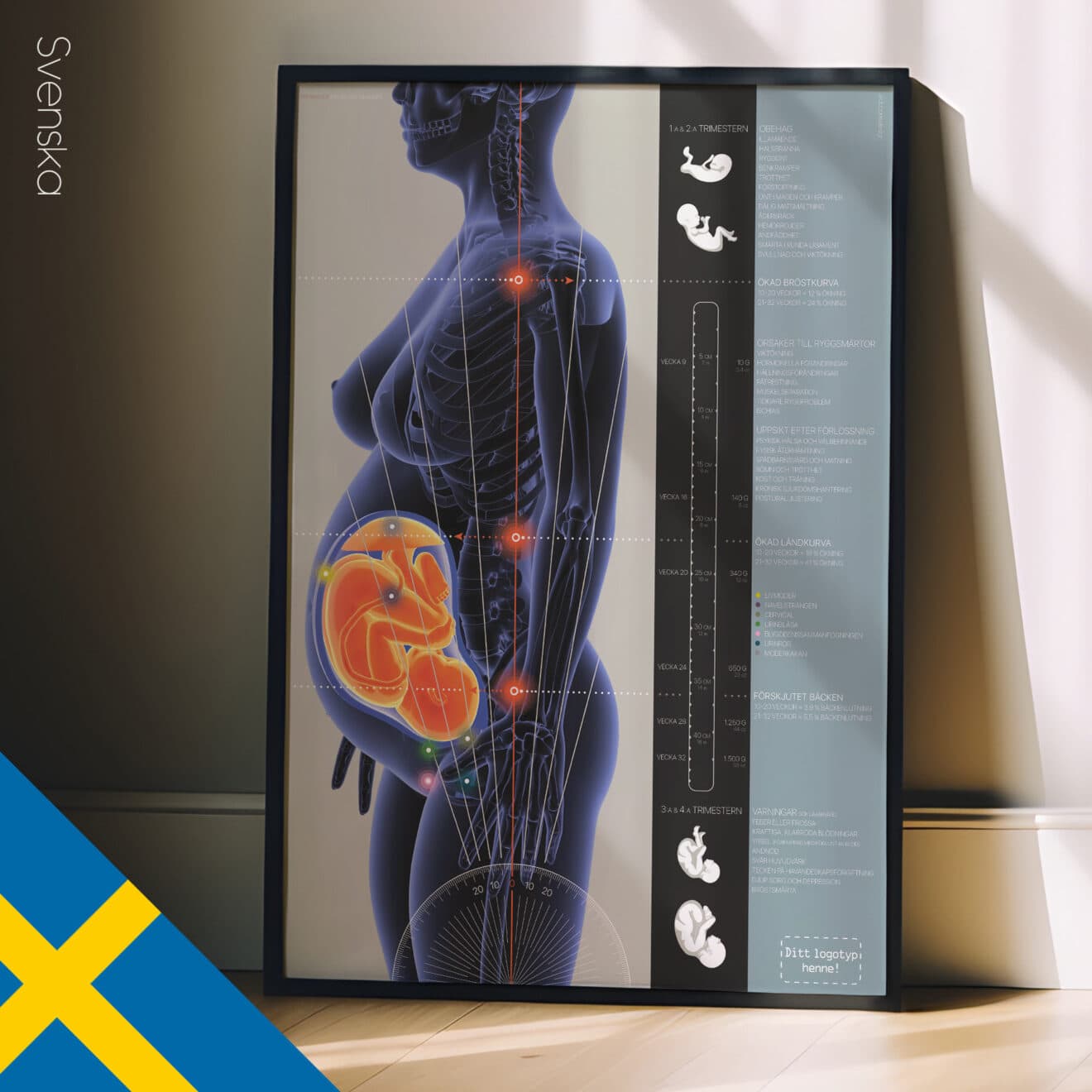
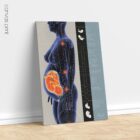
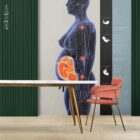
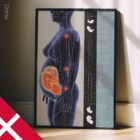
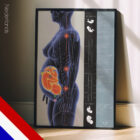
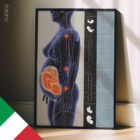
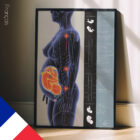
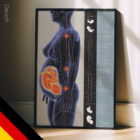
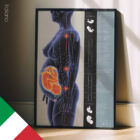
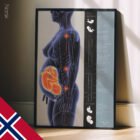
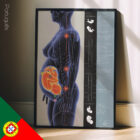
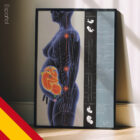
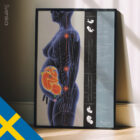
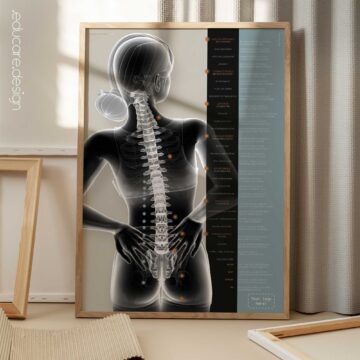
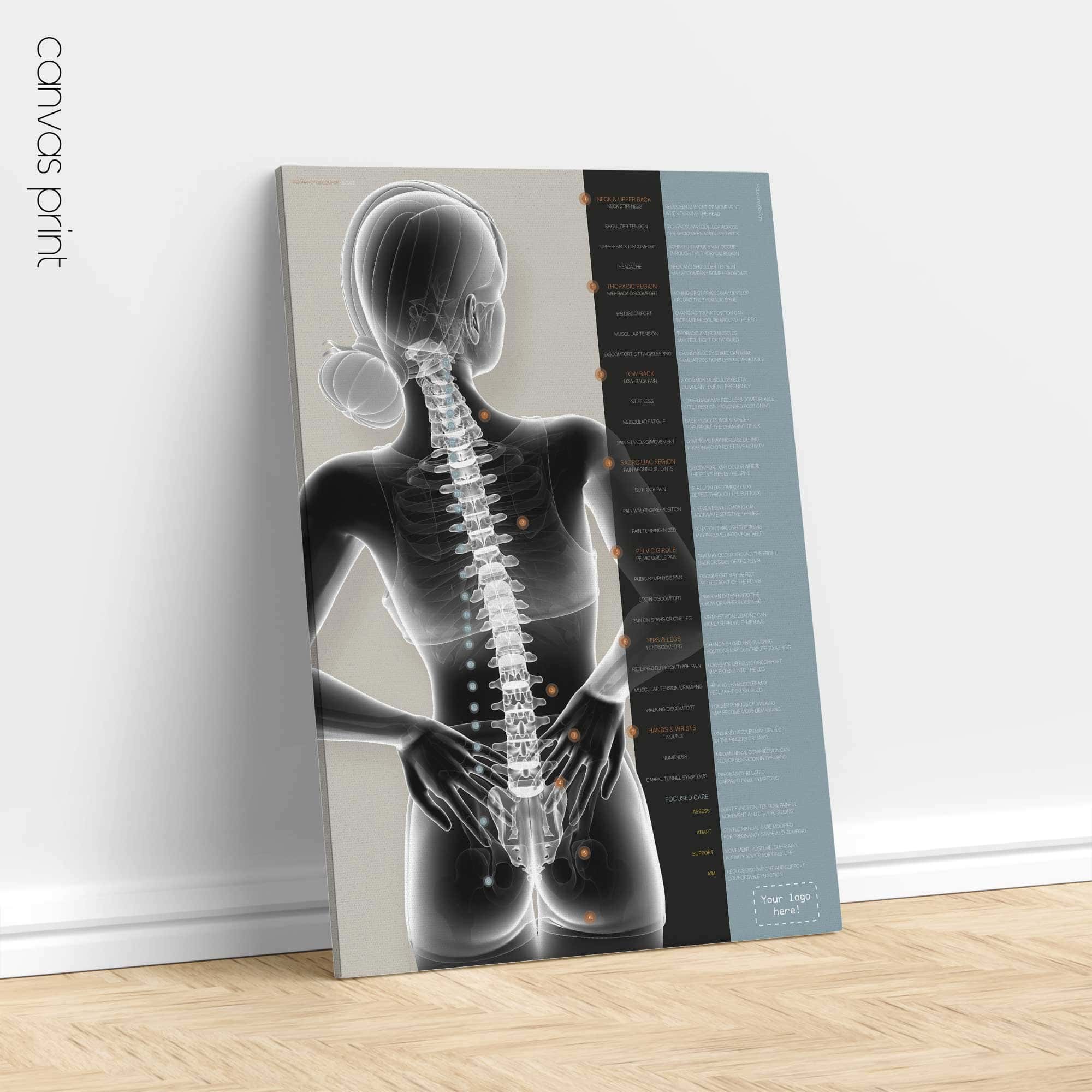
Biomechanics, Centre of Gravity Shift & Spinal Adaptation Across the Trimesters. This Pregnancy and Postural Changes chart presents pregnancy as a dynamic biomechanical progression rather than a purely obstetric process. Through a structured anatomical side view, the artwork illustrates how maternal posture adapts as the foetus grows and the body redistributes load across the spine and pelvis.
As gestation progresses, the centre of gravity shifts anteriorly. The chart clearly visualises the resulting increase in lumbar lordosis, anterior pelvic tilt and compensatory changes in thoracic curvature and cervical alignment. These adaptations influence muscular tension patterns, ligament stress and joint loading — particularly in the lumbar spine, sacroiliac region and pubic symphysis.
The trimester breakdown supports structured consultation. Early physiological adaptations are differentiated from later-stage mechanical stress patterns. The visual markers along the vertebral curves and pelvis help practitioners explain why lower back pain, pelvic discomfort, rib pressure and postural fatigue commonly develop during pregnancy.
This chart does not frame discomfort as inevitable pathology, but facilitates constructive conversations about preparation, movement strategies and supportive care. It provides a visual basis for discussing posture correction, stabilisation exercises, breathing mechanics and external support options.
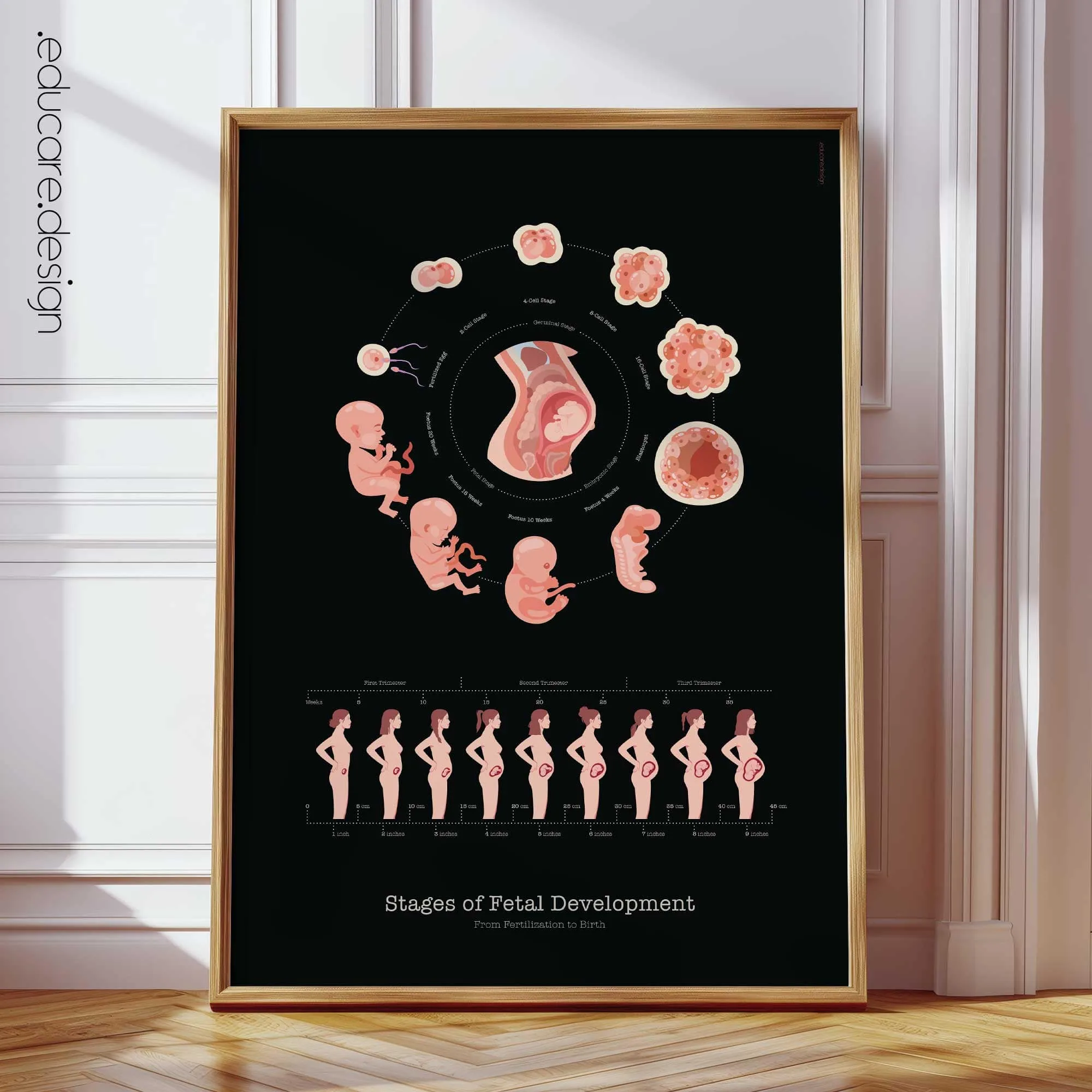
Integrated 1:1 Foetal Growth Measurement Ruler.
A distinctive feature of this artwork is the integrated 1:1 measurement ruler. Displayed in centimetres and inches, it maps foetal growth progression in both length and weight (grams and ounces). This allows practitioners to contextualise mechanical change relative to gestational development, helping patients understand the evolving structural demands placed on the spine and pelvis.
The ruler is precisely scaled to the purchased format to ensure accurate 1:1 measurement. For this reason, the artwork is not available in A3 size, and the ruler is excluded from the square canvas option. Digital versions must be printed at the intended dimensions to preserve measurement accuracy. Size confirmation is provided during ordering to ensure optimal clinical usability.
This chart functions as both an educational and clinical communication tool. It supports pregnancy consultations, postural assessment, prenatal care discussions and postpartum recovery planning. Ideal for chiropractic, osteopathic, physiotherapy, midwifery, obstetric, prenatal and women’s health practices.
 View this chart here on YouTube.
🇬🇧 View more details of the English version.
🇮🇹 Vedi i dettagli della versione italiana.
🇪🇸 Ver detalles de la versión en español.
🇩🇪 Details zur deutschen Version anzeigen.
🇫🇷 Voir les détails de la version française.
🇳🇱 Bekijk details van de Nederlandse versie.
🇵🇹 Veja mais detalhes da versão portuguesa.
🇸🇪 Se fler detaljer om den svenska versionen.
🇳🇴 Se flere detaljer om den norske versjonen.
🇩🇰 Se flere detaljer fra den danske version.
Make it part of your clinic!
⬇ Order here.