Understanding the Autonomic Nervous System — The invisible system that keeps everything running.
The autonomic nervous system (ANS) is the silent regulator of nearly every vital function in the human body. It controls heartbeat, digestion, breathing, and blood pressure — all without conscious effort. Yet, for many patients, it remains a mystery.
Clinicians often find it difficult to explain how “automatic” systems can create very real symptoms — from anxiety and fatigue to digestive issues. That’s where clear visual anatomy becomes essential.
Sympathetic and parasympathetic — the body’s two modes.
The ANS is divided into two complementary parts:
• The sympathetic system triggers the fight-or-flight response — increasing heart rate, releasing adrenaline, and sharpening focus.
• The parasympathetic system does the opposite — slowing heart rate, aiding digestion, and restoring calm.
These two systems constantly shift balance to maintain homeostasis. When this regulation falters, patients may experience functional symptoms such as dizziness, gut discomfort, or sleep disruption — even without structural disease.
Why understanding the ANS matters in communication.
When clinicians and patients share a basic understanding of the autonomic nervous system, communication improves dramatically. It helps translate abstract sensations — like “feeling tense” or “drained” — into physiological explanations that make sense.
By grounding the discussion in visible anatomy, clinicians can replace fear or uncertainty with clarity. Patients start to see their symptoms not as random or mysterious, but as logical responses that can be balanced and managed.

Turning invisible function into visual understanding.
In clinic settings, complex physiology can quickly overwhelm patients. The Autonomic Nervous System chart transforms that complexity into something instantly recognisable.
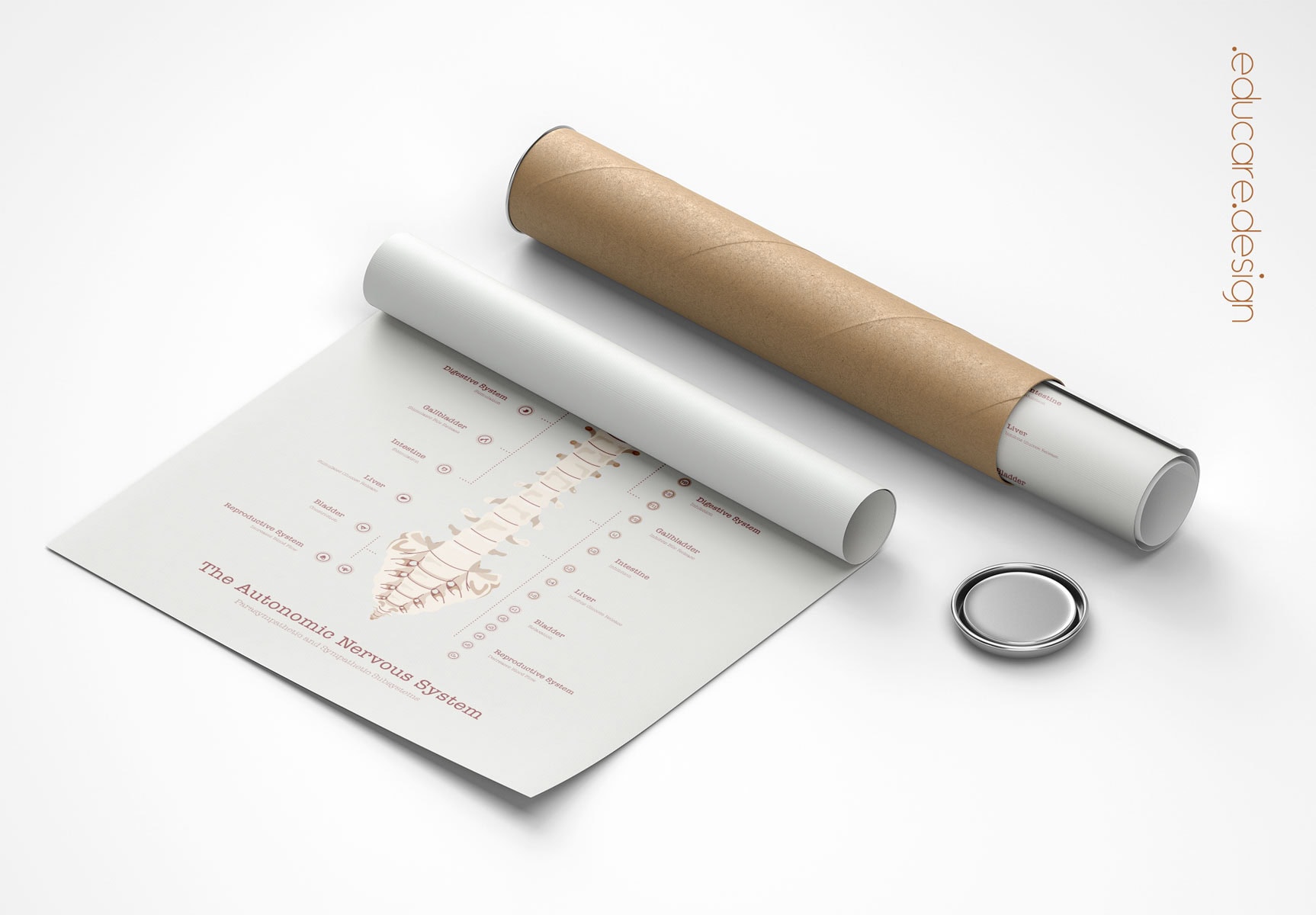
By splitting the human form into sympathetic (right) and parasympathetic (left) sides, each linked to organ icons, the chart translates unseen nerve pathways into simple visual logic.
“Patients often realise for the first time that stress and digestion are directly connected,” explains designer Kasper Smith of educare.design.
“Once they see the nerves branching to the organs, the explanation clicks — it’s design as patient empathy.”
How visual communication improves consultation flow.
Clinics using the Autonomic Nervous System chart often find that it changes the pace of conversation. Instead of long verbal explanations, practitioners can simply point — showing how nerves and organs interact in real time.
The visual structure reduces confusion, allowing clinicians to explain causes and effects in seconds. It builds trust, shortens consultations, and enhances recall — because when patients see the link, they tend to remember it.
FAQ.
Q1: Why is visual anatomy useful in explaining the ANS?
Because visuals reduce cognitive load — patients grasp the relationship between nerves and organs faster than with words alone.
Q2: Can this chart be customised with a clinic logo or language?
Yes — all artworks can be customised to include either a clinic’s logo, the clinic’s name or website address, and all charts are available in 10 languages!
Q3: How accurate is the medical information on the chart?
Each chart is designed using verified anatomical references and reviewed by clinical professionals to ensure visual and scientific accuracy while maintaining a modern, minimal aesthetic.
Q4: How can visual anatomy charts improve patient communication?
They make invisible functions visible, helping patients connect symptoms to physiology and empowering them to follow treatment plans.
Q5: How can this chart be used during a first consultation?
It serves as a visual anchor when explaining stress-related or functional symptoms. Clinicians can point to the relevant nerve pathways, helping patients understand how emotional or physical stress affects internal organs.
Design and accuracy in harmony.
Every line in the chart has purpose. The artwork was developed using verified neuroanatomical references and refined through feedback from practicing clinicians.
The result: a piece that functions both as a communication tool and a contemporary art print for modern clinics.
Available in 10 languages and customisable with your clinic’s name or logo, the charts connect universal science with local understanding — a balance as elegant as the ANS itself.
👉 Explore the charts here:
Autonomic Nervous System Chart (01) and Autonomic Nervous System Chart (02).
Learn More.
Explore related anatomy charts that connect directly with the Autonomic Nervous System:
The Muscular System, The Cardiovascular System, and The Lymphatic System. Browse all our Nervous System Charts.