From Pattern of Symptoms to Clinical Testing.
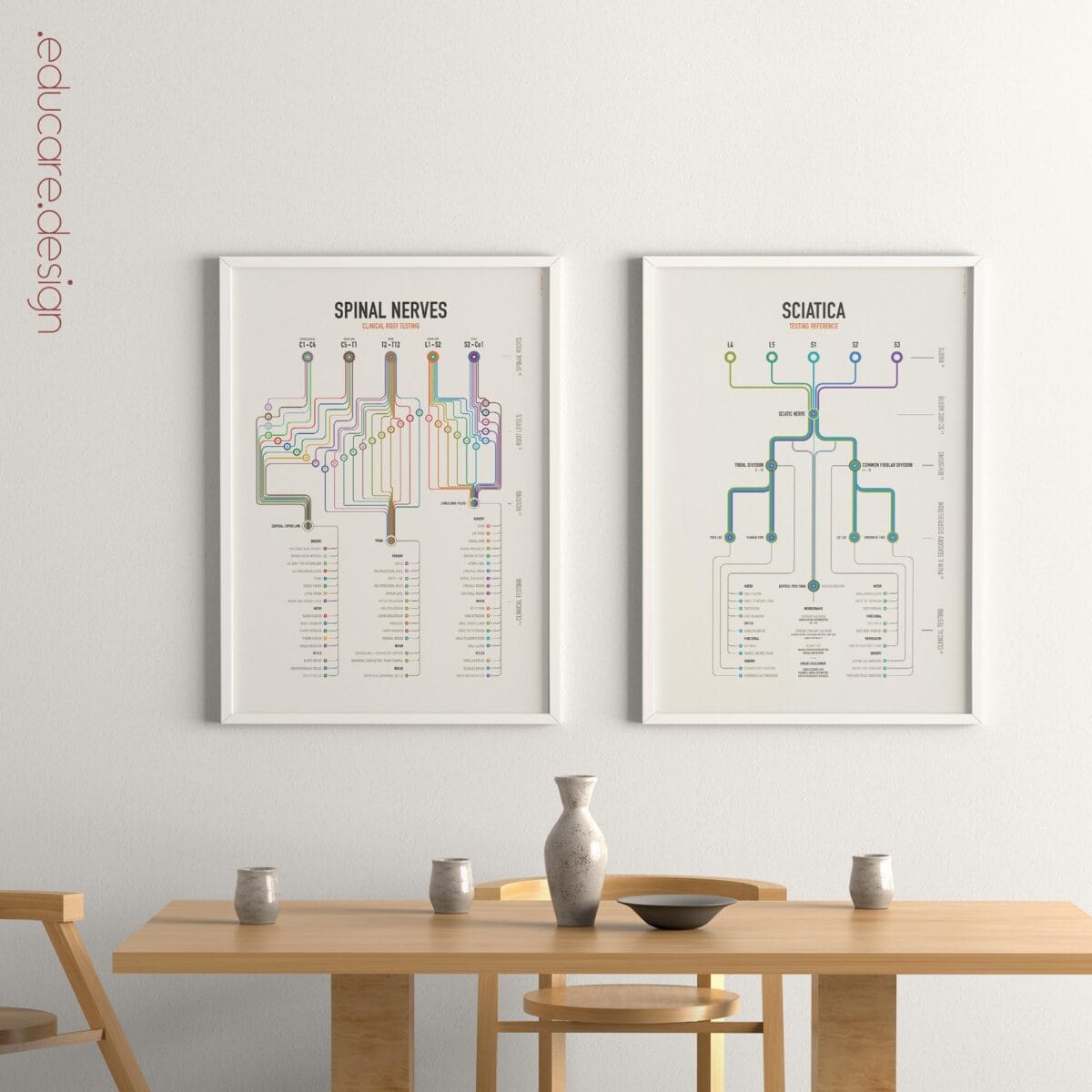
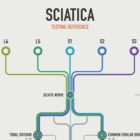
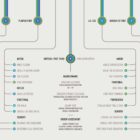
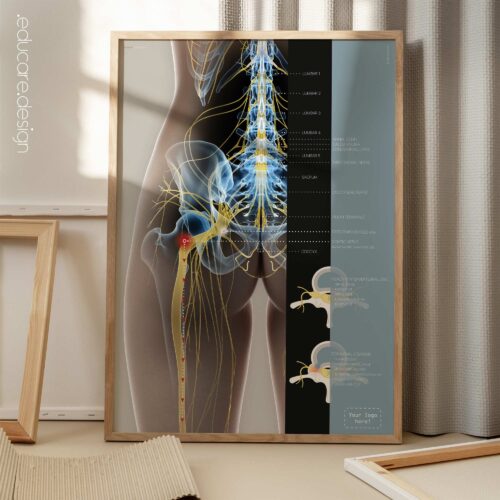
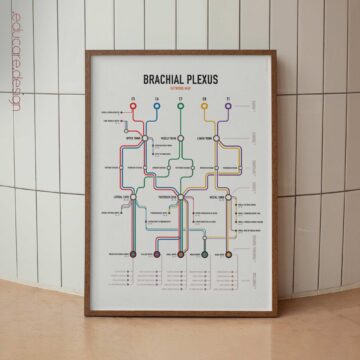
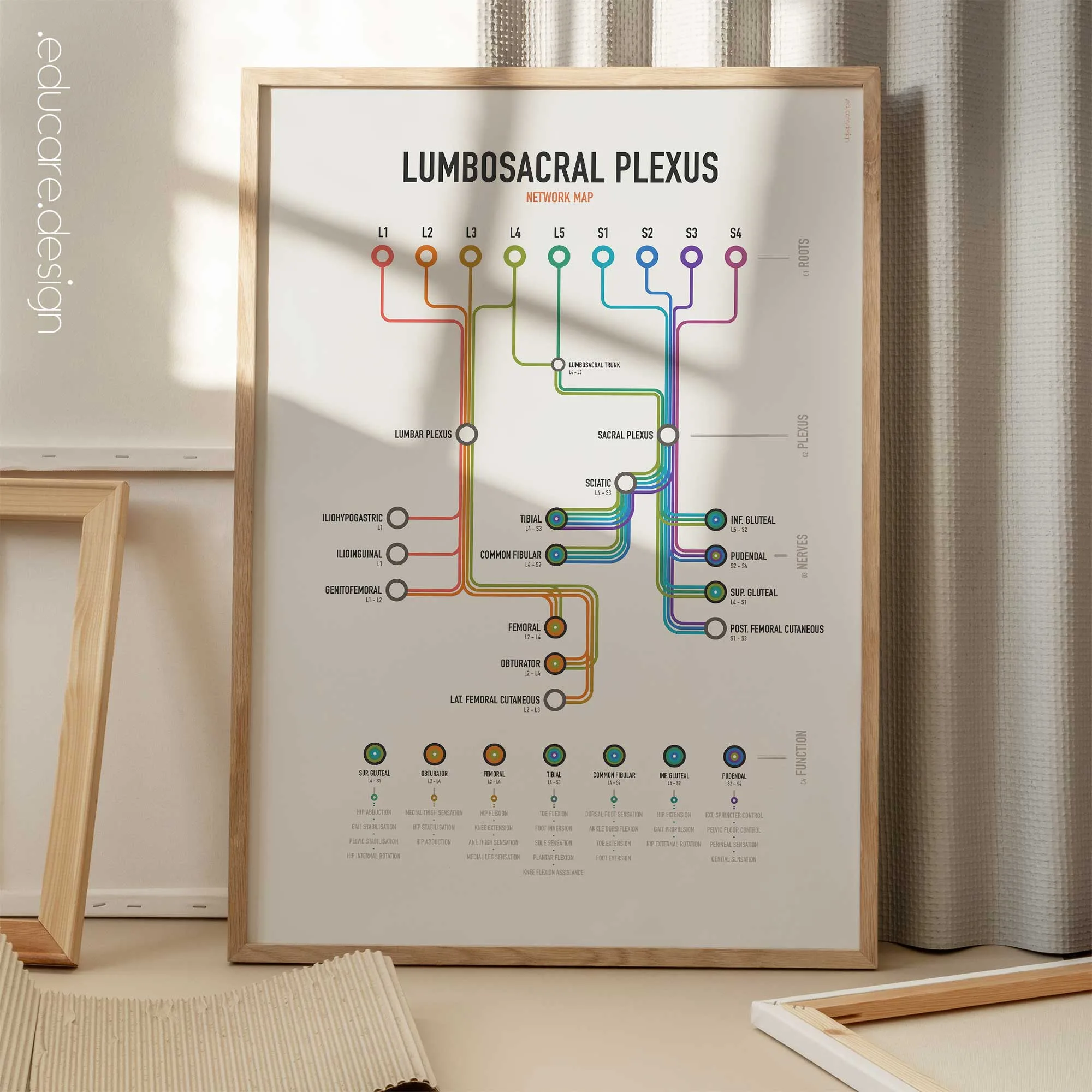
The Sciatica Clinical Testing Reference brings the anatomy and everyday assessment of sciatica together in one clear visual system. Following the L4–S3 roots into the sciatic nerve and its tibial and common fibular divisions, the chart connects nerve pathways with pain and sensory distribution, motor testing, reflexes, functional testing and neurodynamic assessment.
This reference chart does not present the individual tests in isolation; the network structure shows how they relate to the underlying anatomy. Root colours remain visible through the map, helping connect findings such as altered sensation, weakness, reduced reflexes or symptom reproduction with the neural pathways being assessed.
Key testing references include ankle plantarflexion and dorsiflexion, great-toe extension, Achilles reflex, heel and toe walking, single-leg heel raise, Straight Leg Raise, Crossed Straight Leg Raise, Slump Test and Fibular Head Tinel’s Sign. Sensory landmarks cover the posterior and lateral leg, plantar and dorsal foot and first web space.
The chart also includes an Urgent Assessment section highlighting saddle sensory loss, bladder or bowel dysfunction and rapidly progressive weakness — important findings that warrant particular clinical attention.
Made for the Consultation Room.
Sciatica can be difficult to explain because pain location, nerve anatomy and neurological findings do not always appear to the patient to be connected. This chart provides a visual route through that complexity.
During a patient visit, it can help illustrate why sensation is checked in specific areas, why particular movements are tested, what heel or toe walking can reveal, and why neurodynamic tests may reproduce familiar symptoms. Instead of describing an abstract nerve pathway, the clinician can follow it directly with the patient.
It is designed as a reference and communication tool for everyday clinical use — detailed enough to support assessment, but structured clearly enough to use while a patient is in front of you.
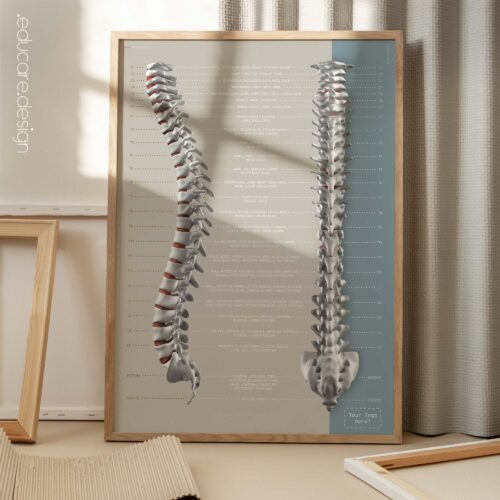
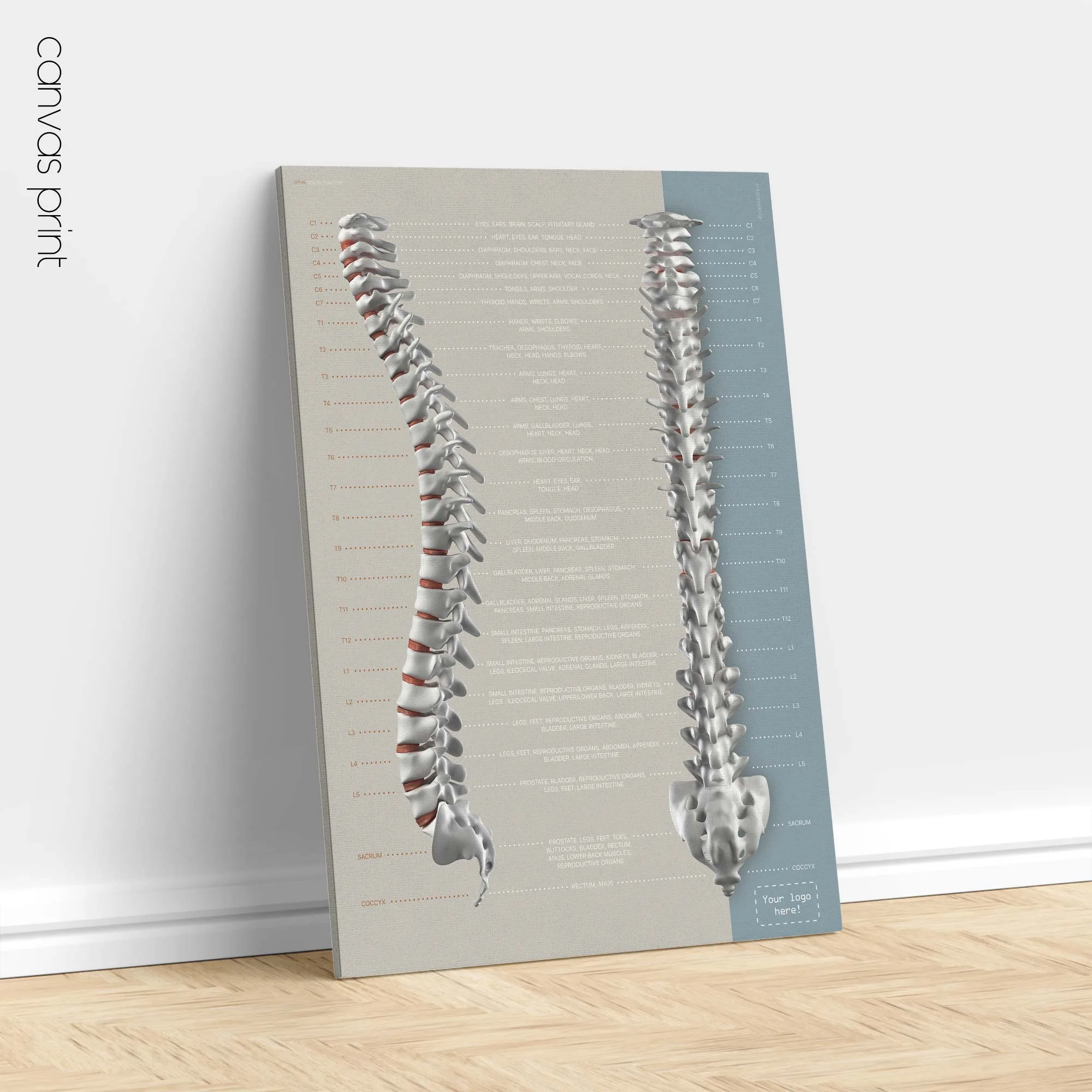
Designed to work with Spinal Nerves Clinical Root Testing.
Our Spinal Nerves Clinical Root Testing maps root-level sensory, motor and reflex findings. Sciatica Clinical Testing Reference follows those findings into the sciatic pathway and focused lower-limb testing. Together they create a clear clinical sequence:
Spinal Root → Sciatic Pathway → Symptom Distribution → Clinical Test.
 View this chart here on YouTube.
🇬🇧 View more details of the English version.
🇮🇹 Vedi i dettagli della versione italiana.
🇪🇸 Ver detalles de la versión en español.
🇩🇪 Details zur deutschen Version anzeigen.
🇫🇷 Voir les détails de la version française.
🇳🇱 Bekijk details van de Nederlandse versie.
🇵🇹 Veja mais detalhes da versão portuguesa.
🇸🇪 Se fler detaljer om den svenska versionen.
🇳🇴 Se flere detaljer om den norske versjonen.
🇩🇰 Se flere detaljer fra den danske version.
Make it part of your clinic!
⬇ Order here.