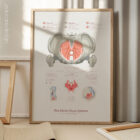
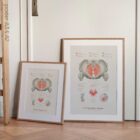
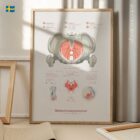
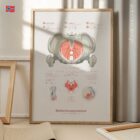
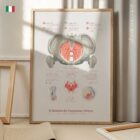
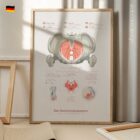
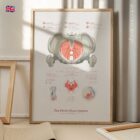
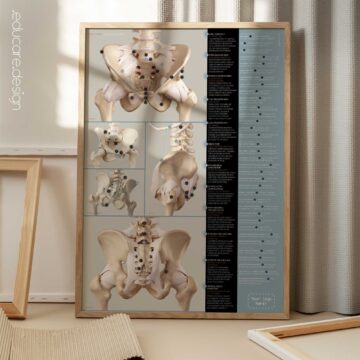
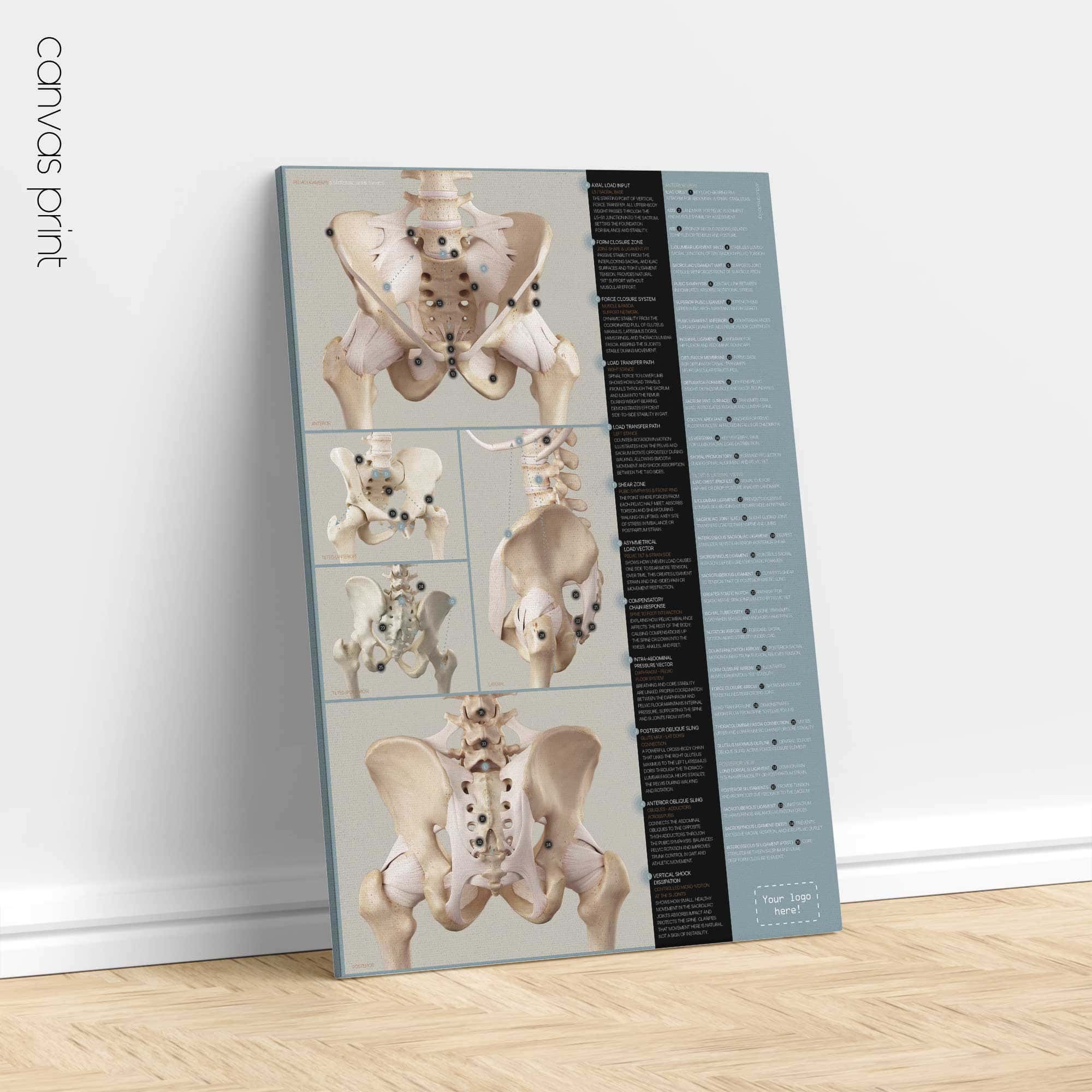
A clear, modern anatomy chart explaining the pelvic floor as a muscular support, control and pressure-coordination system.
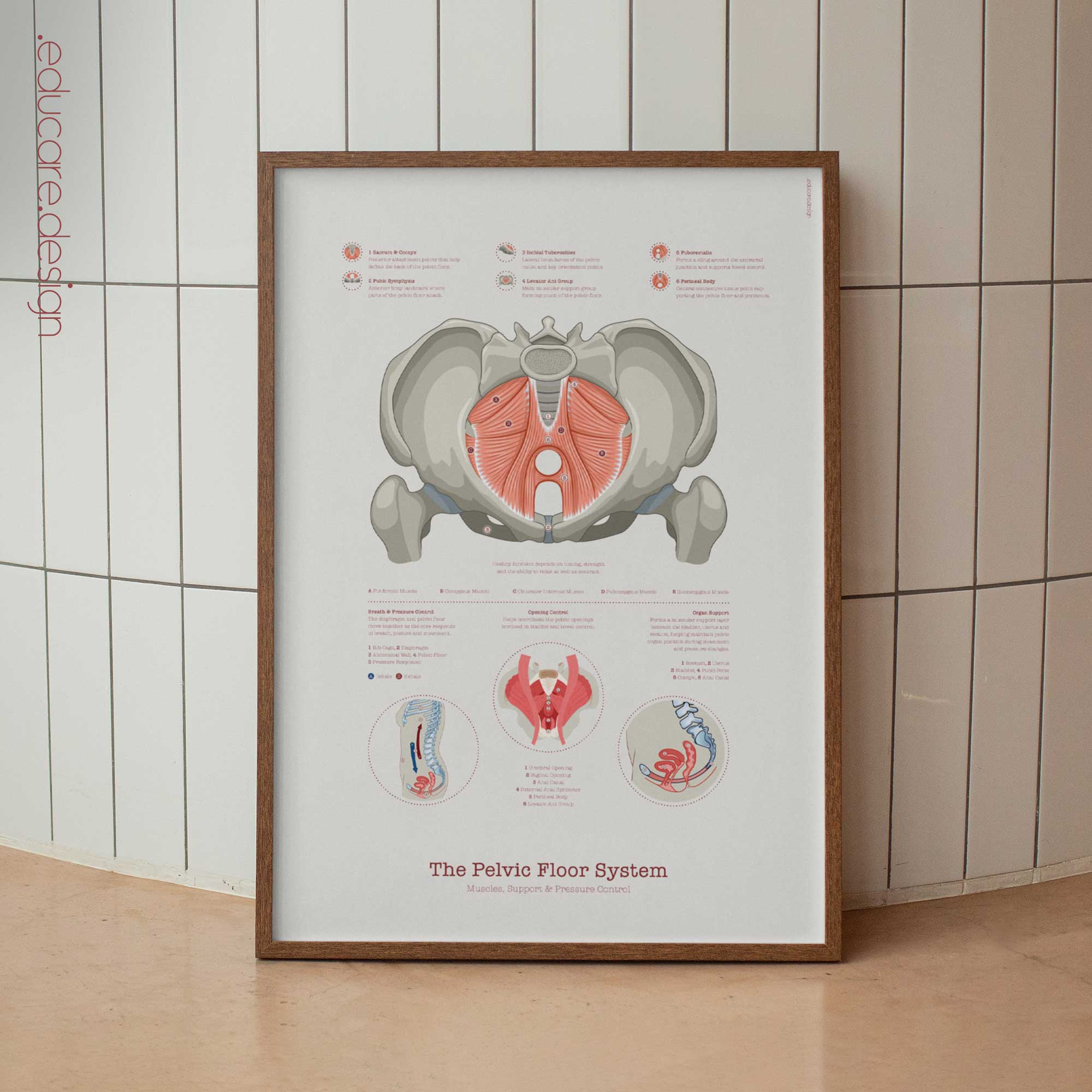
The Pelvic Floor System chart is designed to help patients understand one of the most important — and often least understood — areas of the body. Instead of presenting the pelvic floor as one isolated muscle, the chart shows it as a layered anatomical system that supports the pelvic organs, helps coordinate bladder and bowel control, and works together with breathing, posture and core pressure.
With a calm visual structure and carefully selected labels, the chart gives practitioners a clear way to explain pelvic floor anatomy during consultations, rehabilitation sessions, women’s health appointments, postpartum care, movement therapy and patient education.
What the chart shows.
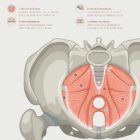
The central illustration presents the pelvic floor as a muscular support layer at the base of the pelvis. It includes key anatomical landmarks and muscle structures such as the sacrum, coccyx, pubic symphysis, ischial tuberosities, levator ani group, puborectalis, perineal body, piriformis, coccygeus, obturator internus, pubococcygeus and iliococcygeus.
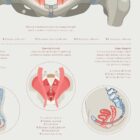
The lower section expands the anatomy into three practical clinical concepts: breath and pressure control, opening control, and organ support. Together, these sections show how the diaphragm and pelvic floor move together as the core responds to breath, posture and movement; how the pelvic floor helps coordinate the pelvic openings involved in bladder and bowel control; and how it forms a muscular support layer beneath the bladder, uterus and rectum.
This makes the chart more than a simple anatomy overview. It explains the pelvic floor as part of a functional system — one that supports, controls, responds and coordinates.
Designed for clear patient communication.
Pelvic floor topics can be difficult to explain verbally. Many patients associate the pelvic floor only with pregnancy, childbirth or “Kegel exercises”, without understanding the broader role of relaxation, timing, pressure control, posture and coordination.
This chart helps practitioners explain that healthy pelvic floor function is not only about strength. It also depends on the ability to relax, contract and respond at the right time. That distinction is especially valuable when discussing symptoms such as urinary leakage, pelvic heaviness, pressure, bowel control issues, postpartum recovery or difficulty coordinating the deep core.
How this chart can be used in practice.
A practitioner may use this chart with a postpartum patient experiencing urinary leakage and pelvic heaviness. The main anatomy illustration helps show that the pelvic floor is not one single muscle, but a layered support system at the base of the pelvis. The organ support section can then be used to explain how the pelvic floor sits beneath the bladder, uterus and rectum, helping support these organs during movement and pressure changes.
The opening control section helps explain why leakage may occur during coughing, sneezing, lifting or exercise. The breath and pressure control section then shows why pelvic floor rehabilitation is not simply about “squeezing harder”. It is also about restoring coordination between the pelvic floor, breathing, posture and core pressure.
This gives the patient a clearer understanding of why treatment may involve strength, timing, relaxation, breathing and movement coordination — rather than one simple exercise or instruction.
For modern clinical settings.
The Pelvic Floor System chart is especially relevant for pelvic health physiotherapists, women’s health clinics, pregnancy and postpartum care, osteopaths, chiropractors, rehabilitation clinics, Pilates and movement therapists, and multidisciplinary healthcare settings. It can support patient education around pelvic floor anatomy, bladder and bowel control, pelvic organ support, pressure management, breathing, posture and movement awareness. Like every educare.design chart, it combines clinical clarity with calm, modern visual design. It is made for clinics that want patient education material that feels professional, refined and easy to understand — without the dated look of traditional medical posters.
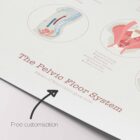
Free customisation with your clinic’s name.
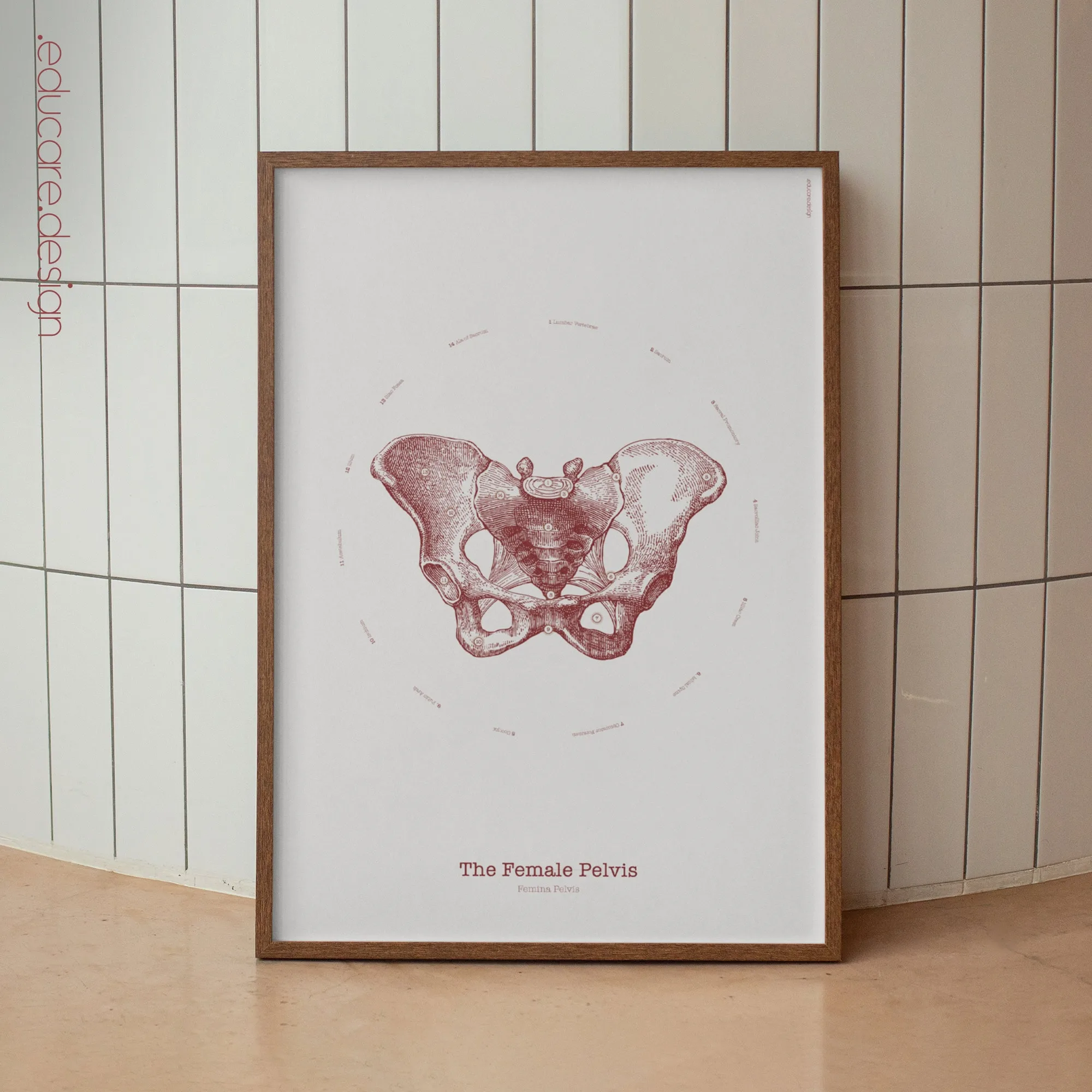
For this chart we offer to add your clinic’s name (or website address) for free! The name will go instead of the current sub-headline on the artwork; view an illustration of this in the image gallery.
 View this chart here on YouTube.
Black Edition.
This anatomy chart is available to order in a special black edition, which can be previewed in the image gallery.
🇺🇸 View more details of the English version.
🇮🇹 Vedi i dettagli della versione italiana.
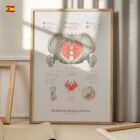
🇪🇸 Ver detalles de la versión en español.
🇩🇪 Details zur deutschen Version anzeigen.
🇫🇷 Voir les détails de la version française.
🇳🇱 Bekijk details van de Nederlandse versie.
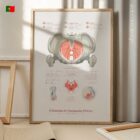
🇵🇹 Veja mais detalhes da versão portuguesa.
🇸🇪 Se fler detaljer om den svenska versionen.
🇳🇴 Se flere detaljer om den norske versjonen.
🇩🇰 Se flere detaljer fra den danske version.
Make it part of your clinic!
⬇ Order here.