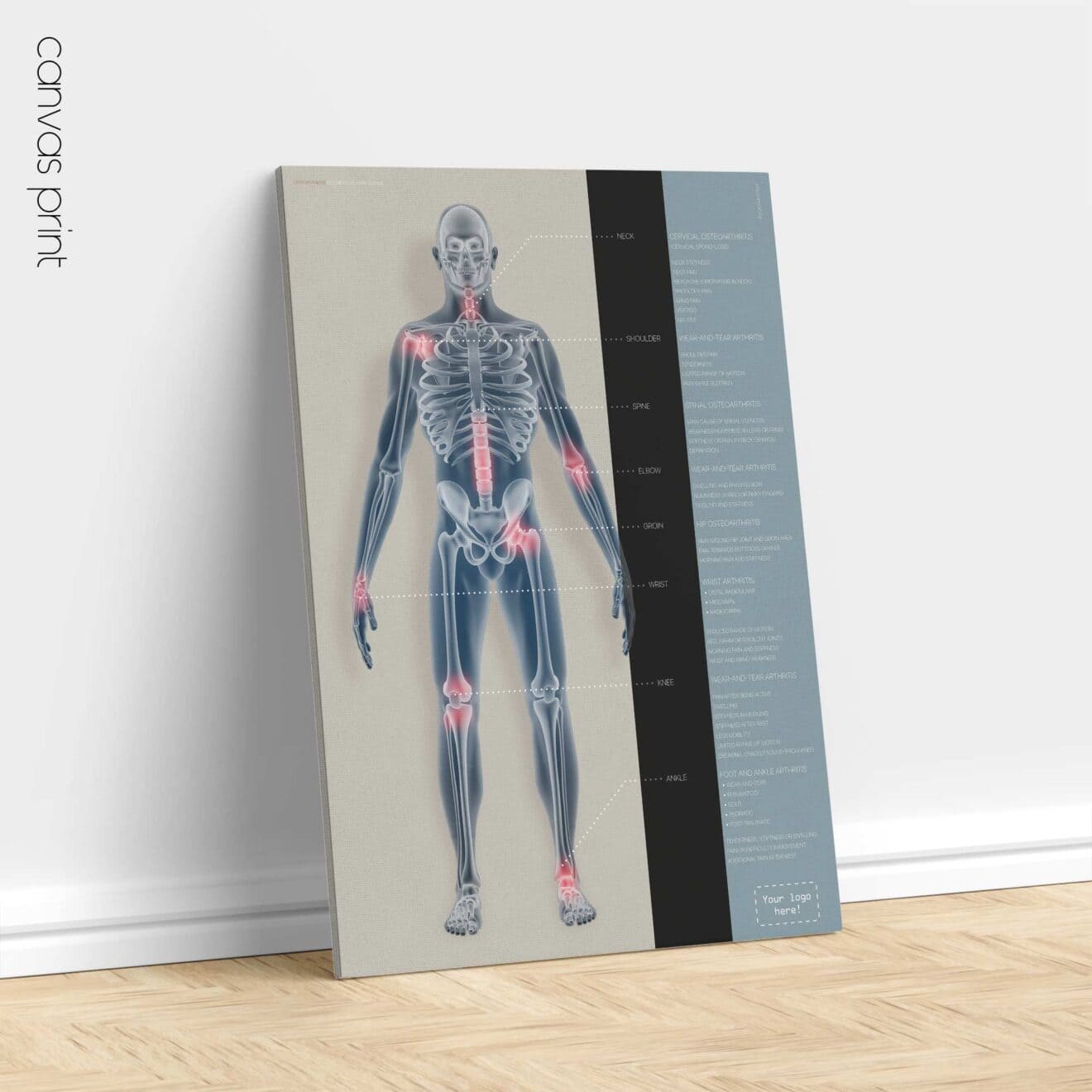
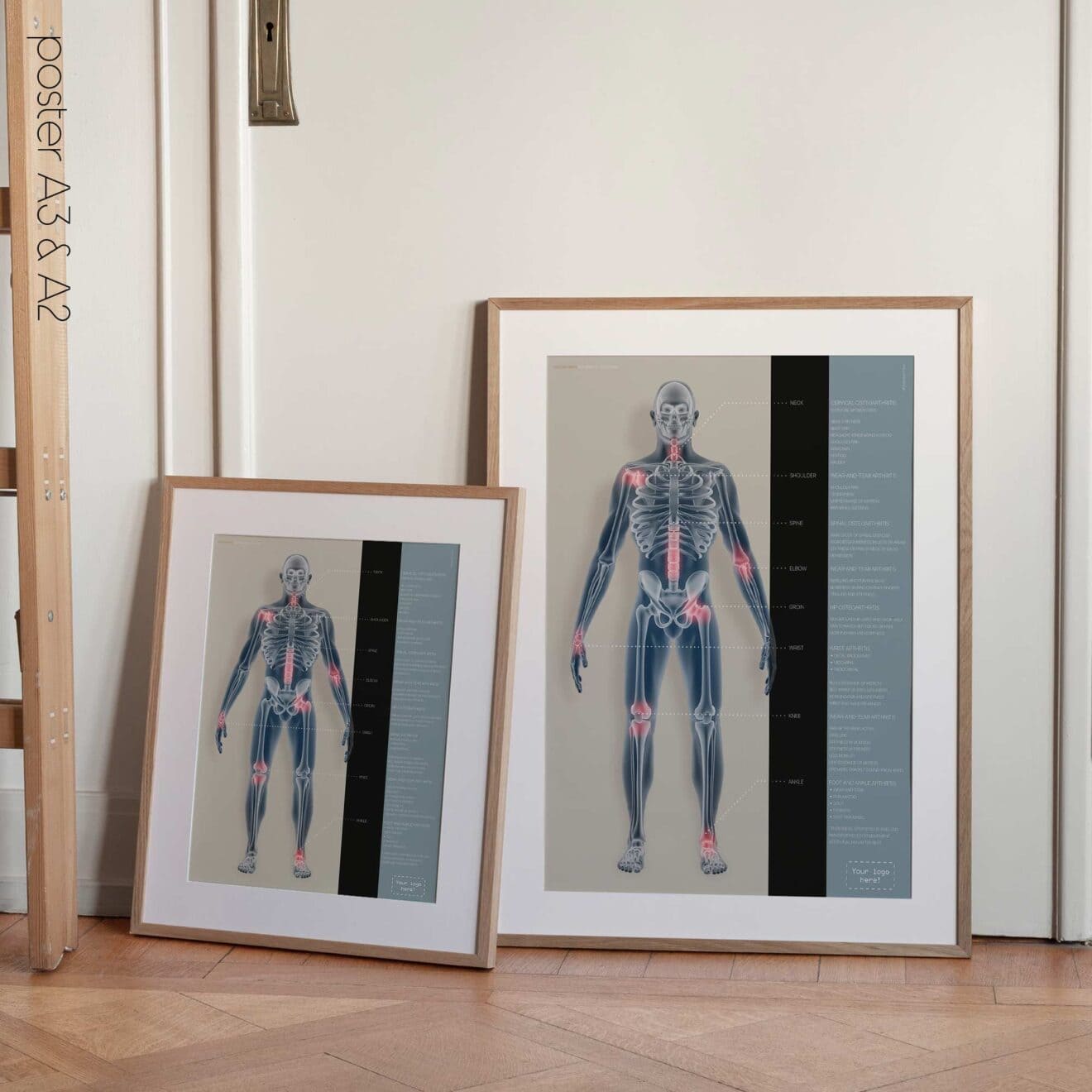
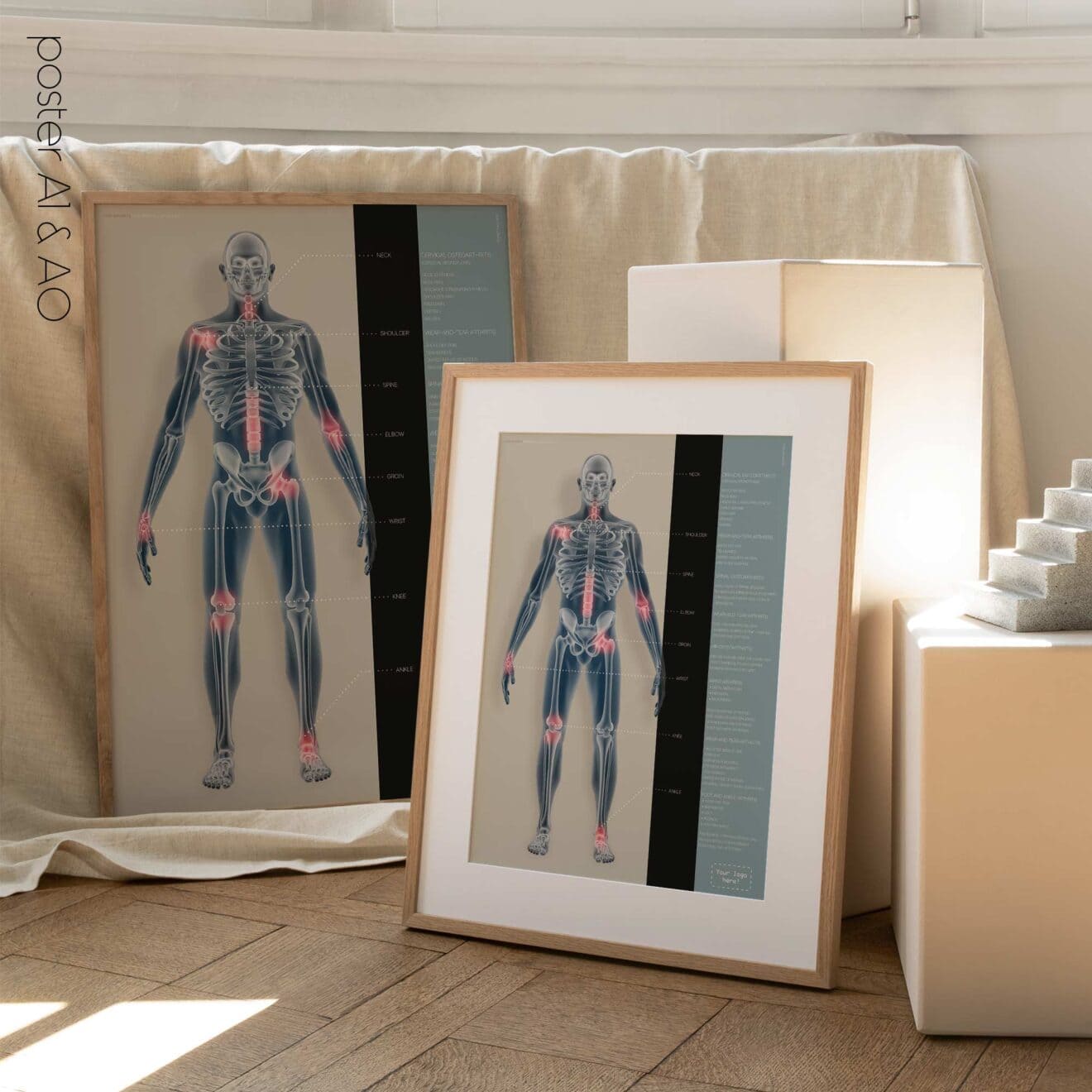
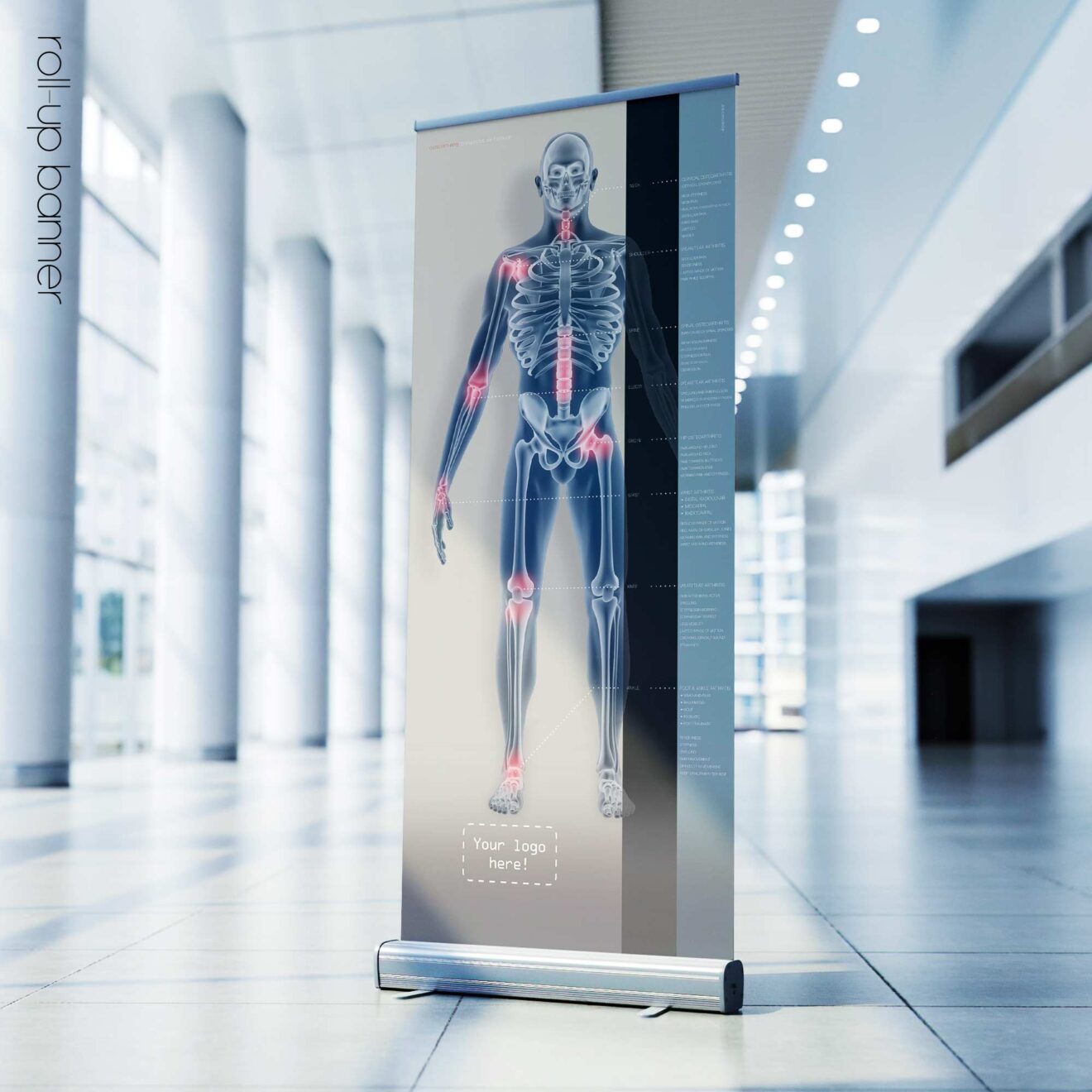
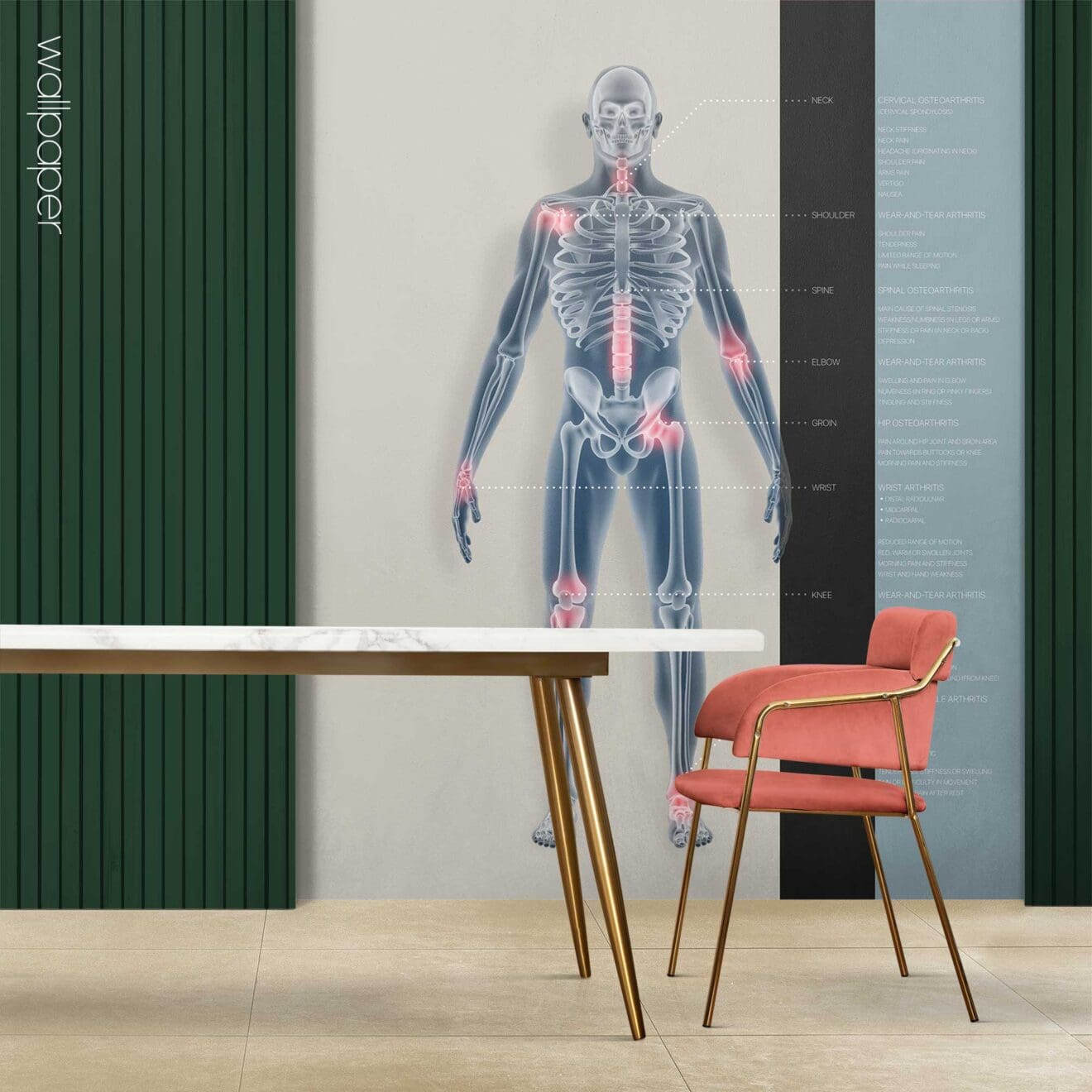
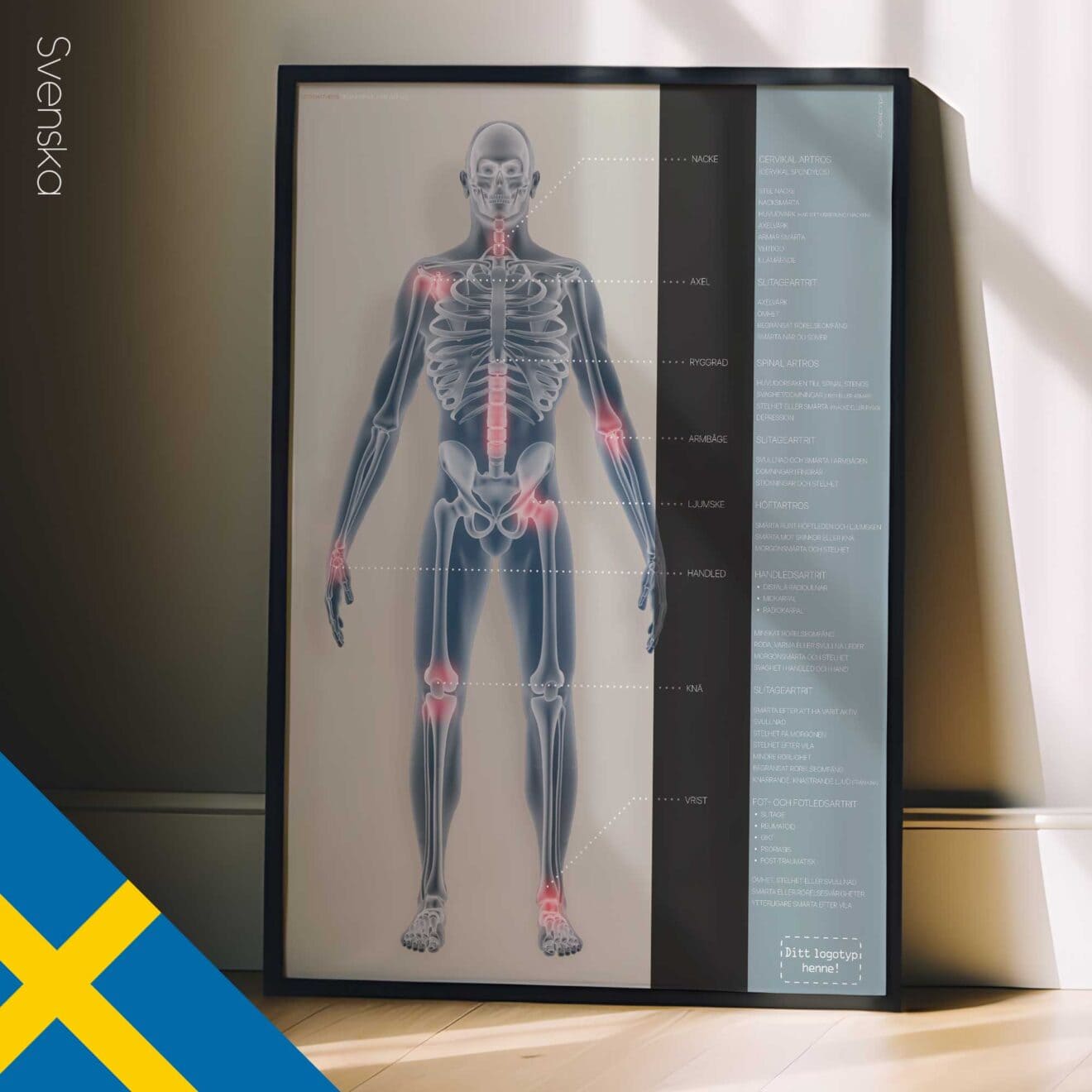
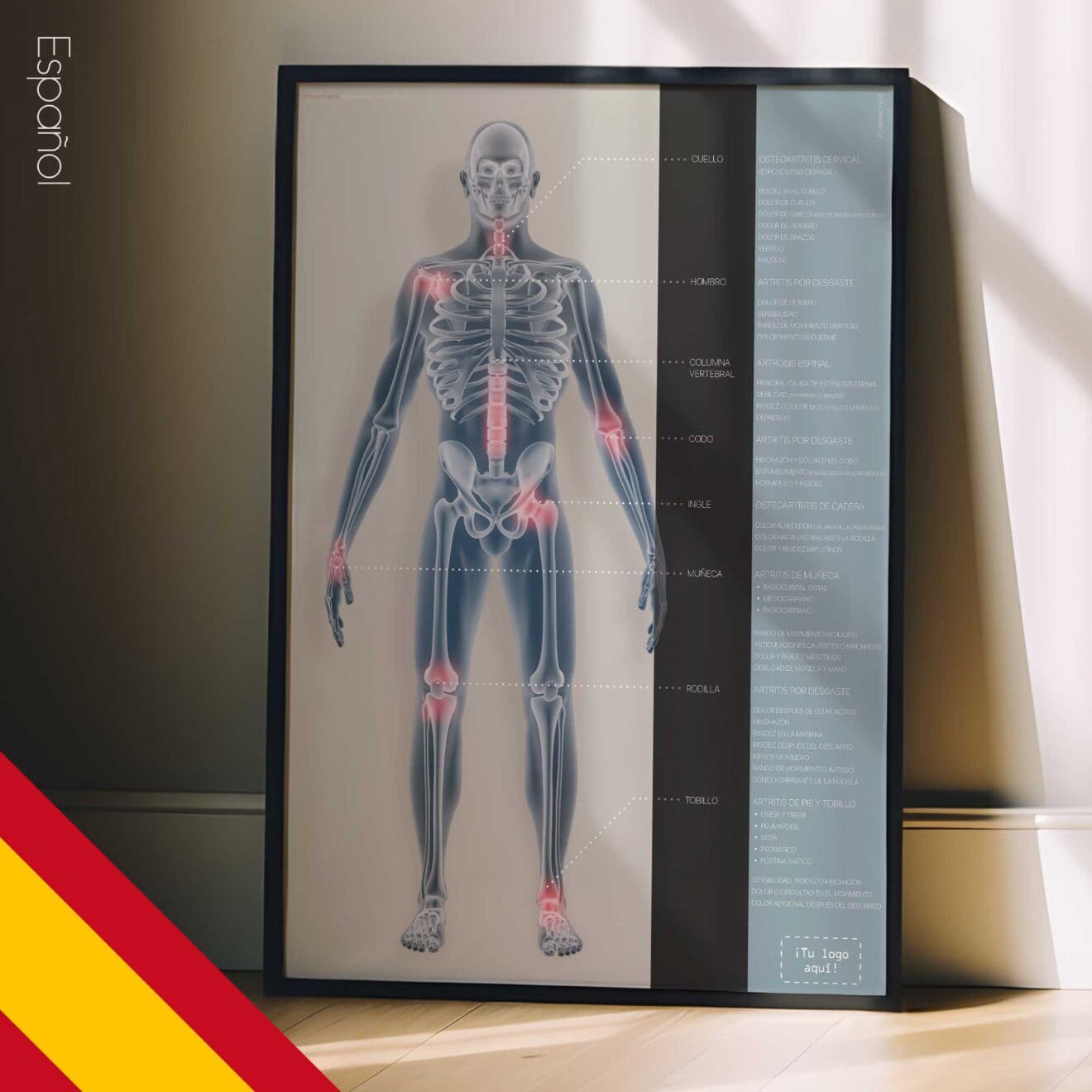
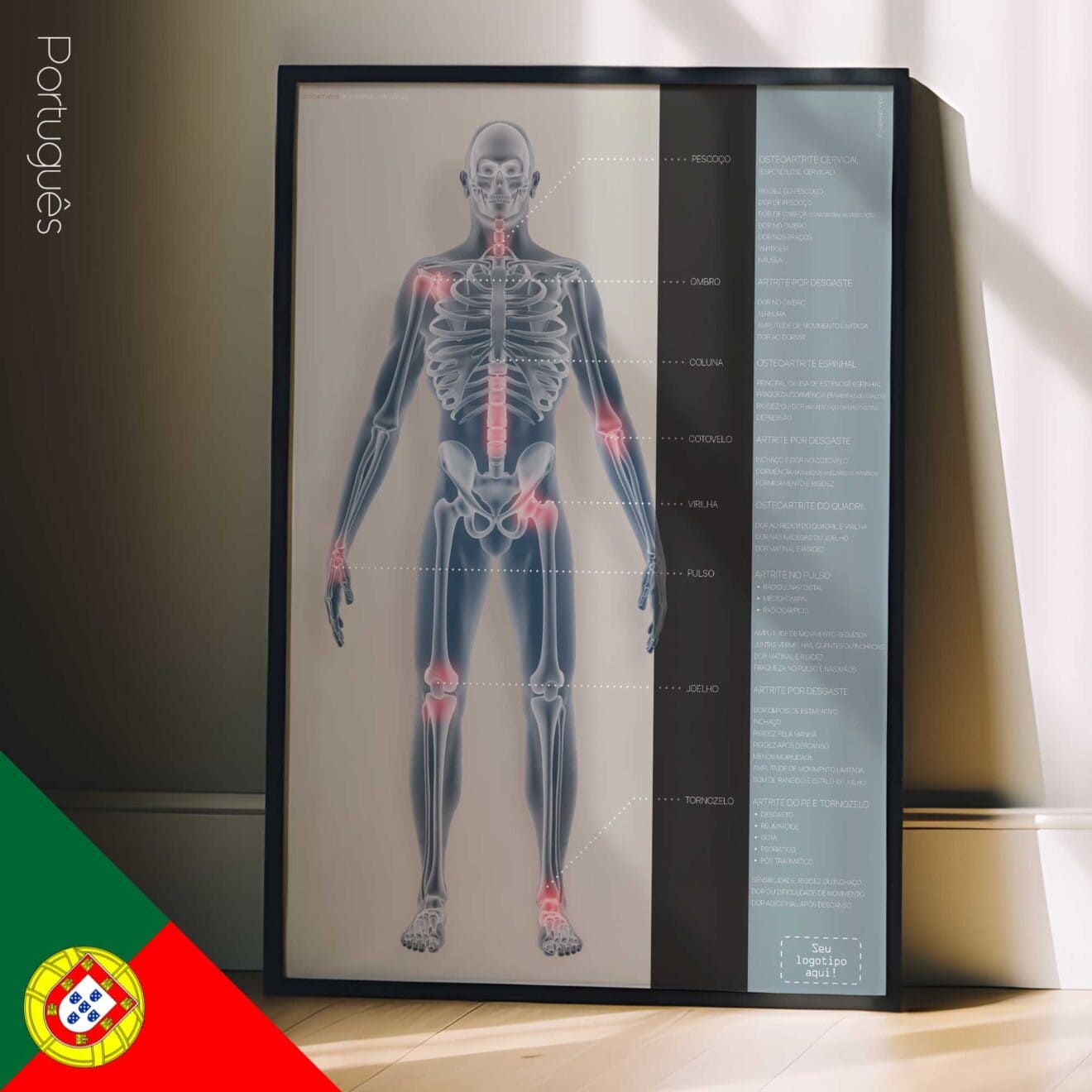
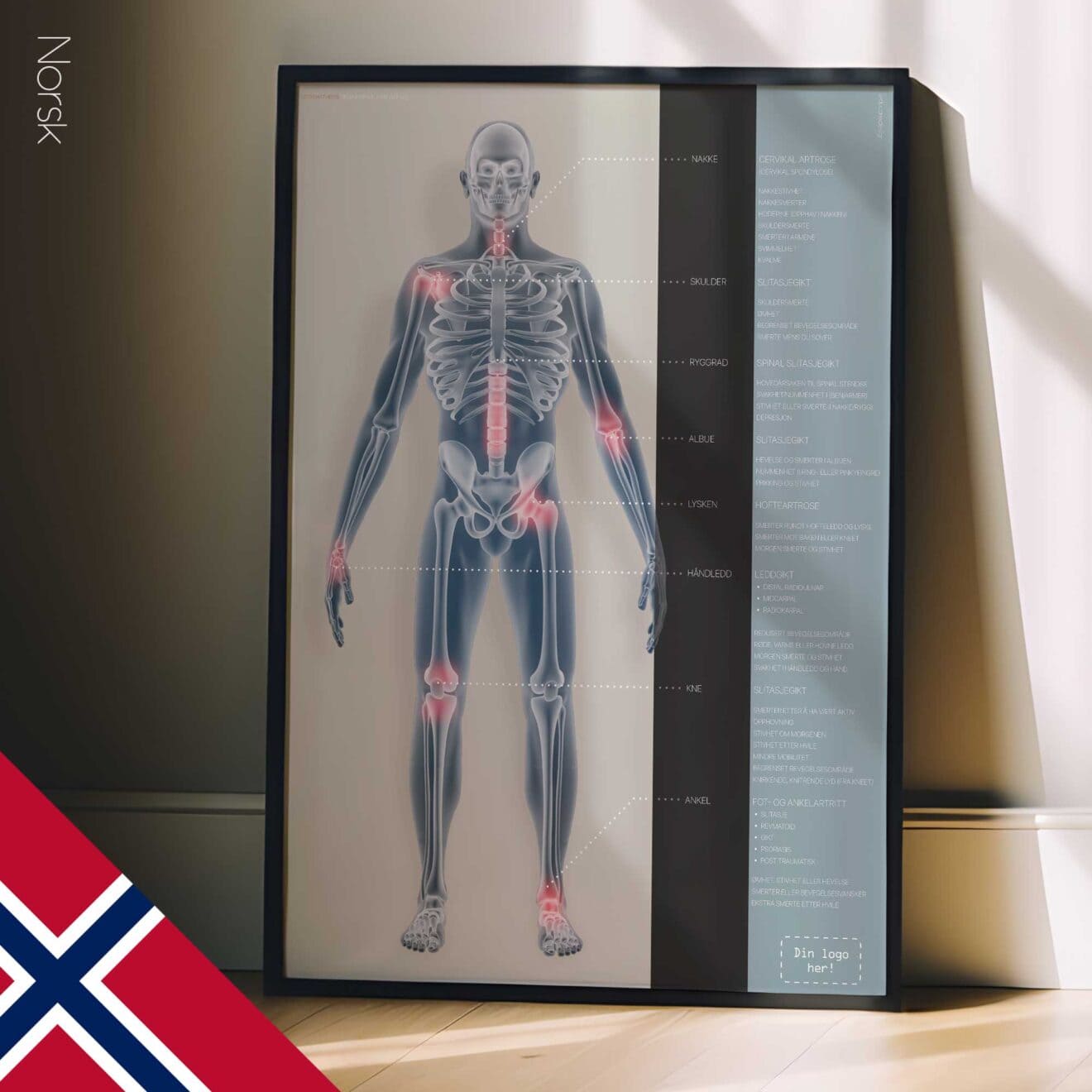
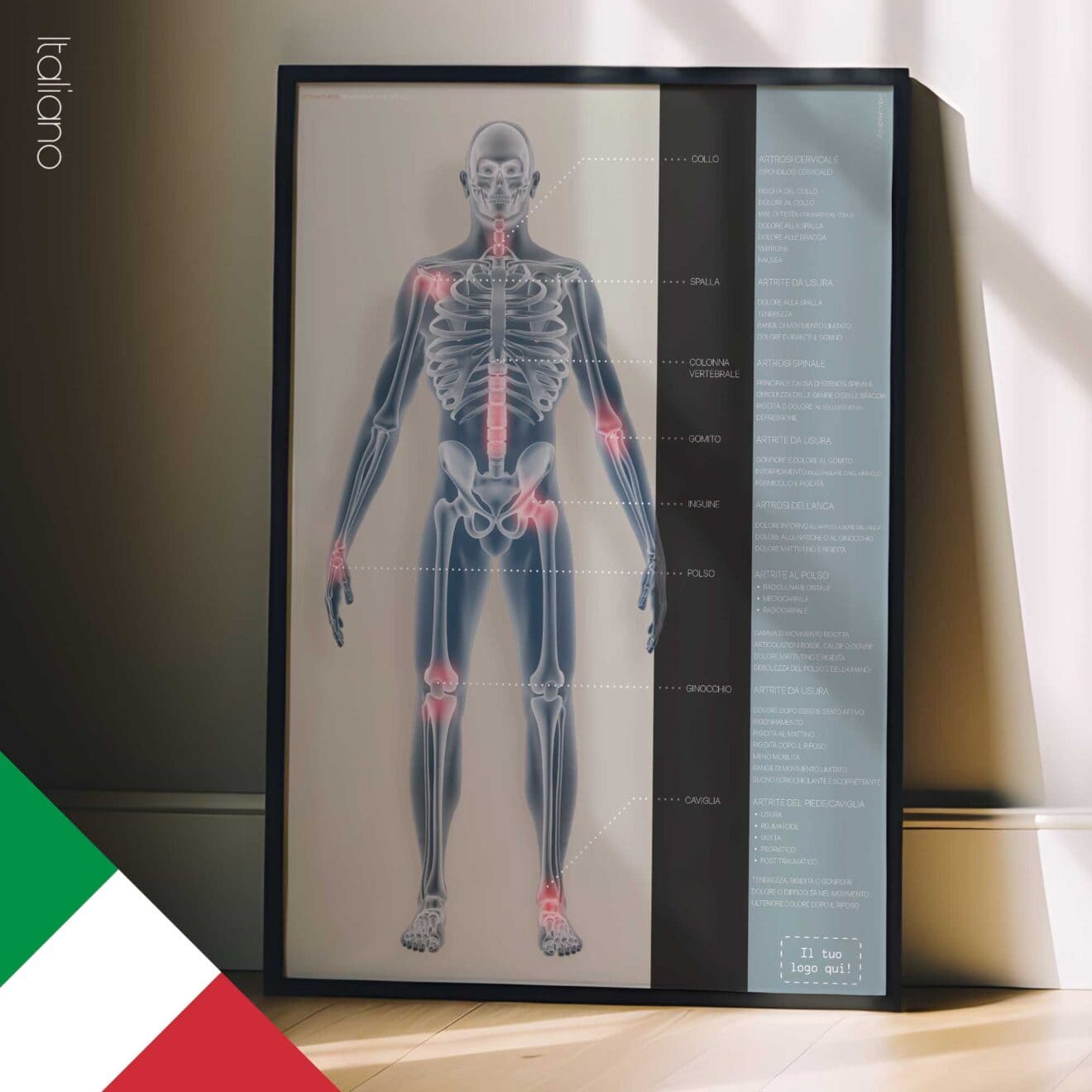
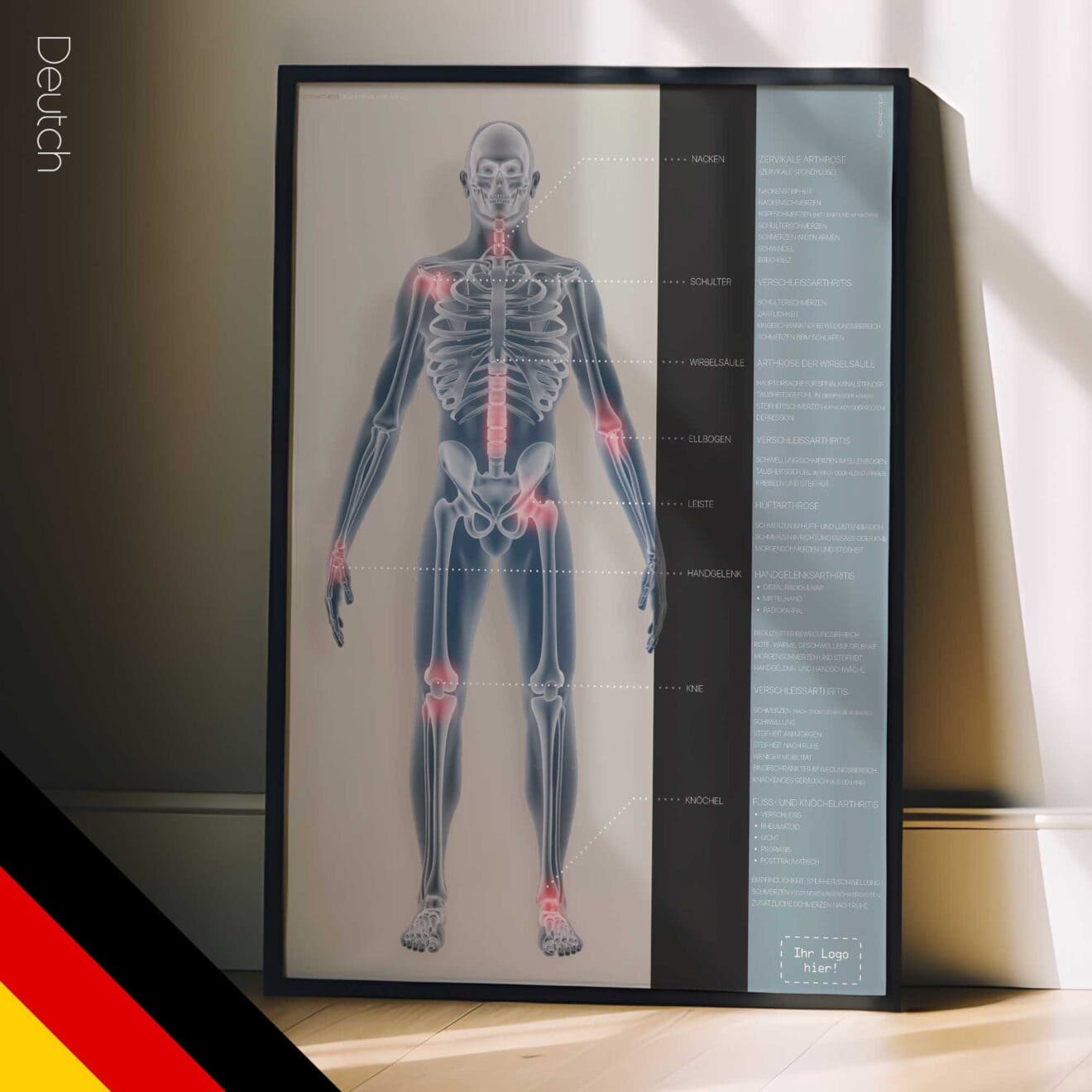
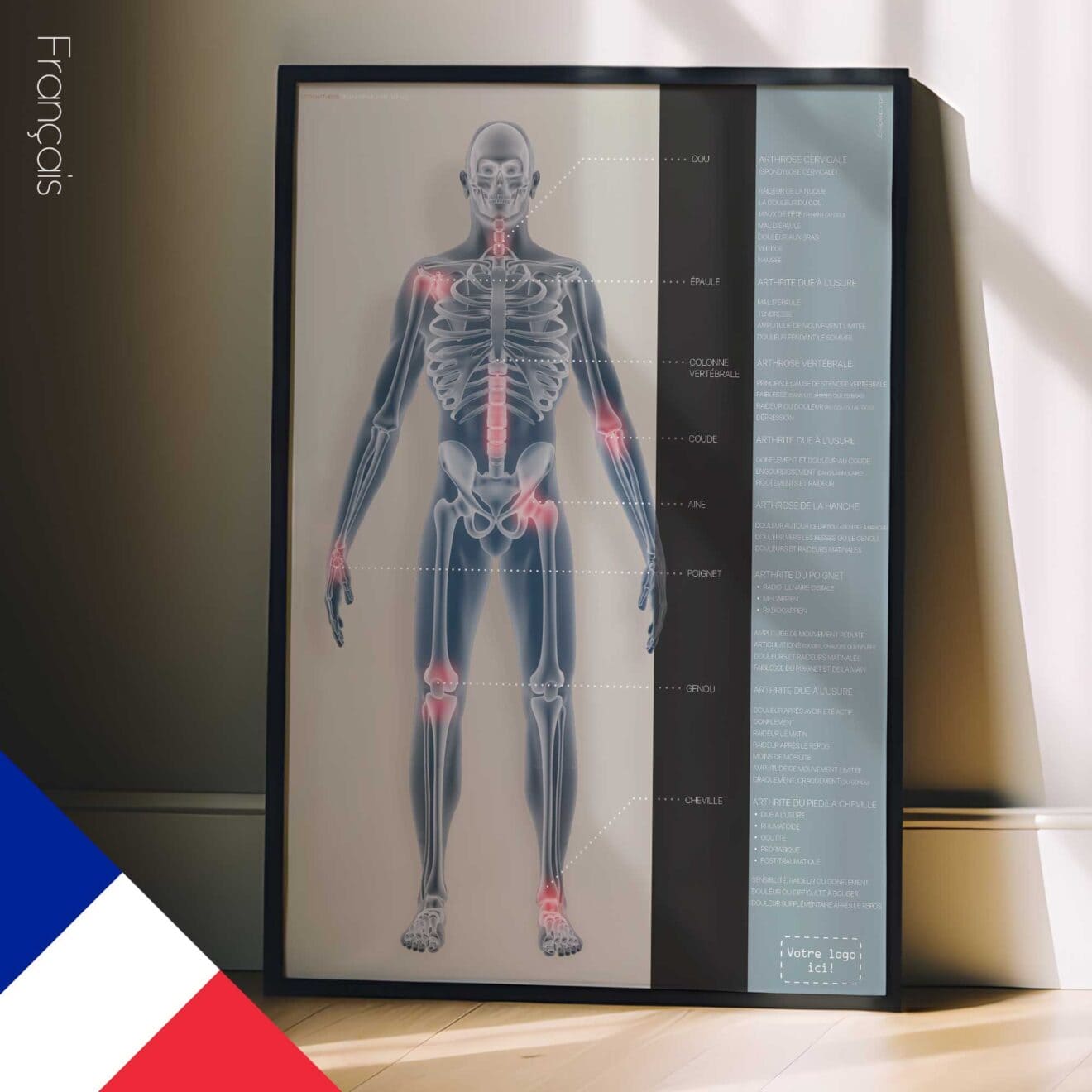
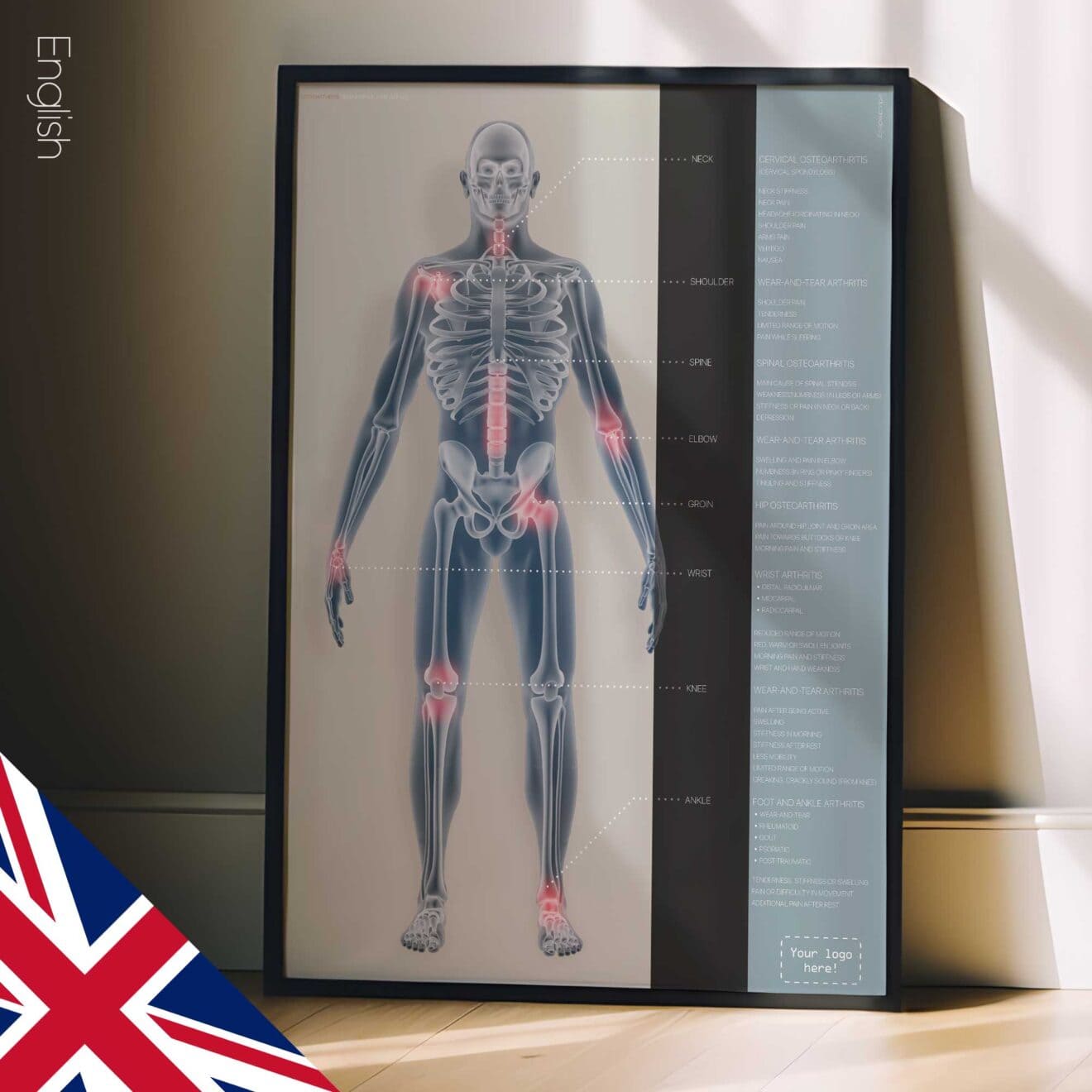
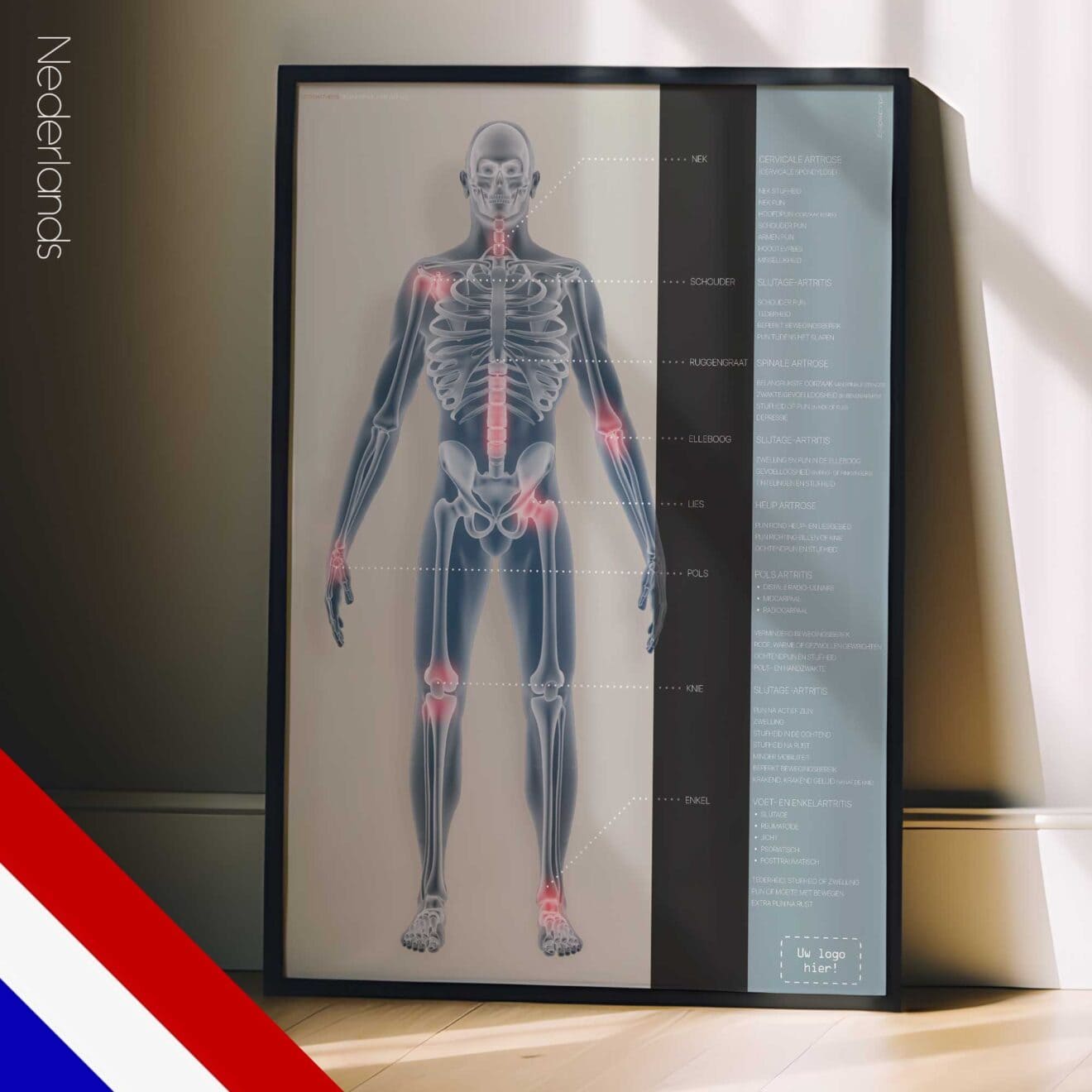
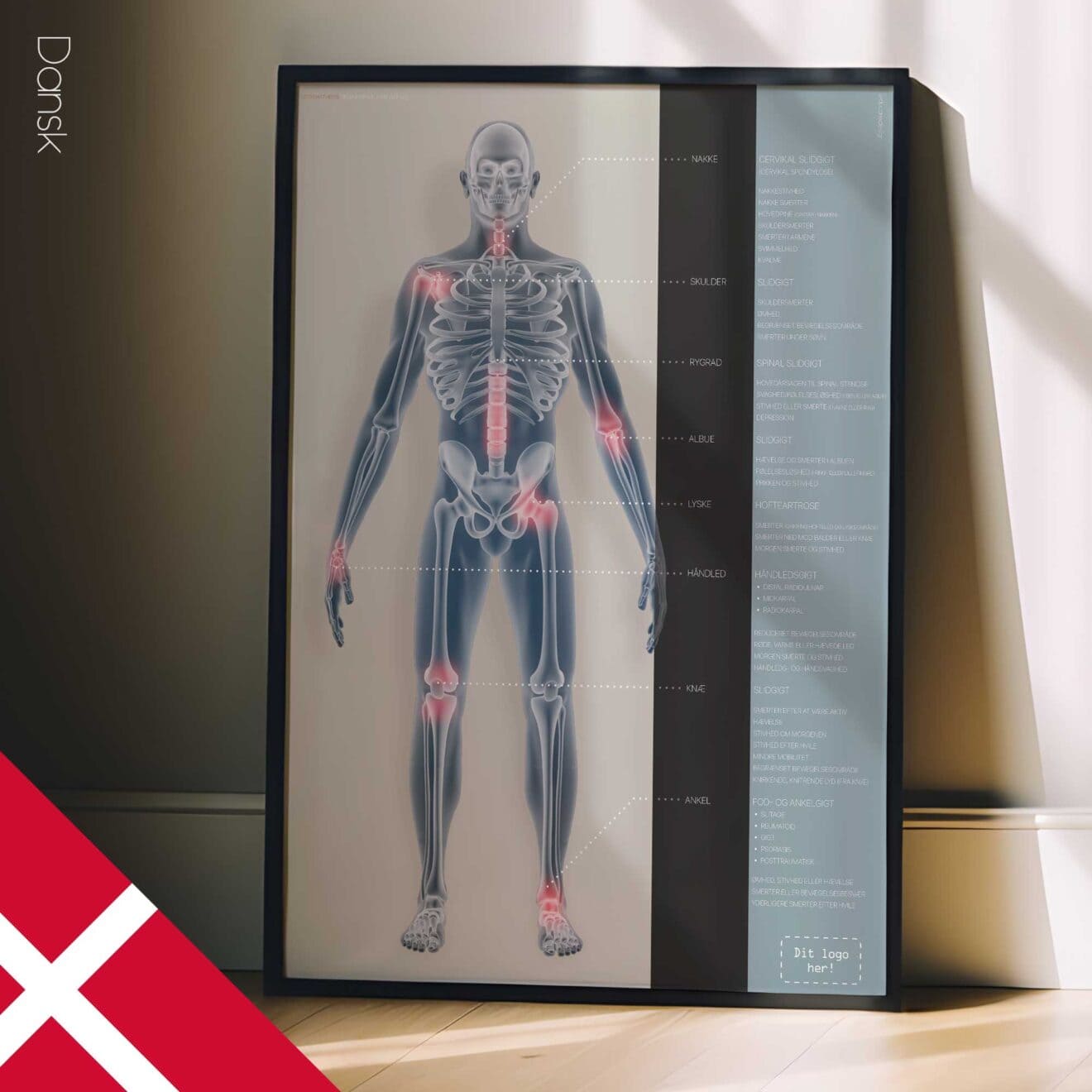
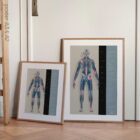
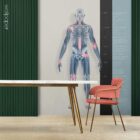
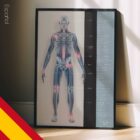
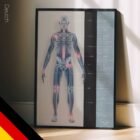
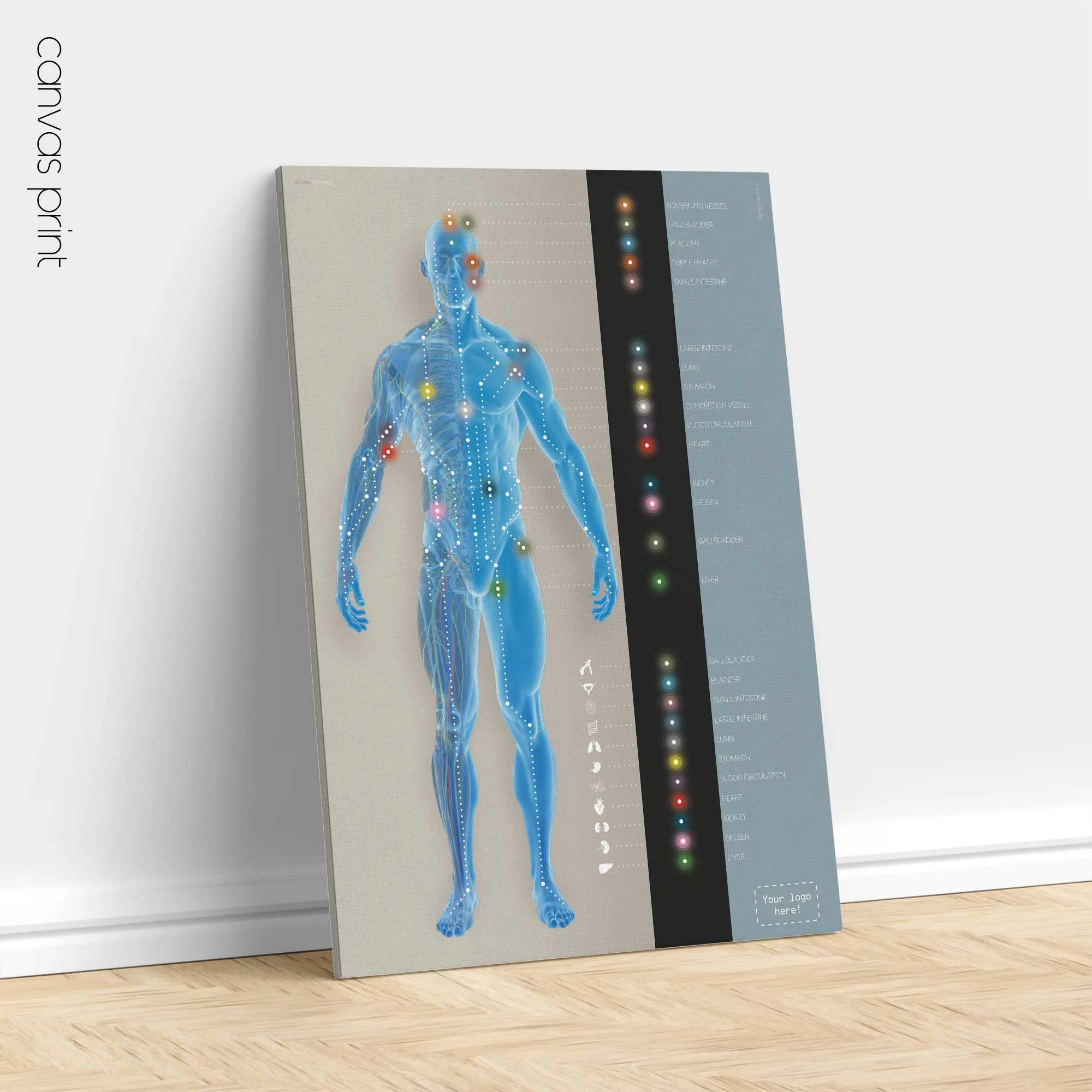
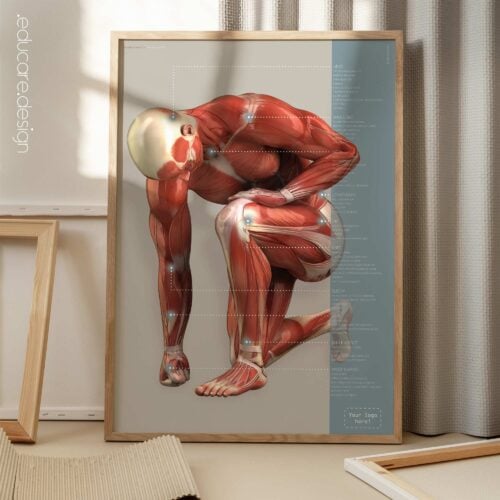
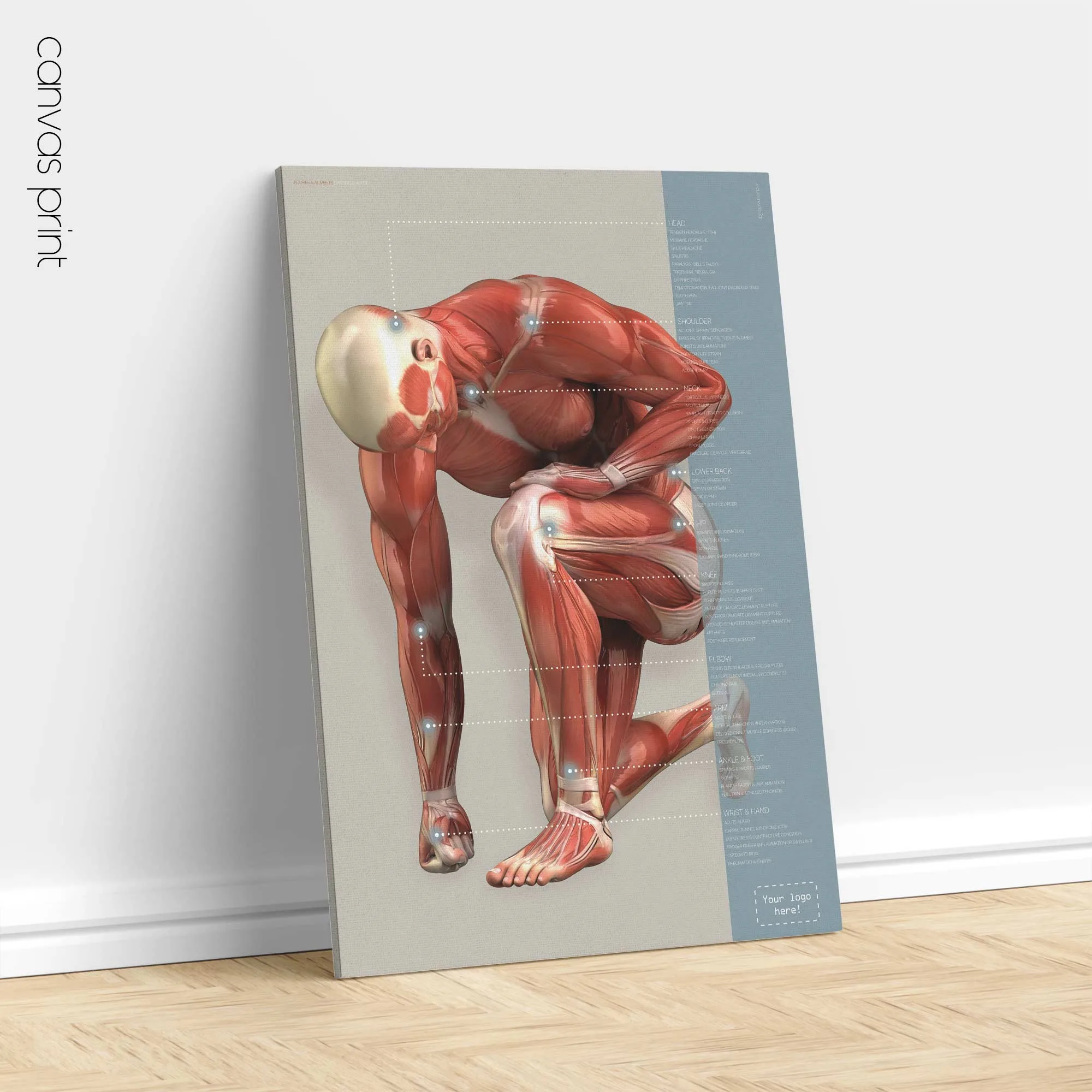
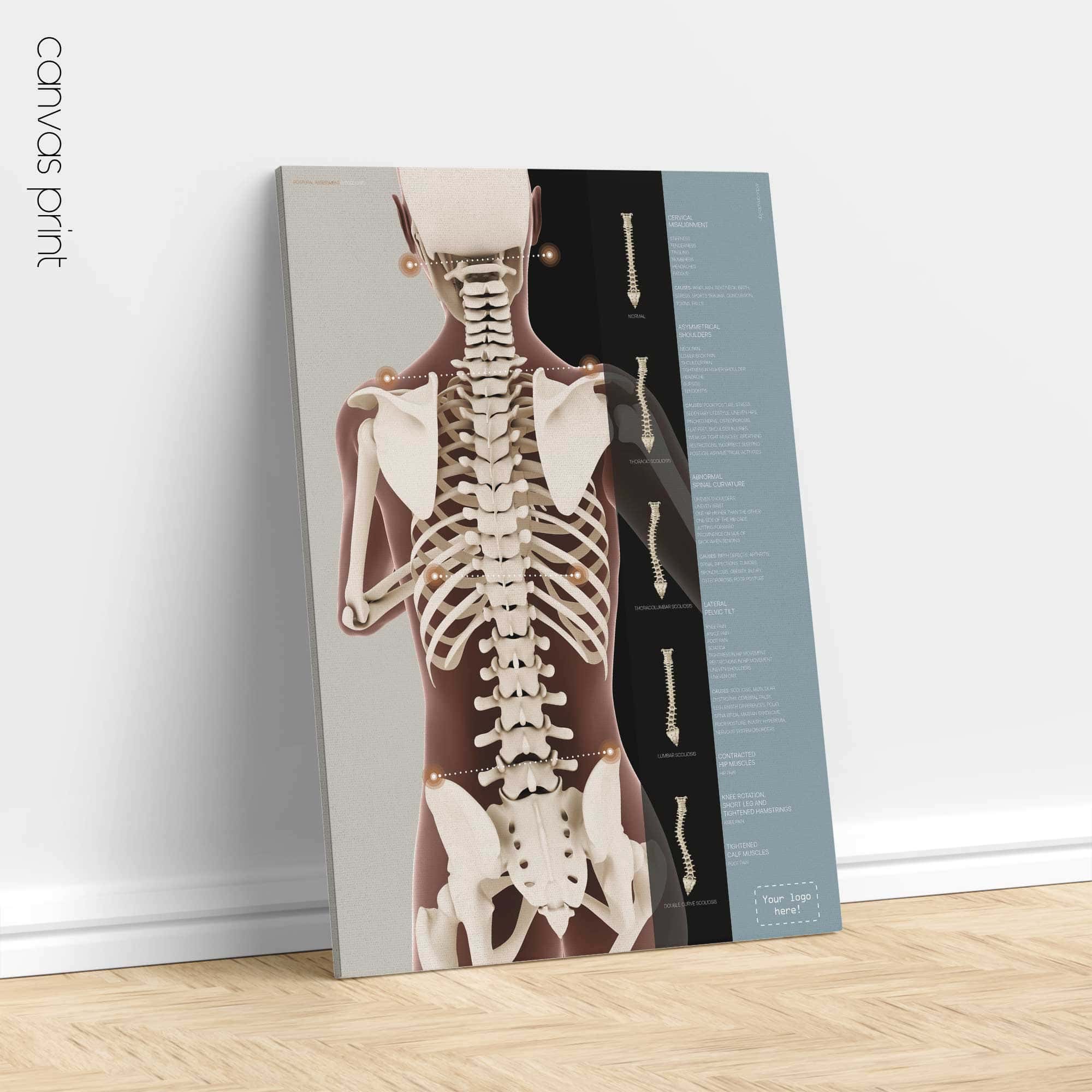
Degenerative Joint Disease – Localised Pain, Structural Change & Functional Limitation. This Osteoarthritis chart presents degenerative joint disease in a clear anatomical overview, highlighting the most commonly affected regions of the body. The artwork visually maps typical sites of osteoarthritic involvement — including cervical spine, shoulder, lumbar spine, elbow, wrist, hip, knee and ankle — allowing patients to immediately recognise patterns of joint-related pain and stiffness.
Rather than describing osteoarthritis as an abstract condition, the chart anchors symptoms to specific anatomical structures. Inflamed and load-bearing joints are visually emphasised, reinforcing how cartilage degeneration and underlying bone changes translate into clinical symptoms such as joint pain, stiffness, reduced range of motion and functional limitation.
Osteoarthritis develops gradually as joint cartilage breaks down and structural adaptation occurs within the joint complex. Over time, this can lead to swelling, tenderness, crepitus, morning stiffness and activity-related discomfort. The visual layout supports conversations about mechanical load, wear patterns, age-related changes and lifestyle factors that influence joint health.
Importantly, the chart clarifies a key distinction: osteoarthritis primarily affects joints rather than internal organs. By presenting affected areas in a structured body overview, it helps differentiate local degenerative processes from systemic inflammatory conditions.
In clinical practice, this artwork functions as a powerful communication tool. During consultation, practitioners can visually connect a patient’s symptom location to the corresponding joint region, improving clarity and reducing misunderstanding. It supports education on risk factors, early detection, conservative management strategies and the importance of maintaining joint mobility and muscular support.
The design remains clean and professional, making it suitable for treatment rooms, waiting areas and educational environments. It promotes awareness without alarmism and encourages informed, constructive dialogue about joint health and functional longevity. Ideal for chiropractic, osteopathic, physiotherapy, orthopaedic, rehabilitation and primary care settings.
 View this chart here on YouTube.
🇺🇸 View more details of the English version.
🇮🇹 Vedi i dettagli della versione italiana.
🇪🇸 Ver detalles de la versión en español.
🇩🇪 Details zur deutschen Version anzeigen.
🇫🇷 Voir les détails de la version française.
🇳🇱 Bekijk details van de Nederlandse versie.
🇵🇹 Veja mais detalhes da versão portuguesa.
🇸🇪 Se fler detaljer om den svenska versionen.
🇳🇴 Se flere detaljer om den norske versjonen.
🇩🇰 Se flere detaljer fra den danske version.
Make it part of your clinic!
⬇ Order here.