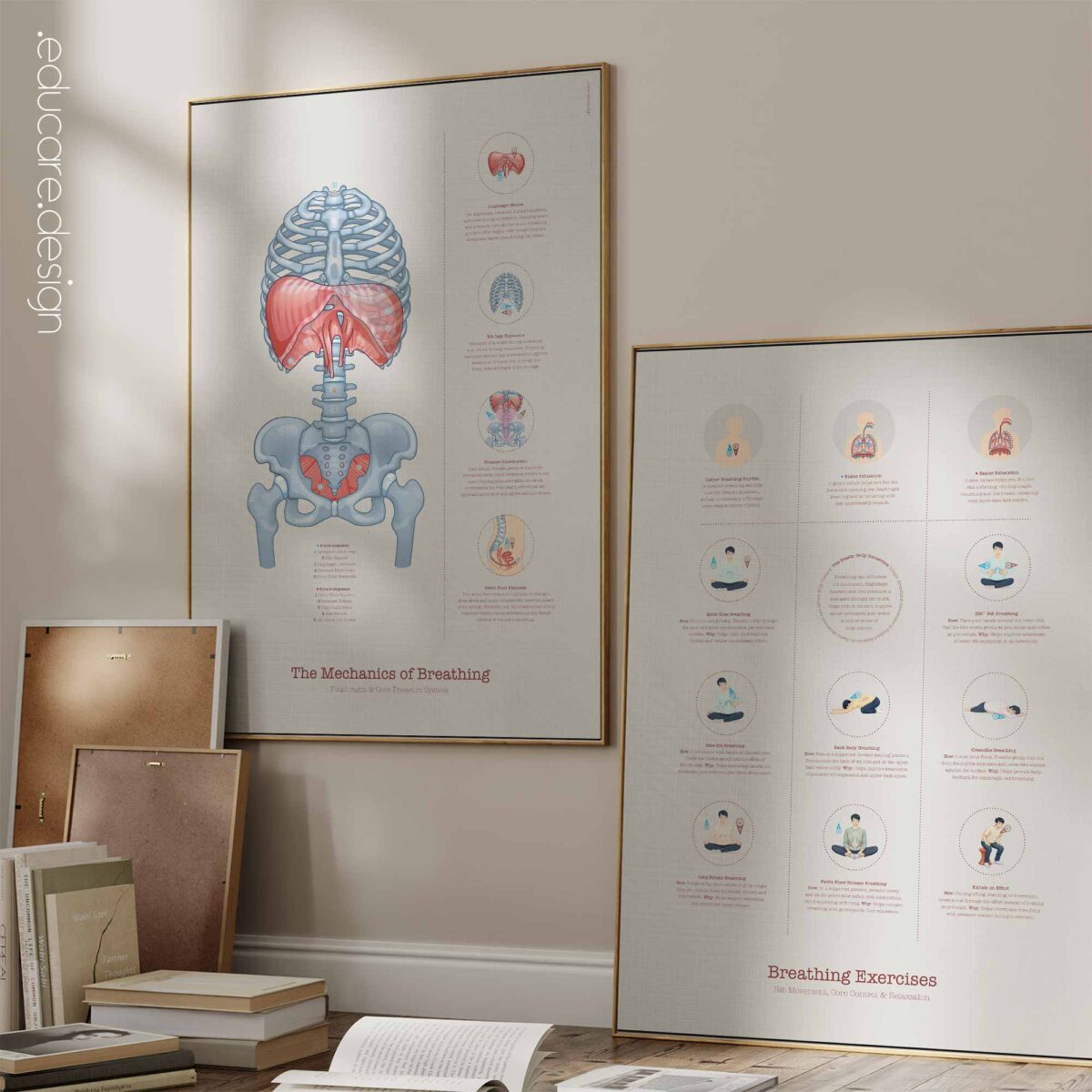
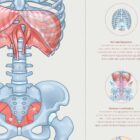
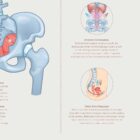
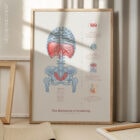
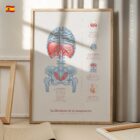
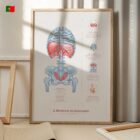
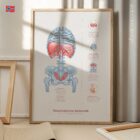
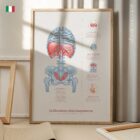
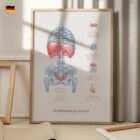
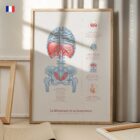
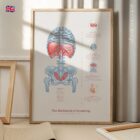
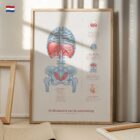
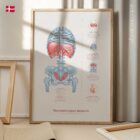
A clear, clinically focused anatomy chart designed to help practitioners explain how one breath moves through the body — from the airway and rib cage to the diaphragm, abdominal pressure system and pelvic floor response. The chart is built around a central Sequence of a Breath, showing the key stages of inhalation and exhalation in a simple, patient-friendly way. During inhalation, air enters through the airway, the lower ribs expand, the diaphragm descends, pressure distributes through the trunk and the pelvic floor responds. During exhalation, the sequence reverses as the pelvic floor returns, pressure reduces, the diaphragm rises, the ribs settle and air leaves the airway.
Rather than presenting breathing as only a lung function, the chart shows breathing as a coordinated body system. It connects the airway, larynx, rib cage, diaphragm, abdominal wall, spine, trunk pressure and pelvic floor into one visual explanation. This makes it especially useful when discussing shallow breathing, breath-holding, rib restriction, postural tension, core support, pelvic floor awareness and movement-related pressure control.
Four supporting modules explain the main physiological elements of the system: diaphragm motion, rib cage expansion, pressure coordination and pelvic floor response. These sections help patients understand how the diaphragm descends and rises, how the lower ribs widen and settle, how pressure is managed through the abdominal cavity, and how the pelvic floor forms the lower boundary of the system.
As a stand-alone chart, The Mechanics of Breathing works well in physiotherapy, osteopathy, chiropractic, pelvic health, Pilates, rehabilitation, wellness and multidisciplinary clinic settings. It gives practitioners a calm visual framework for explaining why breathing can influence posture, trunk control, relaxation, pressure regulation and movement confidence.
Available in a Breathing Mechanics and Exercises Set.
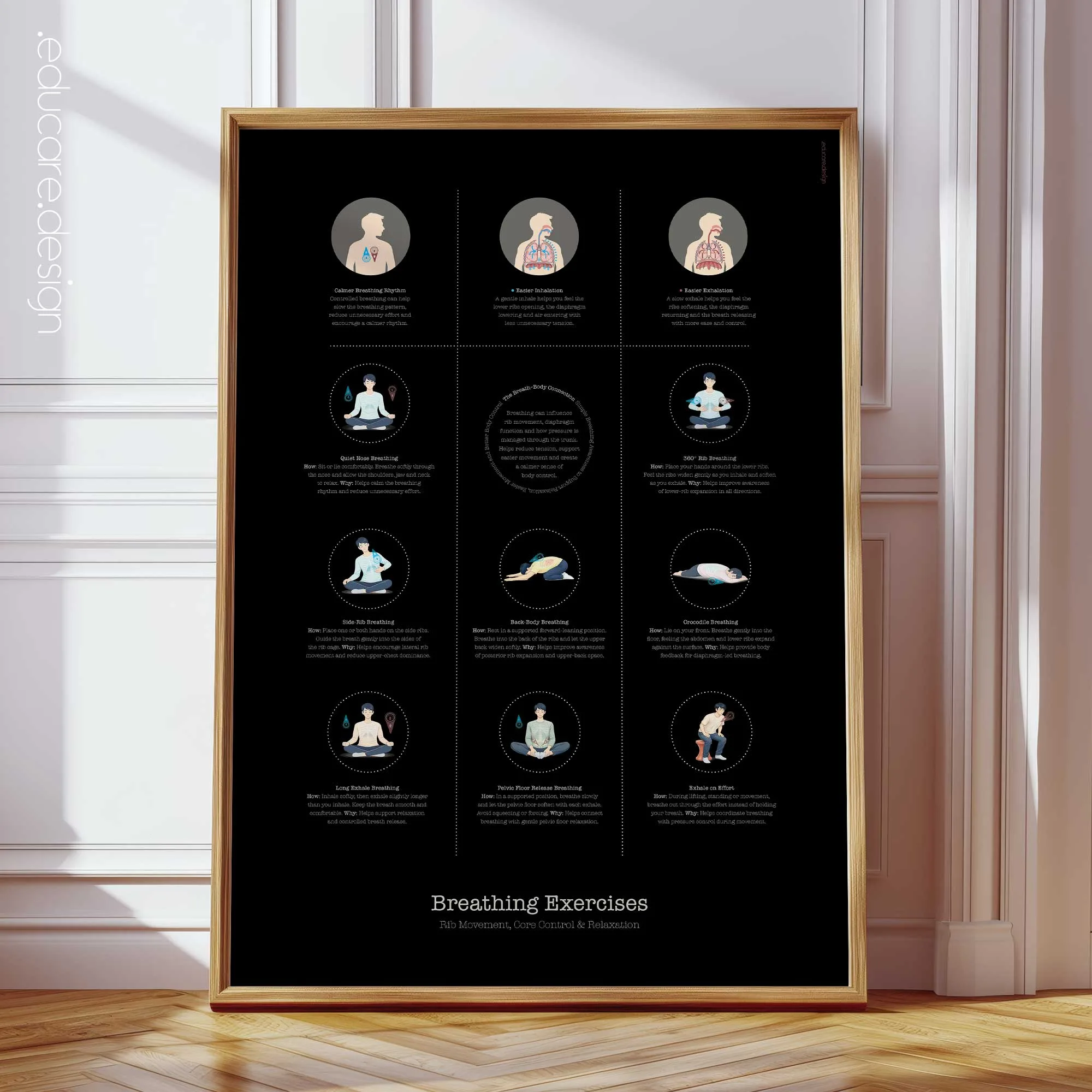
As part of the Breathing Mechanics and Exercises Set, this chart becomes the explanatory companion to Breathing Exercises. The Mechanics of Breathing Chart helps patients understand the system, while Breathing Exercises gives them simple ways to practise rib movement, calmer breathing, long exhalation, pelvic floor release and exhale-on-effort.
Together, the set creates a clear educational flow: understand the system, then practise the movement.
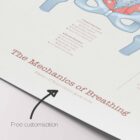
Free customisation with your clinic’s name.
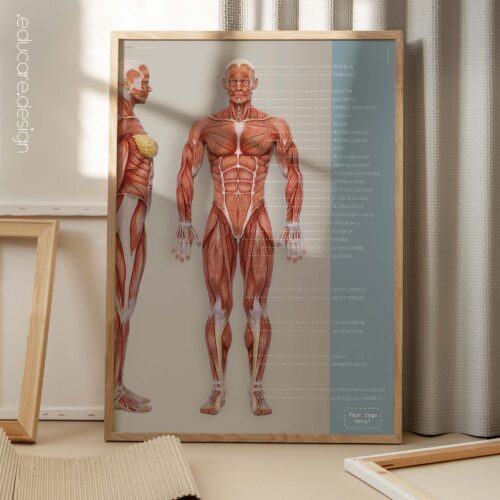
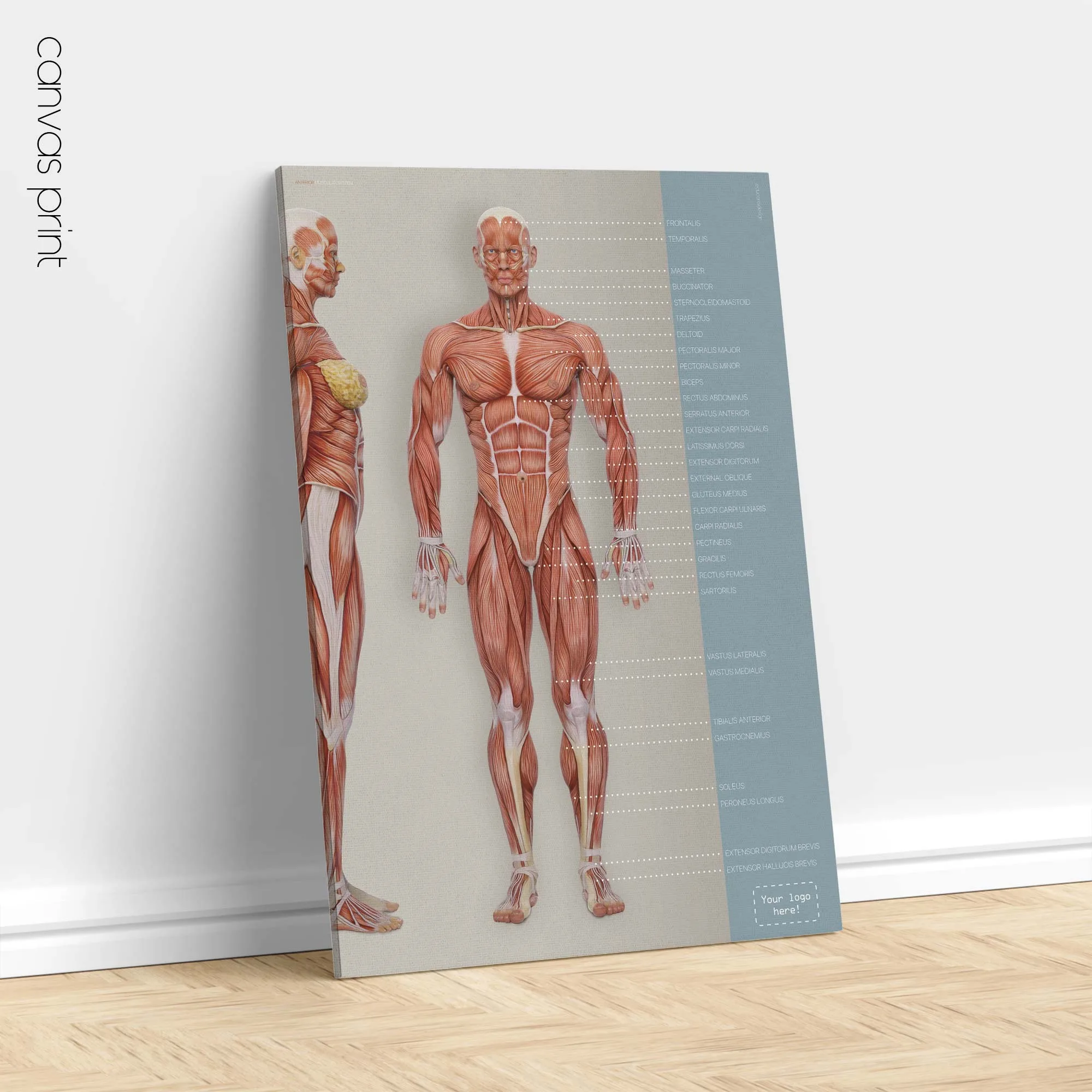
For this chart we offer to add your clinic’s name (or website address) for free! The name will go instead of the current sub-headline on the artwork; view an illustration of this in the image gallery.
 View this chart here on YouTube.
Black Edition.
This anatomy chart is available to order in a special black edition, which can be previewed in the image gallery.
🇺🇸 View more details of the English version.
🇮🇹 Vedi i dettagli della versione italiana.
🇪🇸 Ver detalles de la versión en español.
🇩🇪 Details zur deutschen Version anzeigen.
🇫🇷 Voir les détails de la version française.
🇳🇱 Bekijk details van de Nederlandse versie.
🇵🇹 Veja mais detalhes da versão portuguesa.
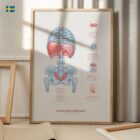
🇸🇪 Se fler detaljer om den svenska versionen.
🇳🇴 Se flere detaljer om den norske versjonen.
🇩🇰 Se flere detaljer fra den danske version.
Make it part of your clinic!
⬇ Order here.